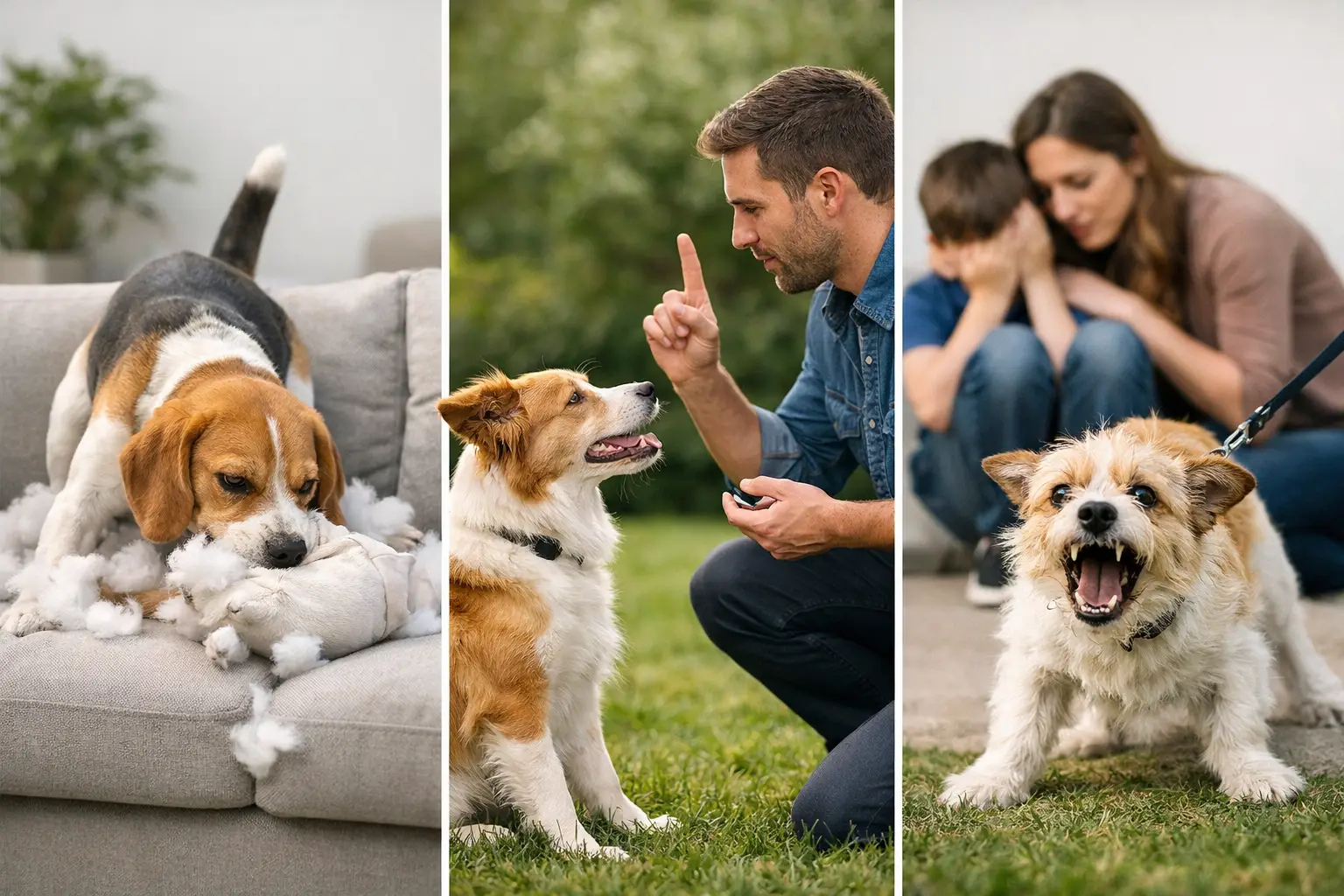

The problem usually starts small. A little barking at the window. A puppy chewing a shoe. A dog that pulls so hard on walks your shoulder hurts by the end of the block. Then one day you realize these common dog behavior problems are running your daily routine.
The good news is most behavior issues are not random, and they are not a sign that your dog is stubborn, spiteful, or hopeless. They are patterns. And patterns can be changed when you know what is causing them and what to do next.
Why common dog behavior problems happen
Most unwanted behaviors come from one of a few simple causes. Your dog has too much energy and not enough structure. Your dog has practiced a bad habit so many times that it now feels automatic. Or your dog is confused because the rules change depending on the day, the room, or the person.
That matters because training only works when it matches the real reason behind the behavior. A bored adolescent dog that shreds couch cushions needs a different plan than an anxious dog that panics when left alone. On the surface, both dogs look destructive. Underneath, the cause is different.
This is where many owners get stuck. They try a tip they found online, it helps for two days, and then the problem comes right back. Usually the issue is not effort. It is lack of a clear system.
The most common dog behavior problems owners face
Some issues show up more than others, and they tend to overlap. A dog that jumps on guests may also ignore commands. A dog that barks nonstop may also struggle to settle. Fixing one area often improves the others too.
Barking
Barking is one of the most common complaints because it gets attention fast. Dogs bark at noises, strangers, other dogs, passing cars, boredom, frustration, and excitement. That means there is no single fix for every barking problem.
If your dog barks at the window, management helps first. Block visual triggers when possible and stop giving your dog hours of rehearsal. Then teach an alternate behavior, such as going to a bed or mat when something passes outside. If your dog barks for attention, the plan changes. In that case, rewarding quiet and refusing to reinforce demand barking matters more than blocking triggers.
The trade-off is that barking often gets worse before it gets better when you stop rewarding it. If barking has worked for your dog for months, expect some pushback. Stay consistent.
Jumping on people
Jumping is usually friendly, but that does not make it harmless. A large dog can knock over kids, scare visitors, and turn greetings into chaos.
Dogs jump because it works. They get eye contact, touch, talking, or excited reactions. Even being pushed away can feel rewarding to a social dog. The fix is to remove the payoff and teach a better greeting. Ask for four paws on the floor or a sit before attention happens. Then reward that position every time.
This sounds simple, but it breaks down when guests accidentally reward the jumping. If one person pets your dog while your dog is bouncing off their chest, your training just got harder. Consistency matters more than intensity here.
Pulling on leash
Leash pulling is frustrating because it turns a basic walk into a daily battle. Most dogs pull for one reason: moving forward is rewarding. They pull, and they get closer to the grass, smell, person, or dog they want.
To change it, your dog needs to learn that a loose leash makes the walk continue and a tight leash slows it down. That takes repetition, not force. Reward position near you, change direction before your dog builds momentum, and keep sessions short enough that your dog can succeed.
Equipment can help with control, but tools do not replace training. If your dog only walks well in one setup and falls apart without it, the skill is not fully built yet.
Chewing and destructive behavior
Chewing is normal. Destructive chewing is what happens when normal chewing meets poor supervision, too much freedom, or unmet needs.
Puppies chew because they are exploring and teething. Adult dogs chew from boredom, stress, or habit. Start by managing the environment. Put tempting items away, use crates or pens when needed, and make appropriate chew options easy to access. Then look at the bigger picture. Is your dog getting enough physical exercise, mental work, and structure during the day?
A dog does not automatically know the difference between a dog toy and a remote control. That needs to be taught.
Ignoring commands
Owners often say their dog knows the command but refuses to listen. Sometimes that is true. More often, the dog only knows the command in easy situations.
A dog that sits in the kitchen but ignores you outside does not fully understand the cue around distraction. That is a training gap, not defiance. Go back a step, practice in easier environments, reward compliance clearly, and build reliability gradually.
This is a big mindset shift. When you stop taking it personally, you can train more effectively.
House training accidents
Accidents indoors are common in puppies, but they can also happen in adult dogs with too much freedom too soon or inconsistent routines. Successful house training depends on supervision, timing, and repetition.
Take your dog out on a predictable schedule. Reward bathroom trips outside right away. Limit unsupervised wandering indoors until your dog has a strong history of success. If accidents keep happening, do not just clean them up and hope for better luck. Tighten the routine.
If an adult dog suddenly starts having accidents after being reliable, it is smart to rule out a medical issue first.
How to fix common dog behavior problems faster
Fast progress does not come from trying ten random tricks. It comes from doing a few useful things consistently.
Start with management. If your dog rehearses the unwanted behavior all day, training will feel slow. Use gates, leashes, crates, covered windows, and better setup choices to prevent repeated mistakes. Management is not cheating. It gives training room to work.
Next, reward what you want with better timing. Dogs repeat behaviors that pay off. If you like calm behavior, quiet behavior, eye contact, or a nice down-stay, mark it and reward it while it is happening. Too many owners only speak up when the dog gets it wrong.
Then simplify your expectations. If your dog cannot stay calm when guests come over, do not start training in the middle of a loud, crowded visit. Practice with one person first. Make the challenge small enough that your dog can succeed.
Finally, be honest about repetition. Most behavior change is not dramatic. It looks like fewer mistakes this week than last week. It looks like your dog recovering faster, listening sooner, or staying calmer for longer. That is real progress.
When behavior is more serious than a bad habit
Not every issue is just annoying. Some are safety problems.
If your dog is showing aggression, guarding food or toys, snapping when handled, or reacting intensely to people or other dogs, do not treat it like a minor obedience gap. You need a structured plan, careful management, and in many cases professional help. The goal is not to punish bigger behavior into stopping. The goal is to understand the trigger, prevent rehearsals, and teach safer responses.
The same goes for severe separation distress. A dog that drools, panics, escapes, or injures itself when left alone needs more than extra exercise. That kind of issue usually improves best with a gradual plan built around the dog’s actual threshold.
There is no shame in needing help here. Getting support early often prevents a manageable problem from becoming a serious one.
A better way to think about training
Your dog is always learning, even when you are not running a formal session. Every walk, greeting, meal, and door opening teaches something. That can feel overwhelming at first, but it is actually good news. Small changes add up fast when they happen every day.
If you are tired of guessing, follow one clear system and stick with it long enough to see the pattern change. That is how owners go from daily frustration to a dog that listens at home and in real life. If you want a step-by-step approach, Optimist Dog is built to help owners train with more clarity and get results faster.
Most dogs do not need magic. They need clear rules, steady follow-through, and an owner who stops hoping the behavior will fade on its own and starts showing the dog what to do instead.



Comment