Helping You Raise a Calm, Happy & Well-Behaved Dog
Group Classes vs Private Dog Training: Which Works?
Sara Michael,
Sharing is caring 😉
Your dog may sit perfectly in your living room, then lose all focus the second another dog appears. Or maybe the problem happens only at home: barking at the window, guarding the couch, pulling toward the front door, or ignoring you in the backyard. That is why the choice between group classes vs private dog training is not simply about price or convenience. The right setting depends on what your dog needs to learn, where the behavior happens, and how much individual help you need to make progress.
Both options can work. The fastest path is usually the one that matches your dog’s current behavior instead of forcing your dog into a training environment they are not ready for.
Group Classes vs Private Dog Training: The Main Difference
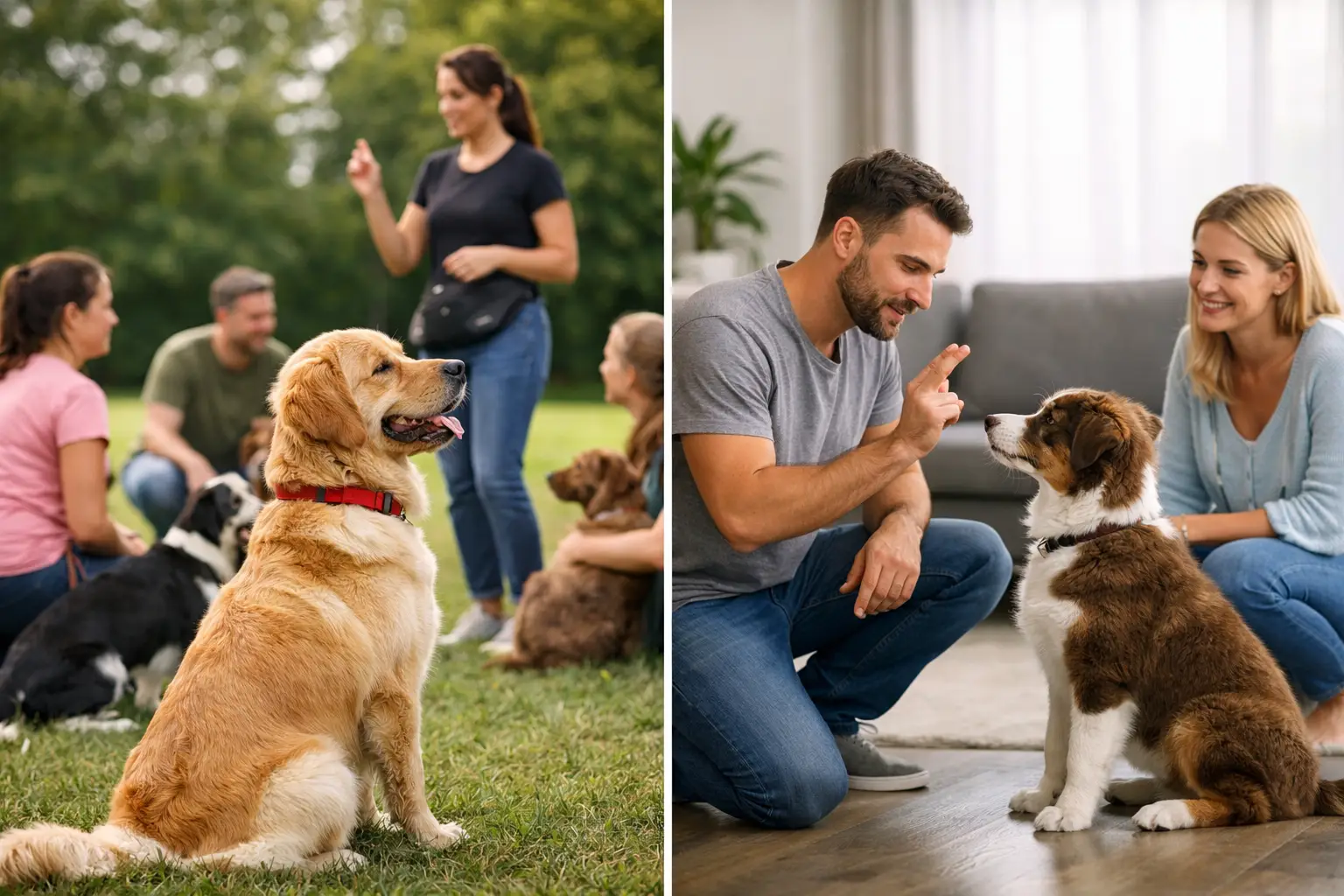
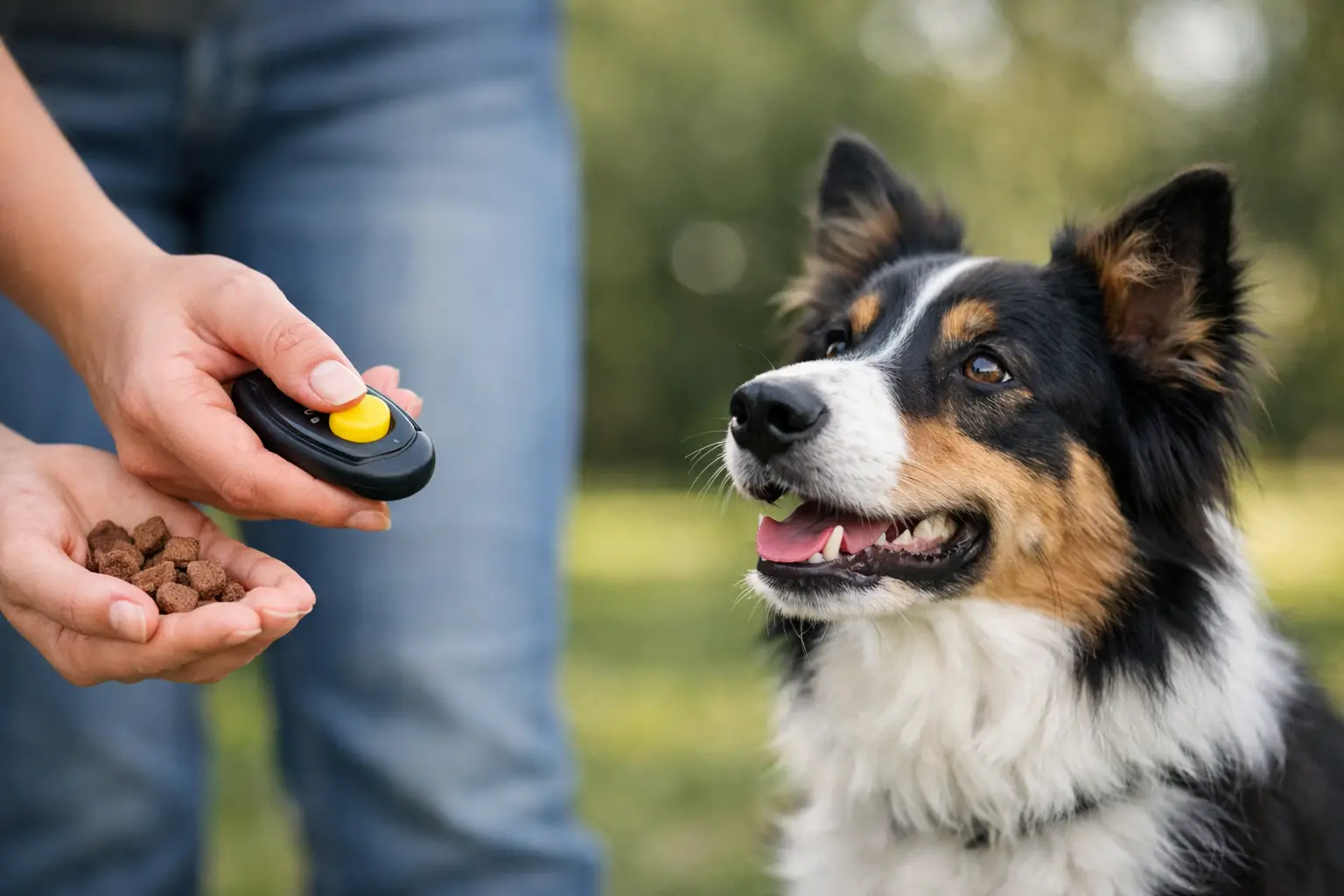
Group classes teach multiple dogs and owners at the same time. Most classes focus on foundational obedience, puppy socialization, leash skills, manners, or a specific sport or training level. You work around distractions while an instructor gives guidance to the whole class and, when time allows, individual feedback.
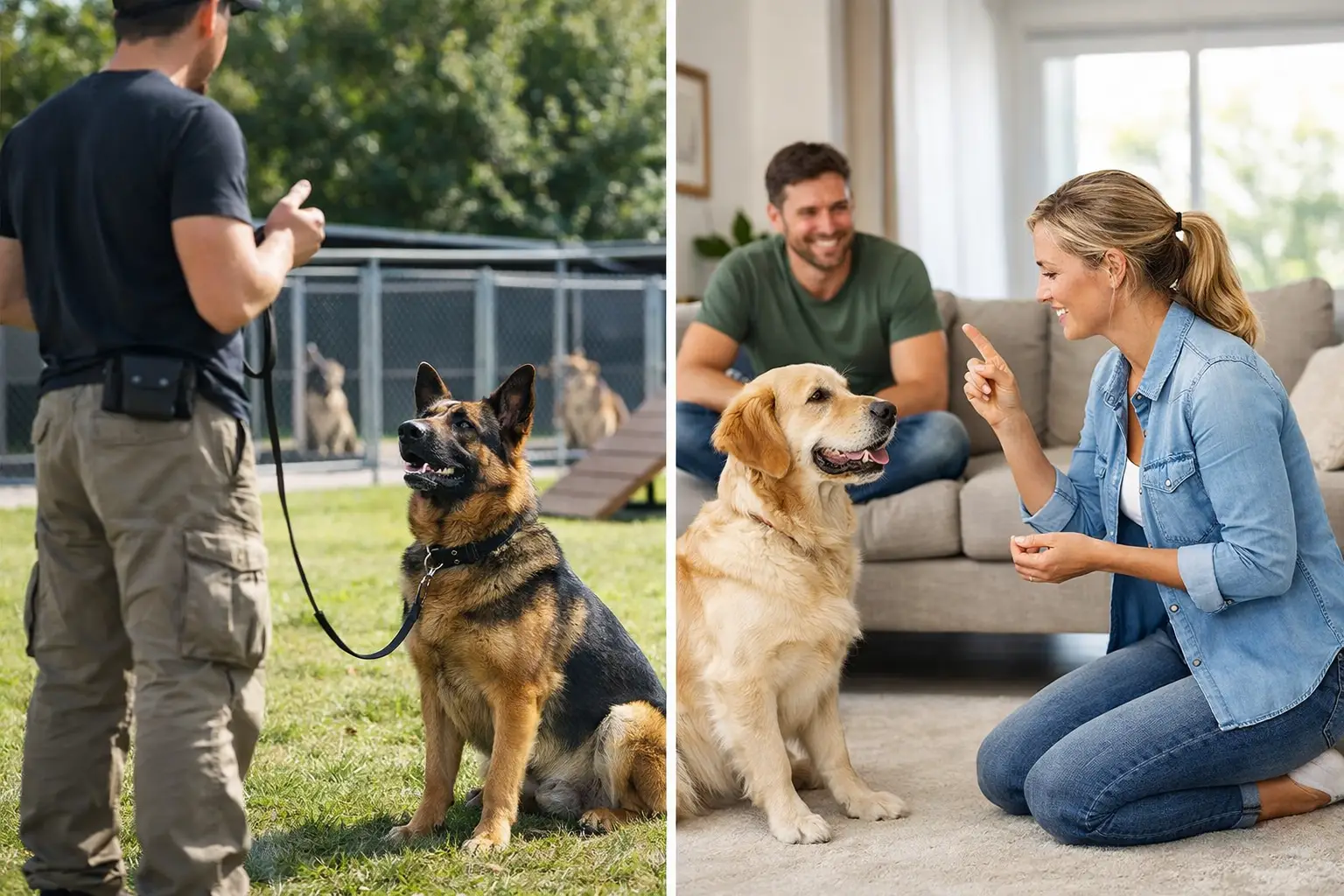
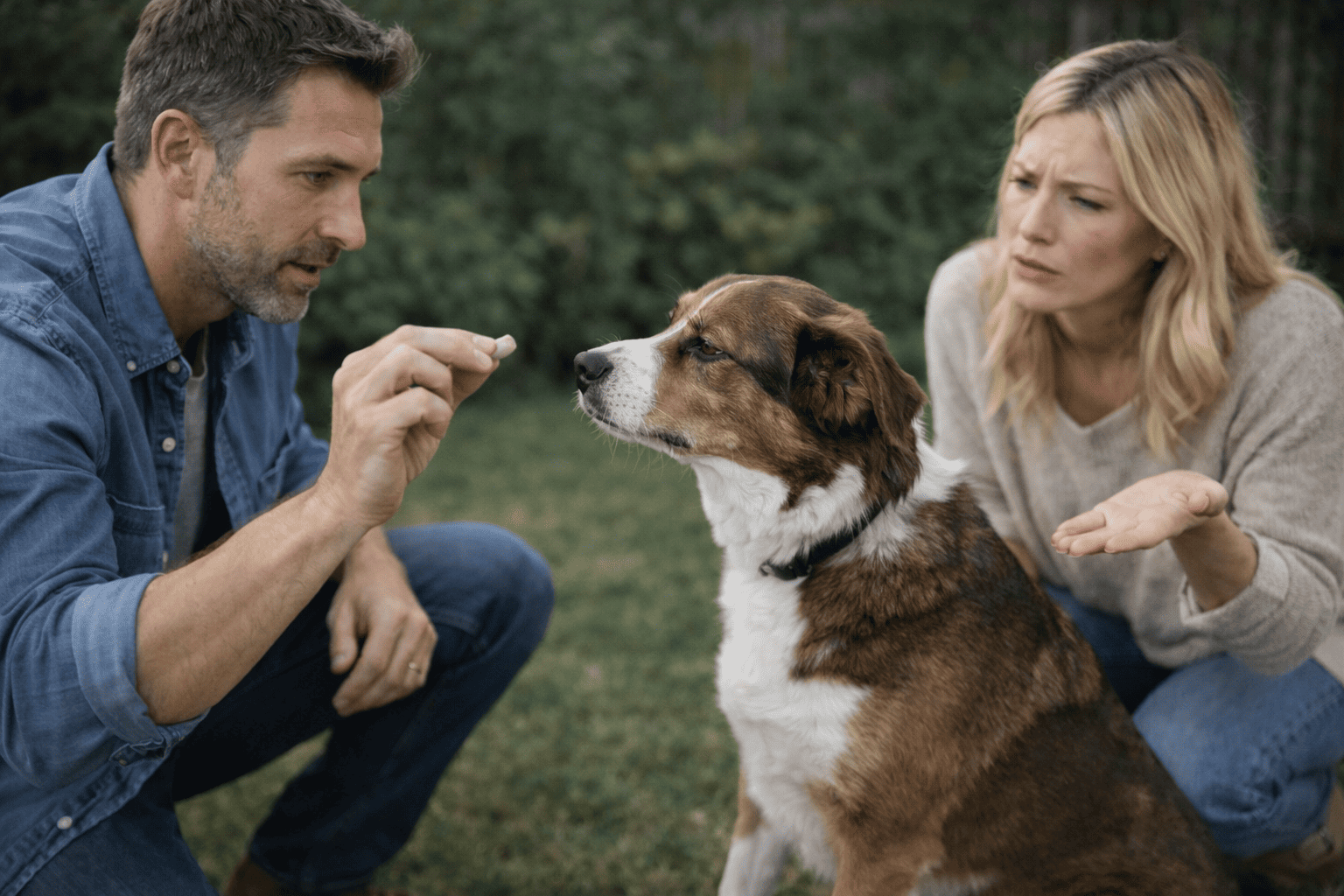
Private dog training is one-on-one instruction. The trainer can watch your dog closely, assess the behavior, coach your timing, and build sessions around your exact goals. Private lessons may happen in your home, on a walk, at a training facility, or in the real-world location where the problem occurs.
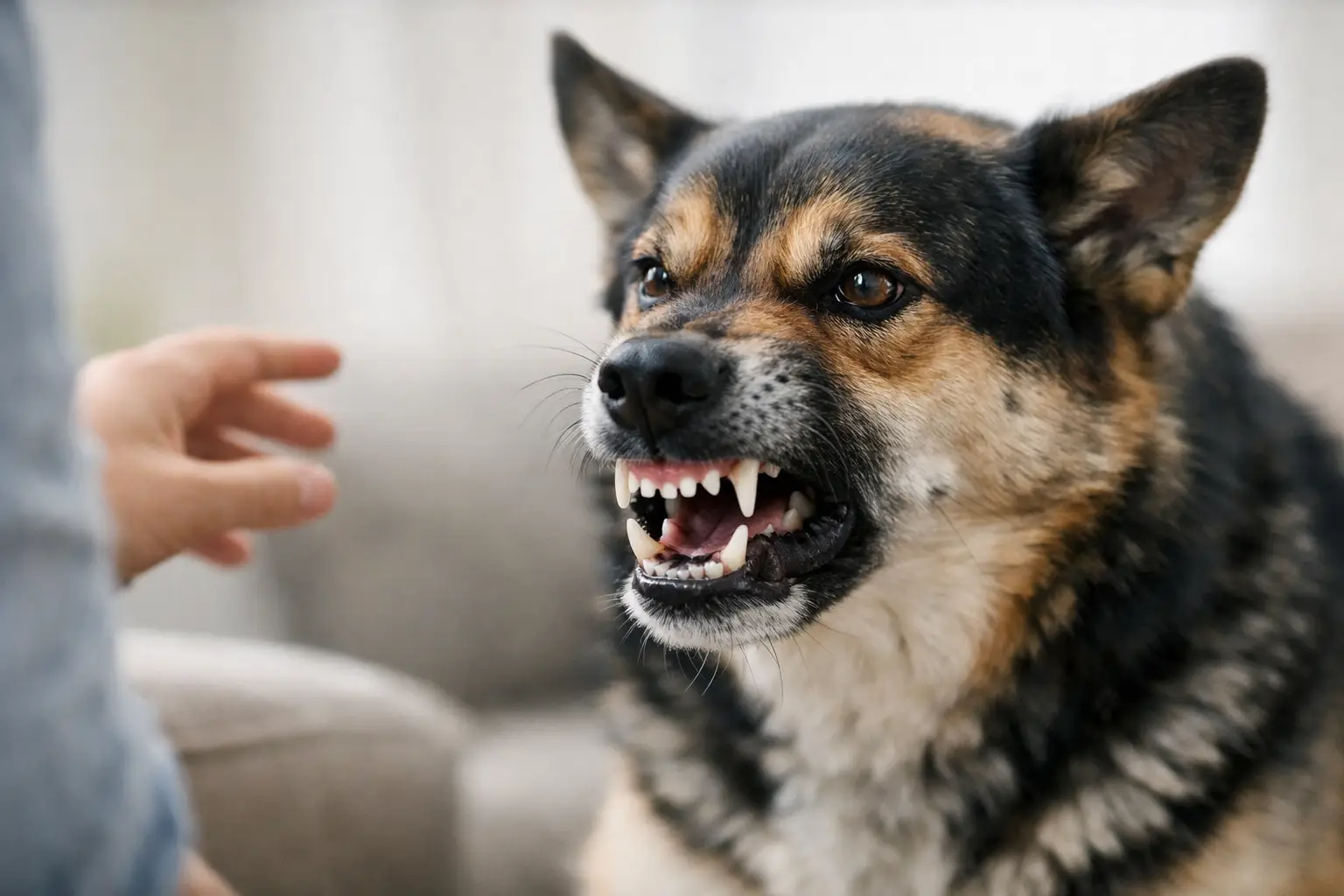
Neither format is automatically better. A friendly young dog who needs practice staying focused around people and dogs may benefit greatly from a well-run group class. A dog who growls when guests enter the house needs a more individualized plan before being placed near unfamiliar dogs and people.
When Group Classes Are a Smart Choice
A group class is often a strong fit for puppies and social adult dogs who need better everyday obedience. The controlled presence of other dogs gives you something your living room cannot: real distractions. Your dog can practice checking in with you, walking politely, settling on a mat, and responding to cues while life is happening around them.
This is especially useful when your dog already understands a cue at home but falls apart outside. A dog does not truly know “sit” or “come” just because they can do it in a quiet kitchen. They need gradual practice in different places, around different people, sounds, and dogs.
Group training also helps owners who benefit from routine. A scheduled weekly class gives you a reason to practice, ask questions, and keep moving forward. Watching other owners work through similar struggles can be reassuring too. You are not the only person whose dog suddenly forgets every cue when a squirrel runs by.
Still, not all group classes are equally useful. Look for a class with manageable class sizes, clear structure, and instructors who actively coach owners instead of simply calling out commands from across the room. Your dog should have enough space to work without being forced into greetings or crowded situations.
A good group class does not mean every dog must play together. Productive socialization means your dog learns to stay calm and responsive around other dogs, even when they are not interacting.
Group Classes Work Best When Your Dog Can Cope
Your dog does not need to be perfect to attend class. They do need to be able to remain under control at a reasonable distance from other dogs and people. Some barking, excitement, or pulling can be addressed in class. But if your dog lunges, panics, growls, snaps, or cannot take food or respond to you near triggers, a busy class may be too much too soon.
Pushing an overwhelmed dog into close contact rarely fixes the issue. It can make the dog more stressed and make you feel like you are failing. Start with the level of support your dog can handle, then add distractions as their skills improve.
When Private Dog Training Is the Better Investment
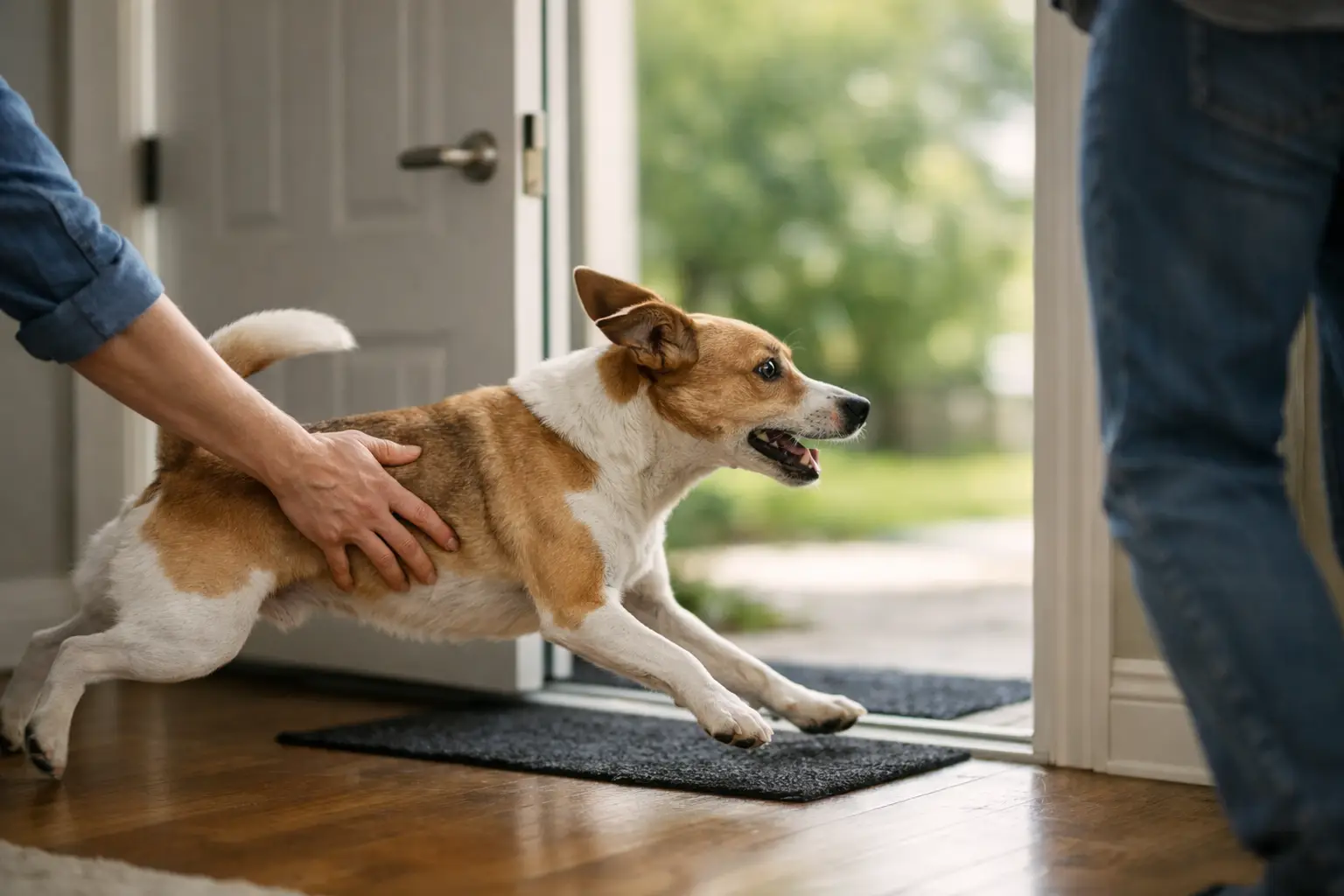
Private training is usually the better choice for behavior problems that are specific, serious, or difficult to reproduce in a class setting. If your dog barks at delivery drivers, guards food, reacts on walks, destroys the house when left alone, or becomes aggressive around visitors, you need training that addresses the actual pattern.
A private trainer can see the details that matter: what happens right before the behavior, how you respond, what rewards are available, how close the trigger is, and where the dog starts to lose control. Those details shape the plan.
Private lessons are also valuable when you need hands-on coaching. Many owners understand what they are supposed to do but struggle with timing, leash handling, reward placement, or following through consistently. A trainer can correct small mistakes before they become weeks of stalled progress.
This format is particularly helpful for owners who have tried several tips online without results. Random advice often fails because it treats the visible problem, not the routine maintaining it. A structured plan gives you clear steps: what to practice, how often to practice it, when to increase difficulty, and what to do when your dog makes a mistake.
Private training can cost more per session, but it may save time when the issue is urgent. If every walk is stressful or you are worried about your dog’s behavior around children, guests, or other dogs, targeted help is often worth it.
Private Training Is Not Just for Severe Problems
You do not need to wait for a major issue to get one-on-one help. Private sessions can be a smart starting point for a new puppy, a newly adopted dog, or an owner who wants a clear foundation from day one.
A few focused lessons can help you establish house rules, prevent common bad habits, teach calm crate time, build recall, and create a reliable daily routine. For some owners, that early clarity prevents the frustration that sends them looking for help later.
Consider the Training Environment
Ask yourself one simple question: where does the behavior actually happen?
If your dog pulls past other dogs on sidewalks, a group class may provide useful practice with controlled distractions. If your dog loses it when the doorbell rings, training in a classroom may not transfer well until you also practice at home. If your dog is calm at the facility but reactive in your neighborhood, the neighborhood is where you need to build skills.
Dogs do not automatically generalize training. They may understand a command in one place and struggle in another. That is normal. The answer is not to repeat the cue louder. It is to teach the skill in easier settings first, then gradually practice it where it matters.
The best training plan often uses both formats at different stages. Private lessons can build the foundation and address behavior challenges. A group class can later help your dog practice those skills around distractions. Think of private work as building the tool, and group work as testing it in the real world.
How to Choose Without Wasting Time or Money
Before enrolling, be honest about your goals. “I want my dog to behave better” is understandable, but it is too broad to guide a decision. Get specific. Do you need your puppy to stop biting? Do you want your dog to walk without pulling? Are you worried about growling around food? Do you need reliable recall before off-leash hikes?
Then consider your dog’s current ability, not the dog you hope they will be after training. If your dog can focus around other dogs from a distance, group training may be productive. If they cannot, start privately and build toward that goal.
Also look at your own schedule and follow-through. Training works between lessons. A class once a week will not change behavior if the same unwanted habits are rehearsed every day at home. Choose a program that gives you simple exercises you can repeat in short sessions, plus clear direction for handling real-life moments.
Be cautious of any trainer or class that promises a cure without asking questions about your dog, your home, and the behavior itself. Good training is confident, but it is not careless. The plan should fit the dog in front of you.
Start With the Level Your Dog Can Succeed At
The goal is not to prove your dog can handle the hardest environment right away. The goal is to create enough successful repetitions that listening becomes a habit. For a social dog with basic manners, that may mean a group class. For a reactive, anxious, or unpredictable dog, it may mean private guidance first.
Give your dog a fair starting point, practice consistently, and raise the challenge one step at a time. Progress becomes much easier when your dog is learning instead of merely trying to cope.
Does your dog ignore commands like it didn’t even hear you? You say “sit”… nothing.You call your dog… it walks away. Frustrating, right? The truth is: 👉 Your dog isn’t “stubborn” on purpose👉 It simply doesn’t understand—or isn’t motivated In this guide, you’ll learn how to train a stubborn dog…
Does your dog ignore you when you call its name? You call… nothing.Or worse—it runs the other way. This is one of the most frustrating (and dangerous) problems dog owners face. The good news? 👉 You can fix it👉 And build a reliable recall In this guide, you’ll learn how…