Helping You Raise a Calm, Happy & Well-Behaved Dog
Can Older Dogs Still Be Trained? Yes, Here’s How
Sara Michael,
Sharing is caring 😉
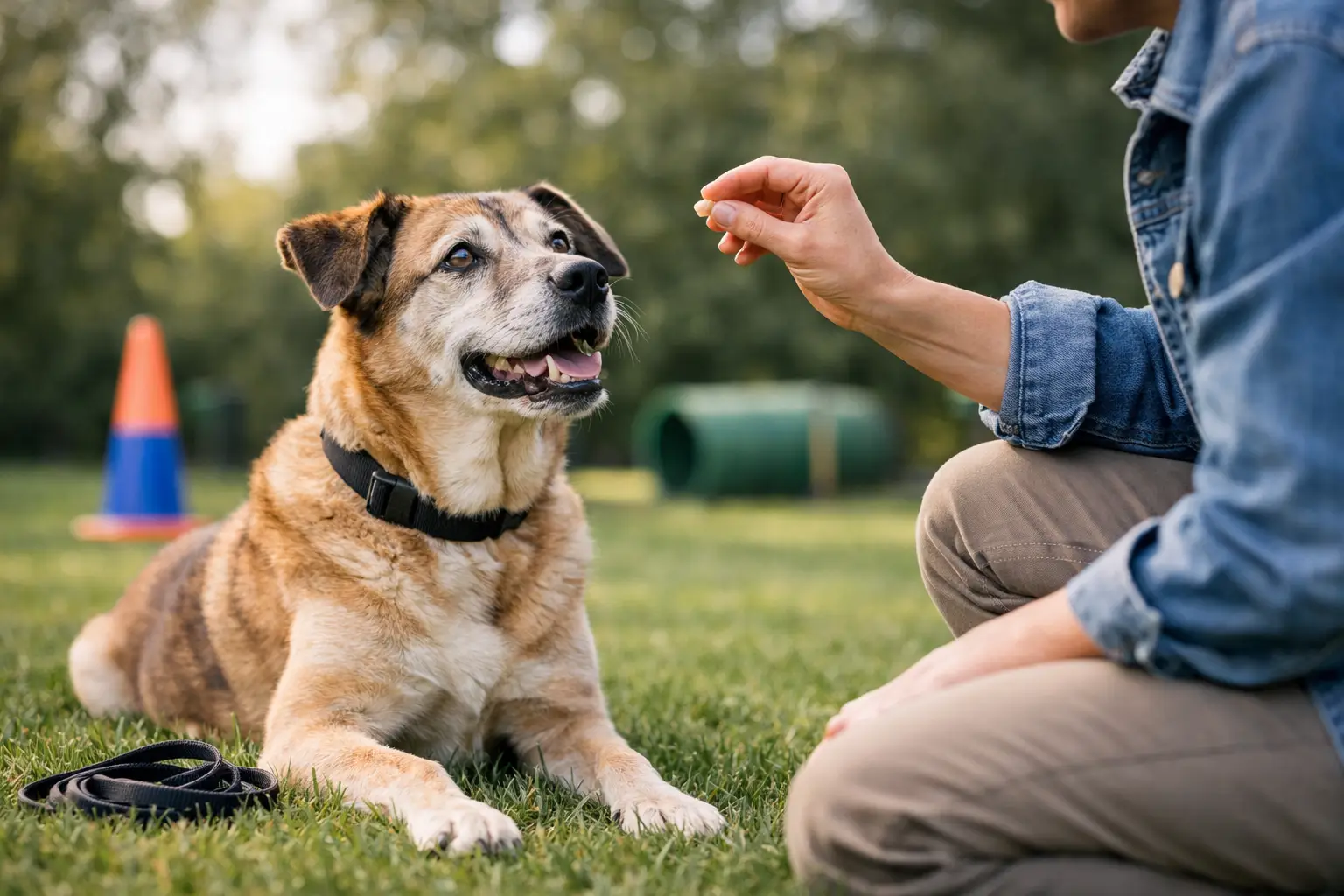
A dog who has spent eight years pulling toward every squirrel or barking when the doorbell rings can make an owner feel stuck. But yes, can older dogs still be trained is a question with a very encouraging answer: adult and senior dogs can learn new skills, replace unwanted habits, and become more reliable at home.
Age changes how you train. It does not close the door on training. Your older dog may need shorter sessions, more comfortable setups, and a little extra patience while a new routine becomes familiar. With clear steps and consistent follow-through, progress is absolutely possible.
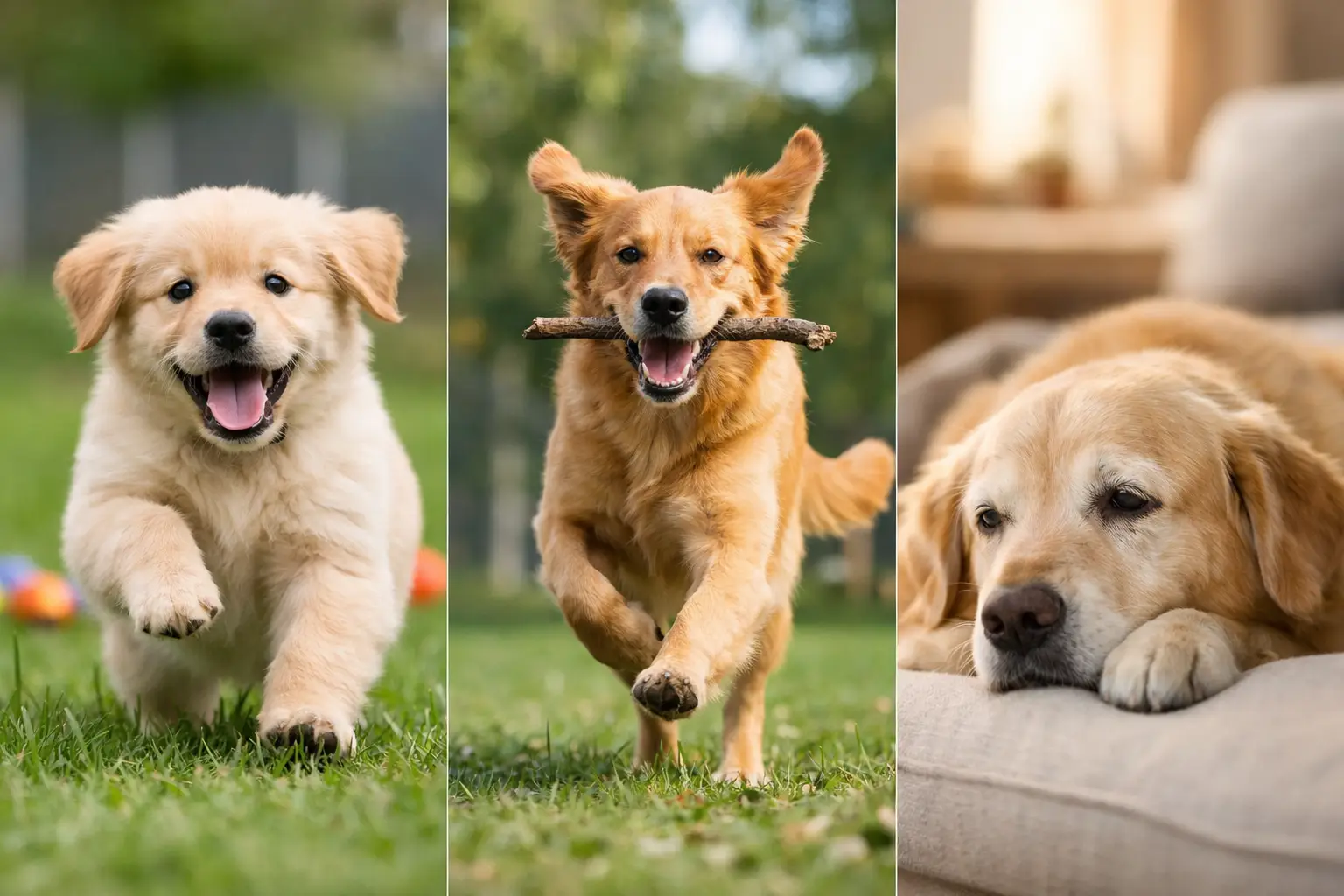
Dogs keep learning throughout their lives. They learn which behaviors get them what they want, what the rules are in different places, and whether listening to you pays off. That process does not stop because a dog is no longer a puppy.
In fact, older dogs often have advantages. Many are calmer than adolescent dogs, have a more predictable daily routine, and are better able to focus for a few minutes at a time. They may already know basic cues such as sit or come, even if they do not perform them reliably around distractions.
The challenge is usually not that the dog is too old. It is that the unwanted behavior has been practiced for a long time. If barking at the window has worked as a daily activity for six years, or pulling has consistently gotten the dog to the interesting smell faster, those habits are well rehearsed. Training must give your dog a clearer and more rewarding alternative.
That is why random corrections and inconsistent rules rarely solve long-standing problems. A structured plan does.
Start With Health, Comfort, and Realistic Goals
Before you increase training, consider whether pain or a medical issue could be affecting behavior. Arthritis, dental pain, hearing loss, vision changes, thyroid problems, and cognitive changes can all make a dog seem stubborn, anxious, reactive, or less responsive than usual.
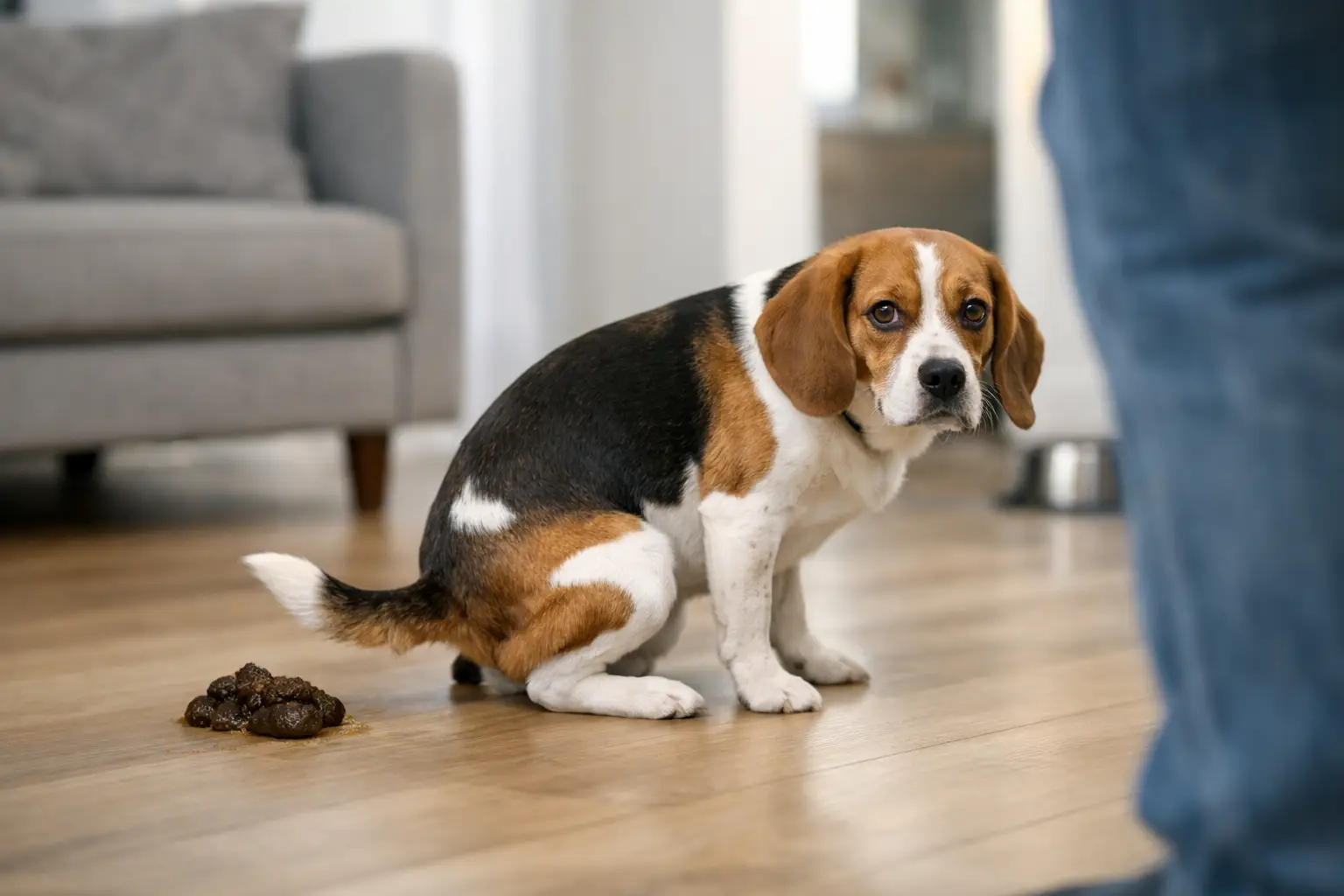
If your dog’s behavior changed suddenly, schedule a veterinary checkup. A dog who growls when touched may be protecting a sore body part. A dog who starts having accidents indoors may need medical support before a house-training refresher. Training works best when your dog feels physically comfortable.
Adjust the exercise, too. A young dog might enjoy repeated running drills or long walks, while an older dog may do better with gentle leash practice, scent games, short obedience sessions, and low-impact movement. You can build a well-trained dog without asking a senior dog to perform like a puppy.
Set a goal you can clearly see. Instead of aiming for “better behavior,” choose outcomes such as waiting calmly while you open the front door, walking on a loose leash for five minutes, settling on a bed during dinner, or coming when called from the backyard. Clear goals make training easier for both of you.
Teach One Simple Behavior at a Time
Owners often try to fix everything at once when an older dog has several bad habits. That creates frustration fast. Pick the issue causing the biggest daily problem, then teach the replacement behavior in small pieces.
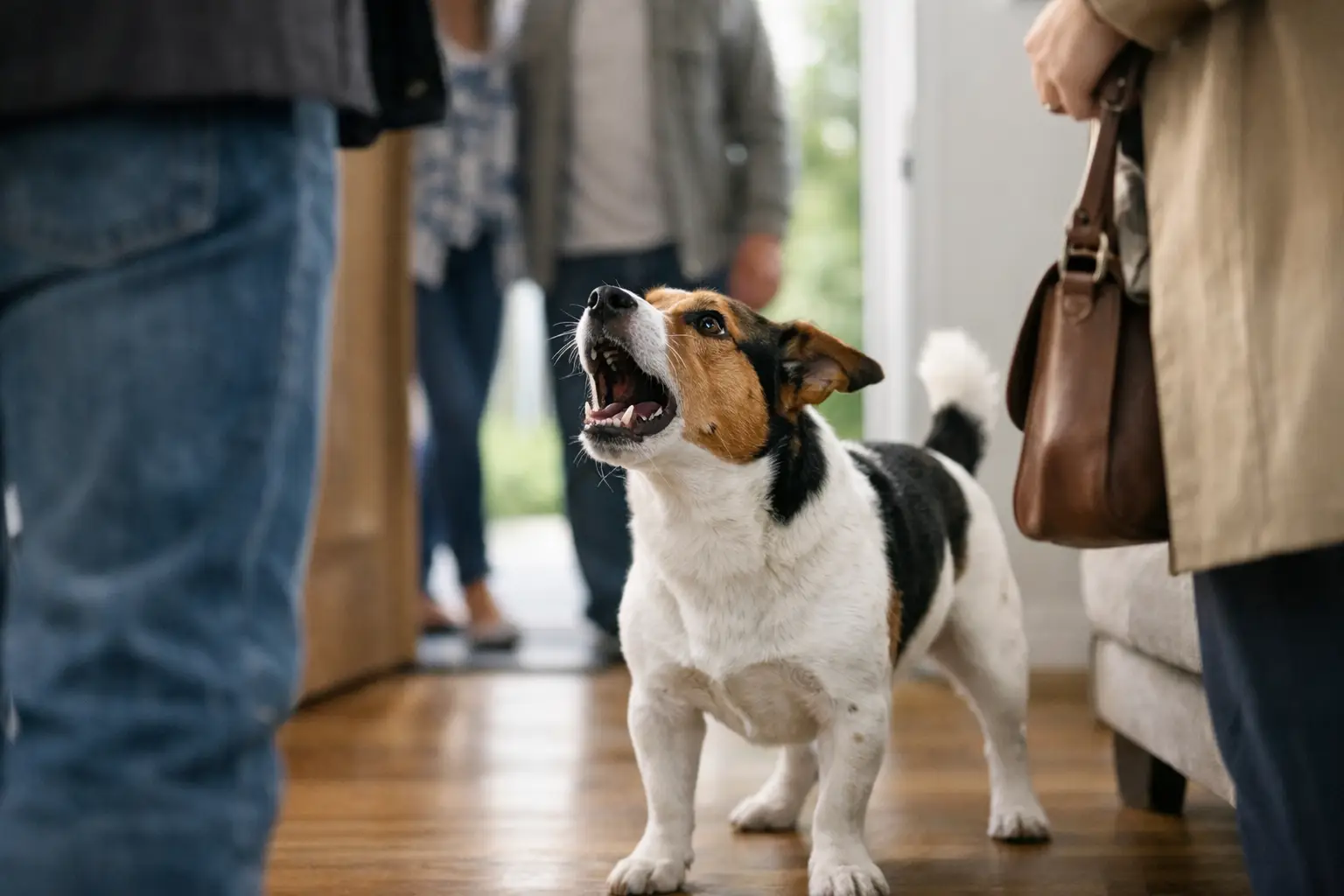
For example, if your dog rushes and barks at the front door, do not begin by expecting perfect silence when a delivery driver arrives. Start when the house is quiet. Teach your dog to go to a bed or mat, reward calm behavior there, and practice walking to that spot when you say the cue. Once that skill is solid, add mild distractions, such as a family member opening and closing the door.
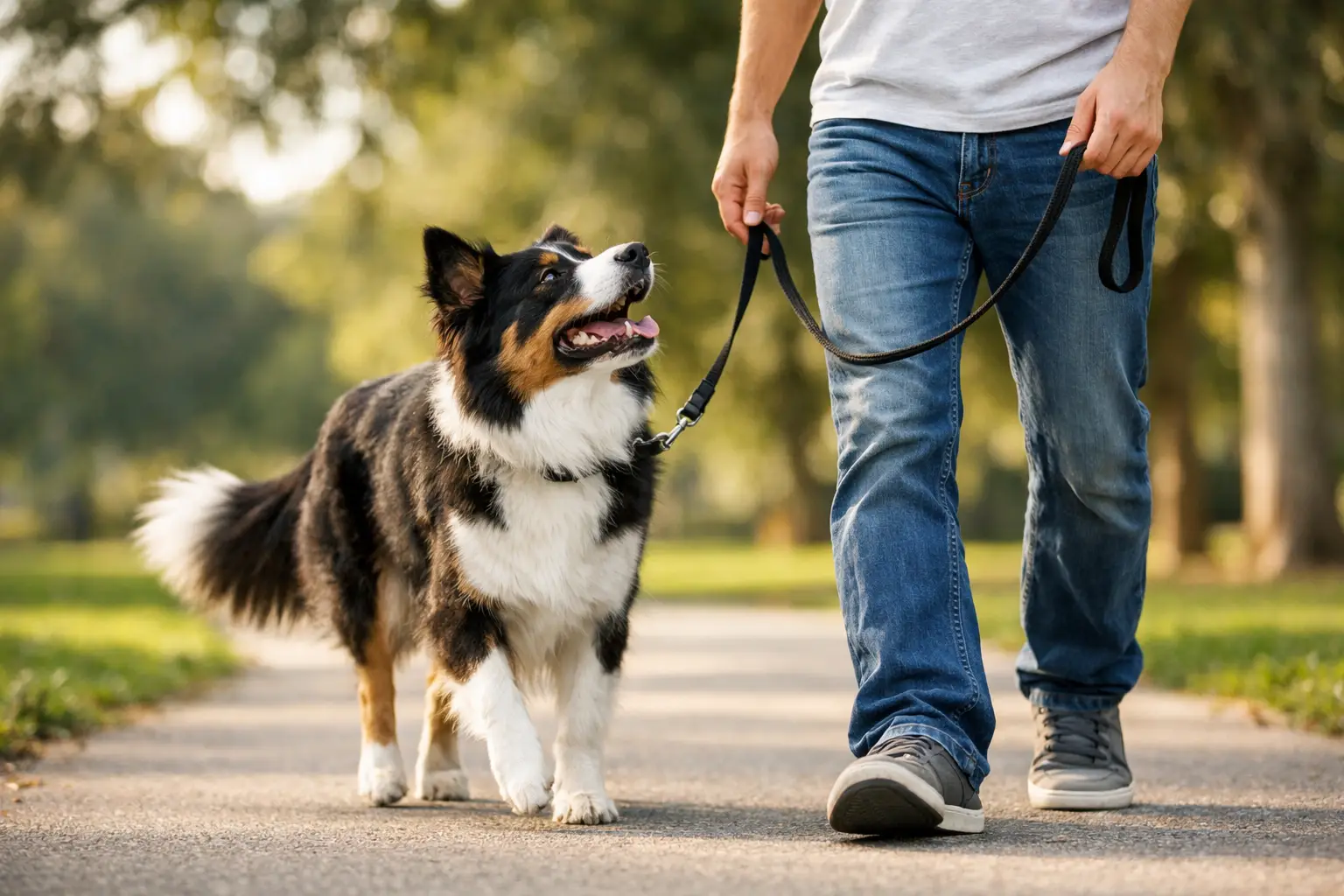
If your dog pulls on walks, begin in a low-distraction area. Reward your dog for being beside you or for turning back toward you when the leash tightens. Do not let pulling be the thing that gets your dog to every interesting destination. The rule needs to be simple: a loose leash moves forward, and a tight leash pauses progress.
The same approach works for jumping, counter surfing, barking, and poor recall. Decide what you want your dog to do instead. Then make that behavior easy to practice and worth repeating.
Keep Sessions Short and Rewarding
Older dogs do not need marathon training sessions. Five focused minutes can accomplish more than 30 distracted minutes. Aim for several short practices during normal life rather than one exhausting session at the end of the day.
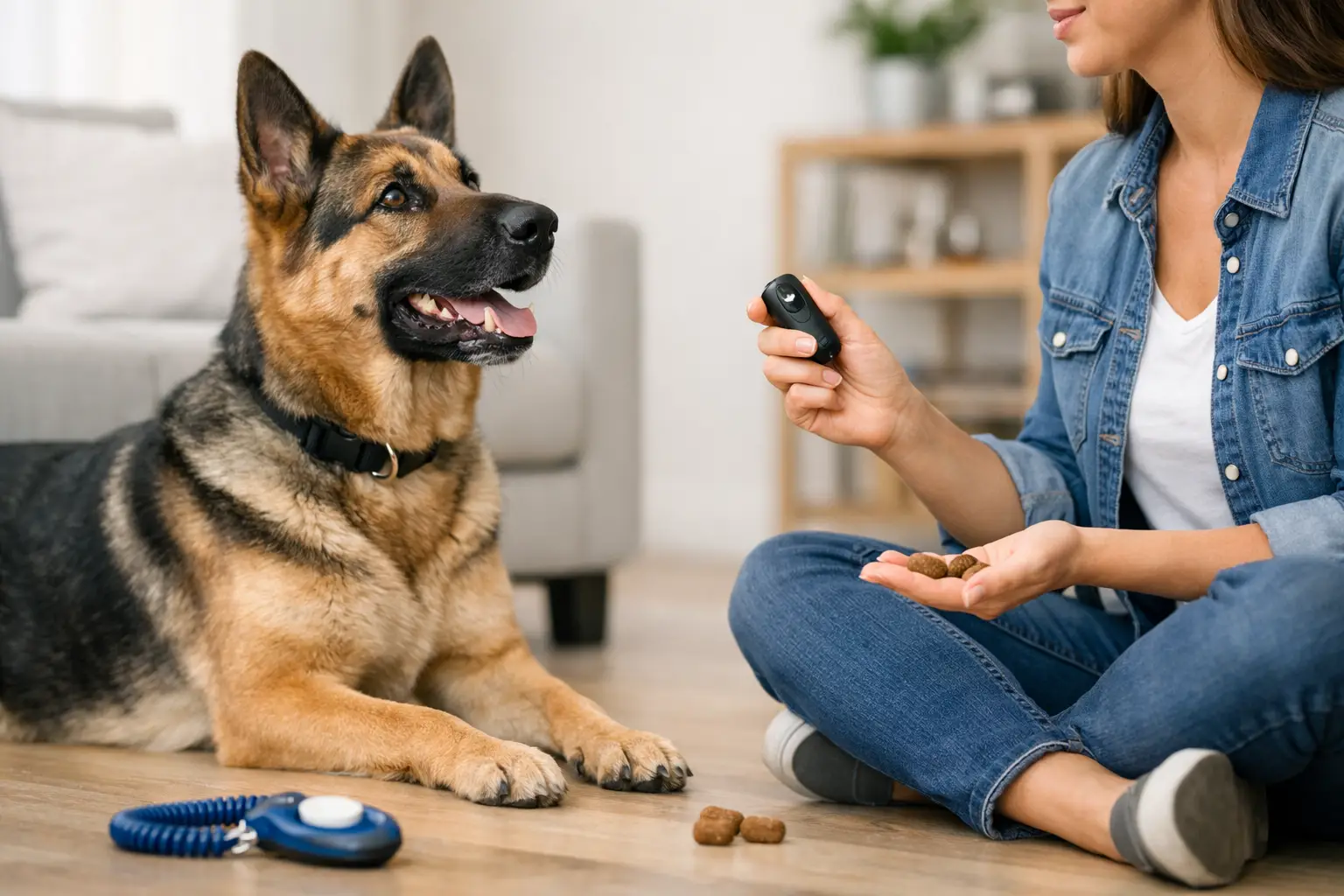
Use rewards your dog genuinely values. For some dogs, that is a small food treat. For others, it may be a favorite toy, praise, a chance to sniff, or access to the yard. The reward should arrive quickly after the correct choice so your dog understands what earned it.
Be specific with your timing. Say the cue once, wait for the behavior, and reward it immediately. Repeating “sit, sit, sit” teaches many dogs that the first few words do not matter. Clear communication builds faster obedience.
As your dog improves, do not rush to remove rewards completely. Real life is full of distractions, and even well-trained dogs deserve to be reinforced for making good choices. You can gradually make rewards less predictable while continuing to praise and reward excellent responses.
Make the Right Choice Easier Than the Old Habit
Management is not cheating. It is how you stop an unwanted behavior from getting stronger while training the new one.
If your dog barks at people passing the window, block access to that window during times you cannot supervise. If your dog steals food from counters, keep food put away and use a leash or gate while you teach a place command. If your dog raids the trash, secure the trash can. Every time the old habit succeeds, your training gets harder.
This is especially helpful with behaviors that have become automatic. Your dog is not trying to make your life difficult. He is doing what has worked before. Change the setup, show him a better option, and reward that option consistently.
Add Distractions Slowly
A dog who listens in the kitchen may not immediately listen at the park. That is normal. Dogs do not automatically apply a new skill to every place, person, and situation.
Build reliability in stages. Practice at home first, then in the yard, then on a quiet sidewalk, and finally around bigger distractions. If your dog stops responding, the environment is probably too difficult for the current stage. Move back to an easier setting, reward success, and build up again.
This matters even more for recall and reactivity. Do not test your dog’s recall off leash in an unsafe area before the skill is ready. Do not force a fearful or reactive dog close to other dogs or strangers to “get used to it.” Create enough distance for your dog to stay under control and reward calm attention to you.
For aggression, bite risk, or severe fear, prioritize safety. Prevent situations where someone could get hurt, and get qualified professional help for a plan tailored to your dog. Training can help, but serious behavior problems should not be handled through guesswork.
Consistency Matters More Than Your Dog’s Age
Older dogs can learn quickly when everyone in the home follows the same rules. They become confused when one person allows jumping, another scolds it, and a third rewards it with attention. Decide what behavior is allowed, what cue you will use, and how each person will respond.
Keep your expectations fair. A 12-year-old dog with stiff joints may take longer to lie down or may need a different exercise than a younger dog. That is not failure. The goal is a dog who can comfortably succeed in everyday life.
Track small wins. Maybe your dog barks for 30 seconds instead of 10 minutes. Maybe she checks in with you twice on a walk instead of pulling nonstop. Those changes show the new habit is taking root. Build on them.
Your dog does not need a perfect past to have better behavior now. Start with one clear goal today, practice it in short sessions, and give your dog plenty of reasons to choose the right behavior. The next good choice can become the beginning of a completely different routine.
Learn how to teach loose leash walking with simple, proven steps that stop pulling, build focus, and make everyday walks calmer and safer for you today.