Helping You Raise a Calm, Happy & Well-Behaved Dog
Why Is My Dog Leash Reactive? What to Do
Sara Michael,
Sharing is caring 😉
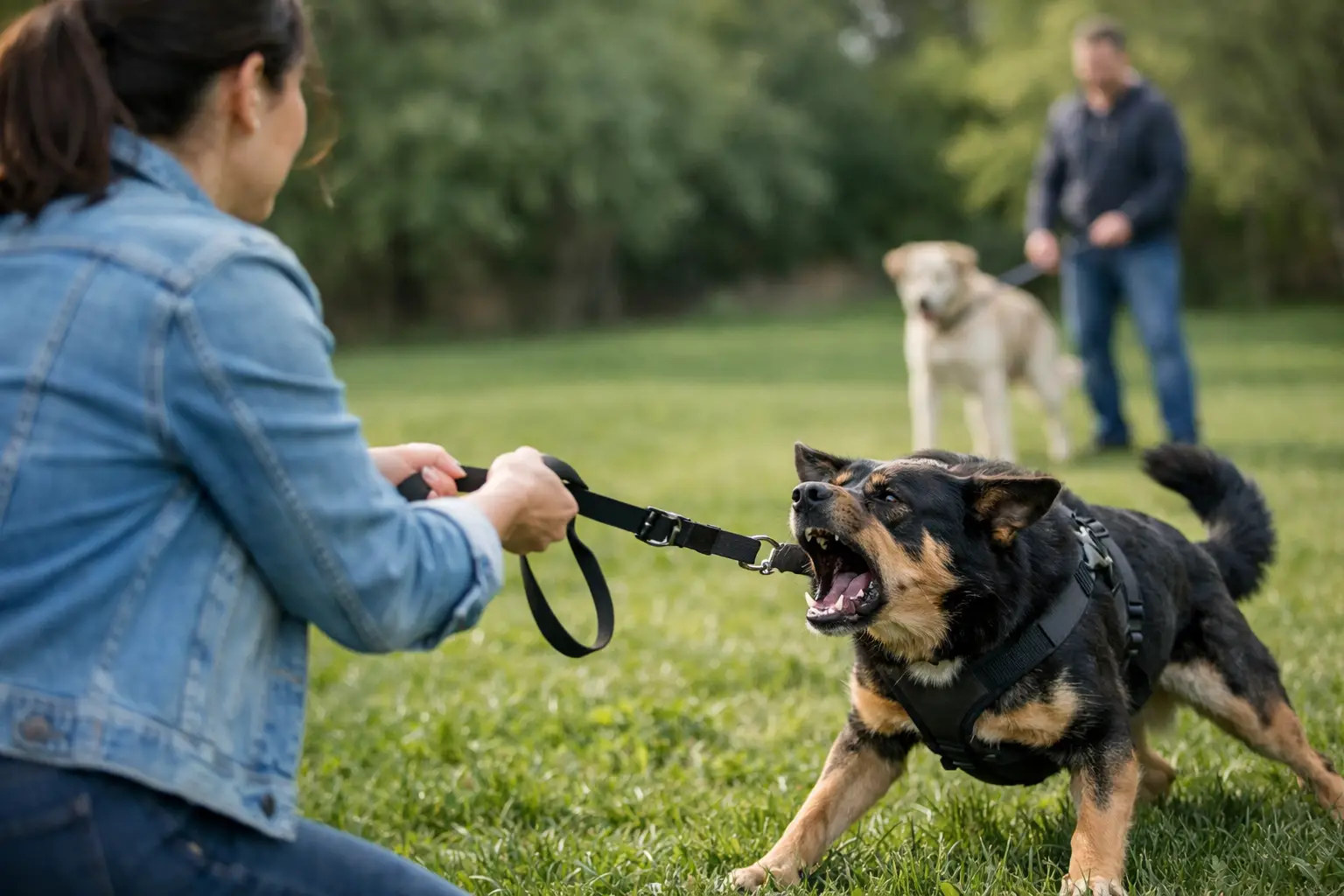
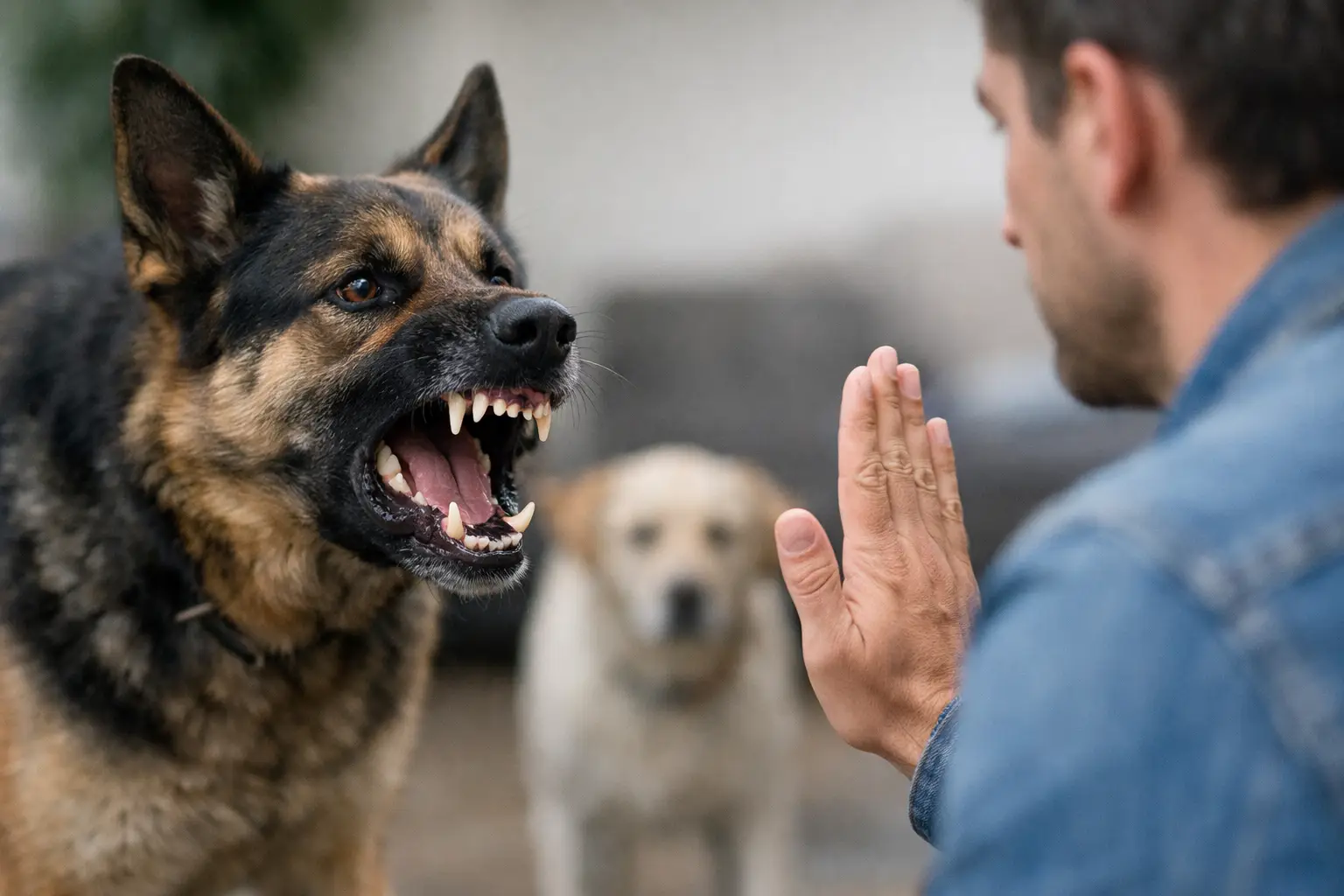
The moment another dog appears, your relaxed walk can turn into barking, lunging, spinning, or a dog that seems impossible to hold. If you are asking, “why is my dog leash reactive,” the short answer is that your dog is having a big emotional response while restrained by a leash. The useful answer is that this behavior can be changed when you stop rehearsing it and start training at a distance where your dog can think.
Leash reactivity is common, frustrating, and embarrassing. It does not automatically mean your dog is “bad,” dominant, or trying to attack every dog on the block. But it does mean your current walking routine is giving your dog more practice reacting than practicing calm behavior. That is the part you can change.
A leash removes your dog’s ability to move naturally. Off leash, a dog can create space, curve away, sniff, freeze, or walk off if another dog feels uncomfortable. On a narrow sidewalk, attached to a six-foot leash, your dog may feel trapped. Barking and lunging can become the fastest way to make the other dog disappear.
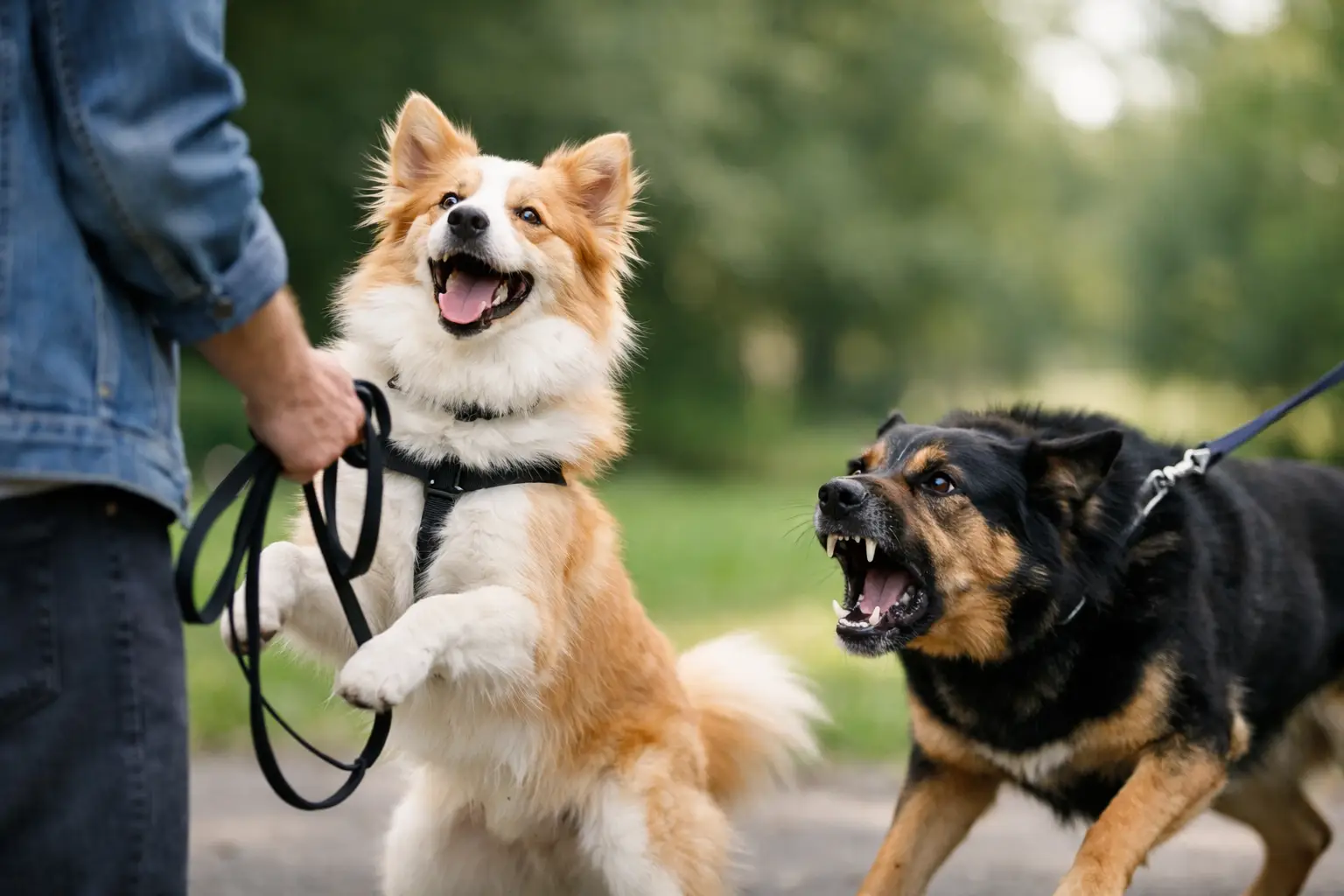
For some dogs, the reaction is rooted in fear or uncertainty. They may have had a bad experience, missed early socialization, or simply be naturally cautious. For others, it is frustration. A social, high-energy dog sees another dog, wants to get there immediately, hits the end of the leash, and explodes when access is denied.
The behavior can look nearly identical from the outside, which is why guessing based on labels is not enough. Watch what happens before the outburst. A fearful dog often stiffens, stares, lowers its body, or tries to retreat. A frustrated greeter may lean forward, whine, pull hard, and look eager until the leash stops them. Both dogs need better handling and structured training, but their progress depends on working below their emotional limit.
Reactivity can also grow because it works. Your dog barks at a passing dog. The other dog keeps walking. Your dog learns, “That worked. Barking made the problem go away.” Every successful rehearsal makes the next reaction easier and faster.
Common Triggers That Make Walks Harder
Dogs are rarely reactive in every situation. Your dog may handle a dog across the street but explode when one turns a corner five feet away. They may be calmer in an open park and worse on a tight path, in an apartment hallway, or near the front window.
Distance is usually the biggest factor. The closer the trigger, the harder it is for your dog to stay calm. Movement matters too. Running dogs, skateboards, bikes, people carrying umbrellas, and dogs staring directly can all increase pressure. So can a tight leash, a rushed handler, or repeated walks through busy areas when your dog is already overexcited.
Your dog’s state before the walk matters as well. A dog that has spent an hour barking out the window, pacing during visitors, or reacting at the fence starts the walk with less patience available. This is called trigger stacking: several smaller stressors add up until one ordinary sight causes a major reaction.
Pain and physical discomfort can lower a dog’s tolerance, especially if reactivity appeared suddenly or has become much worse. If your dog is unusually irritable, reluctant to walk, limping, or sensitive to touch, talk with your veterinarian before assuming the problem is training alone.
What Leash Reactivity Is Not
It is tempting to call every barking dog aggressive. That label can make owners feel hopeless and can lead to bad decisions, such as forcing greetings or punishing warning signs. Reactivity is a behavior pattern, not a complete diagnosis of your dog’s personality.
Some leash-reactive dogs can play well with familiar dogs. Some do not enjoy unfamiliar dogs at all, and that is okay. The goal is not to make every dog social. The goal is reliable control and calm, safe behavior around everyday triggers.
Likewise, do not expect a leash correction to fix the underlying issue. Jerking, yelling, or using pain to stop the bark may suppress the noise in the moment, but it can make another dog predict discomfort. A worried dog can become more worried. A frustrated dog can become more aroused. You need your dog to learn a better response, not just fear the consequence of reacting.
The First Step: Stop Practicing the Explosion
Training starts with management. This is not avoiding the problem forever. It is creating enough successful repetitions that your dog can learn something new.
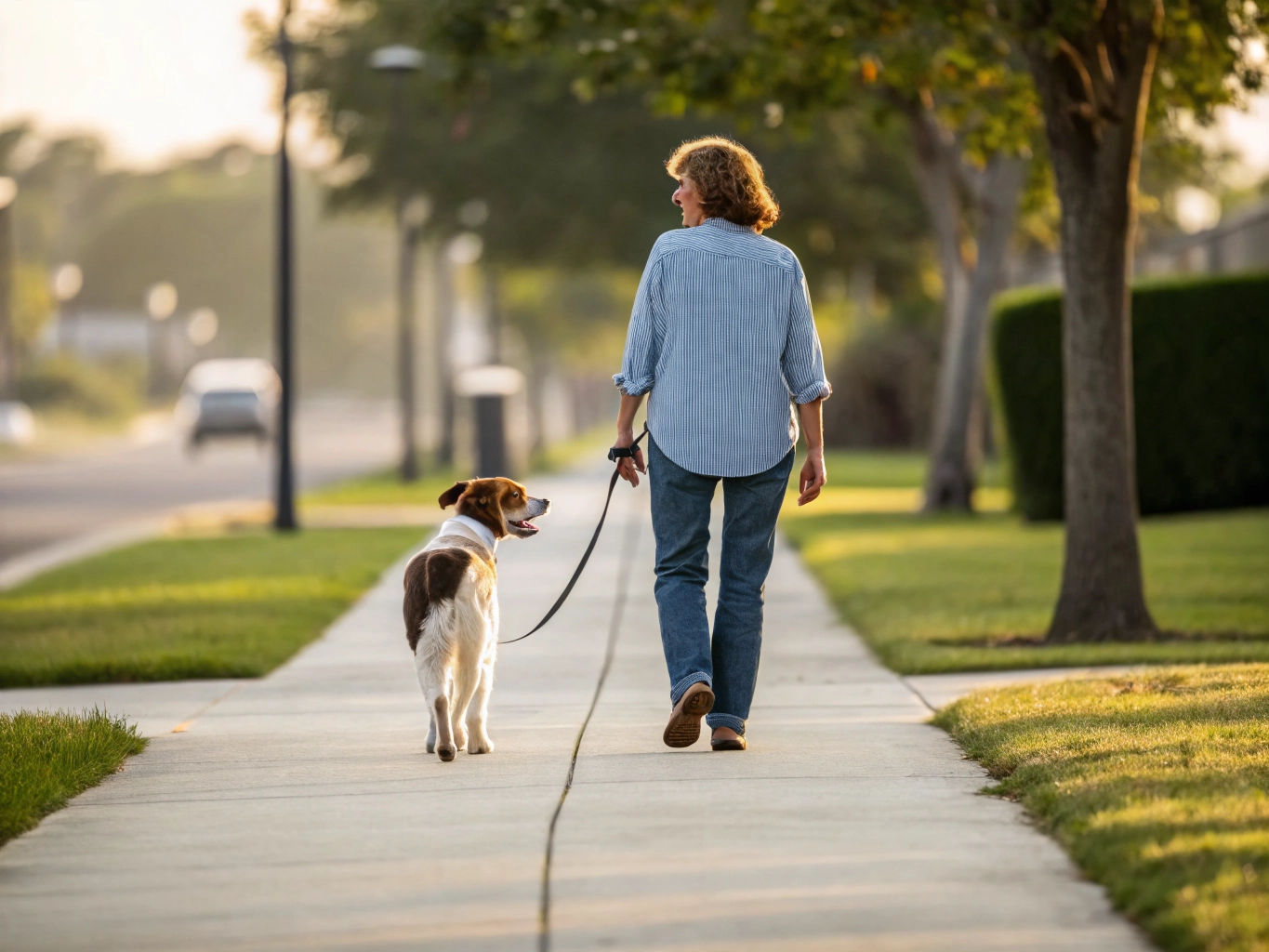
Choose quieter routes and walk at lower-traffic times. Cross the street early, turn into a driveway, make a U-turn, or step behind a parked car when you spot a trigger. There is no prize for staying close enough to prove your dog cannot handle it. Creating distance is smart handling.
Use secure equipment that you can control without causing pain. A well-fitted harness and a standard leash are often a practical starting point. Avoid retractable leashes for reactive dogs because they make distance, timing, and safety harder to manage. If your dog has a bite history or you are concerned they may bite, work with a qualified professional on a careful safety plan, including muzzle conditioning when appropriate.
Your job on walks is to notice triggers before your dog does. Watch ahead, scan around corners, and keep enough space for your dog to remain responsive. Once your dog is already barking and lunging, the learning window is mostly closed. Get out of the situation calmly instead of trying to win an argument at the end of the leash.
Train a New Response at a Safe Distance
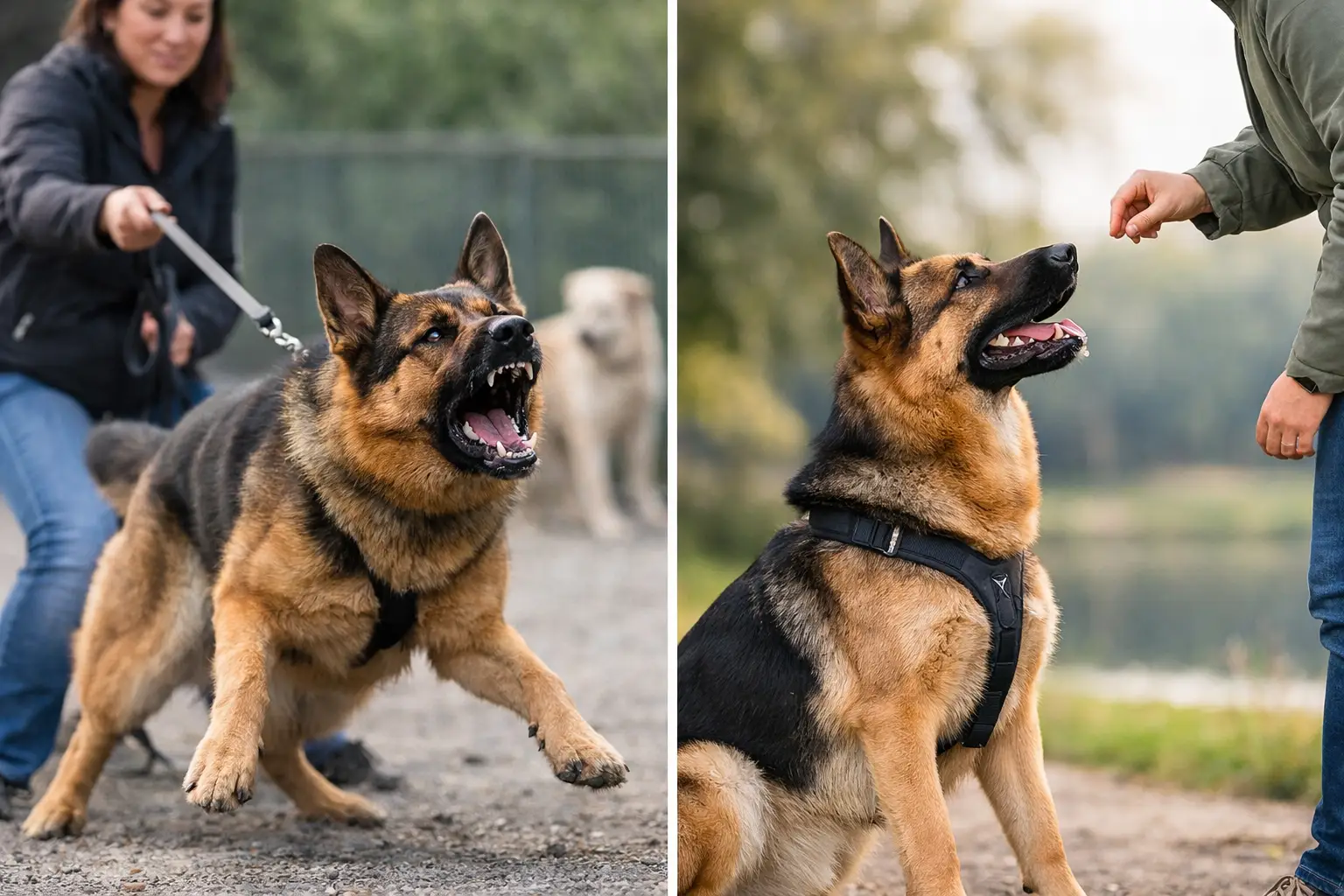
The most effective training happens far enough from the trigger that your dog can see it without exploding. This is your working distance. It may be 20 feet, 50 feet, or across a parking lot at first. That is not failure. It is the correct place to begin.
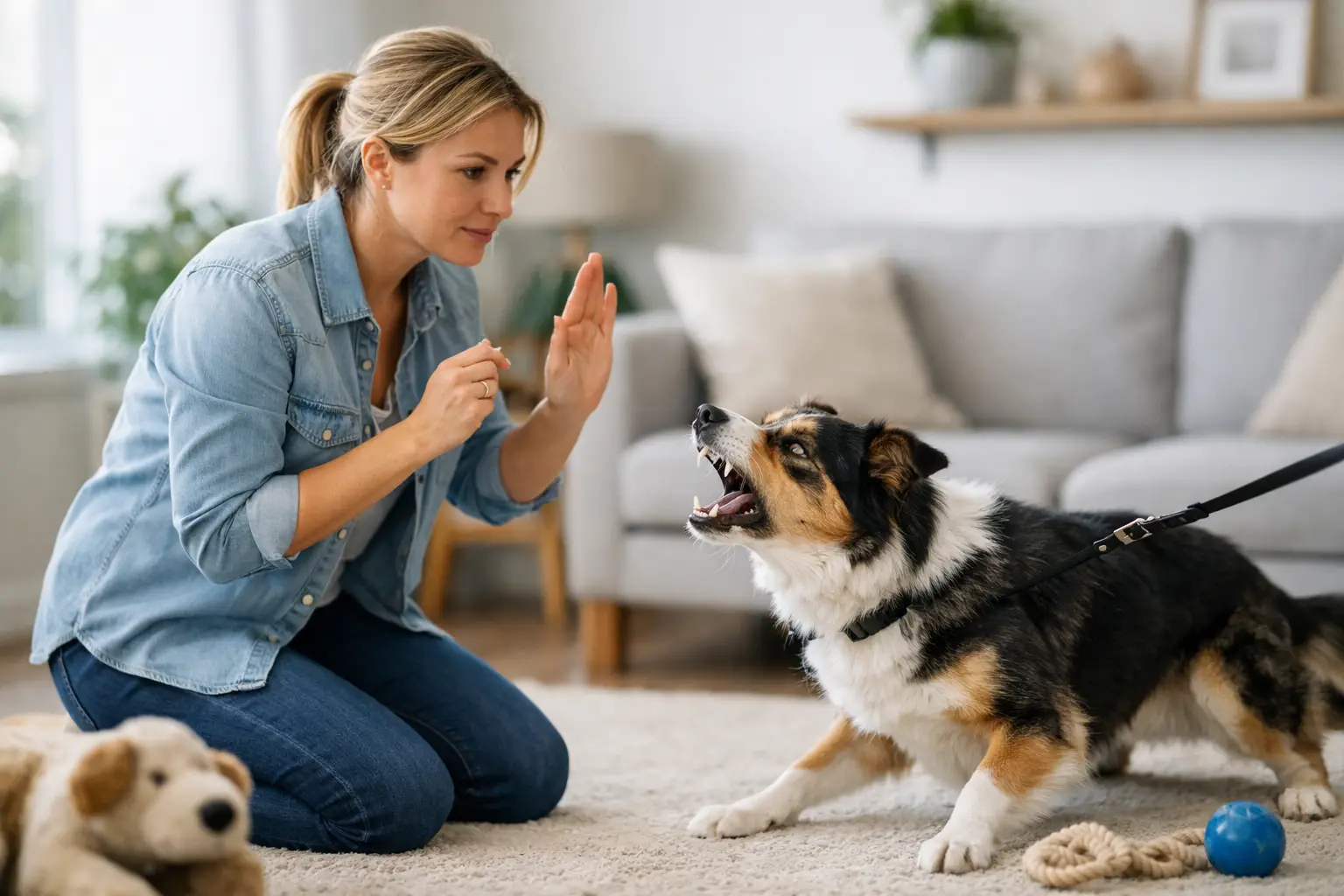
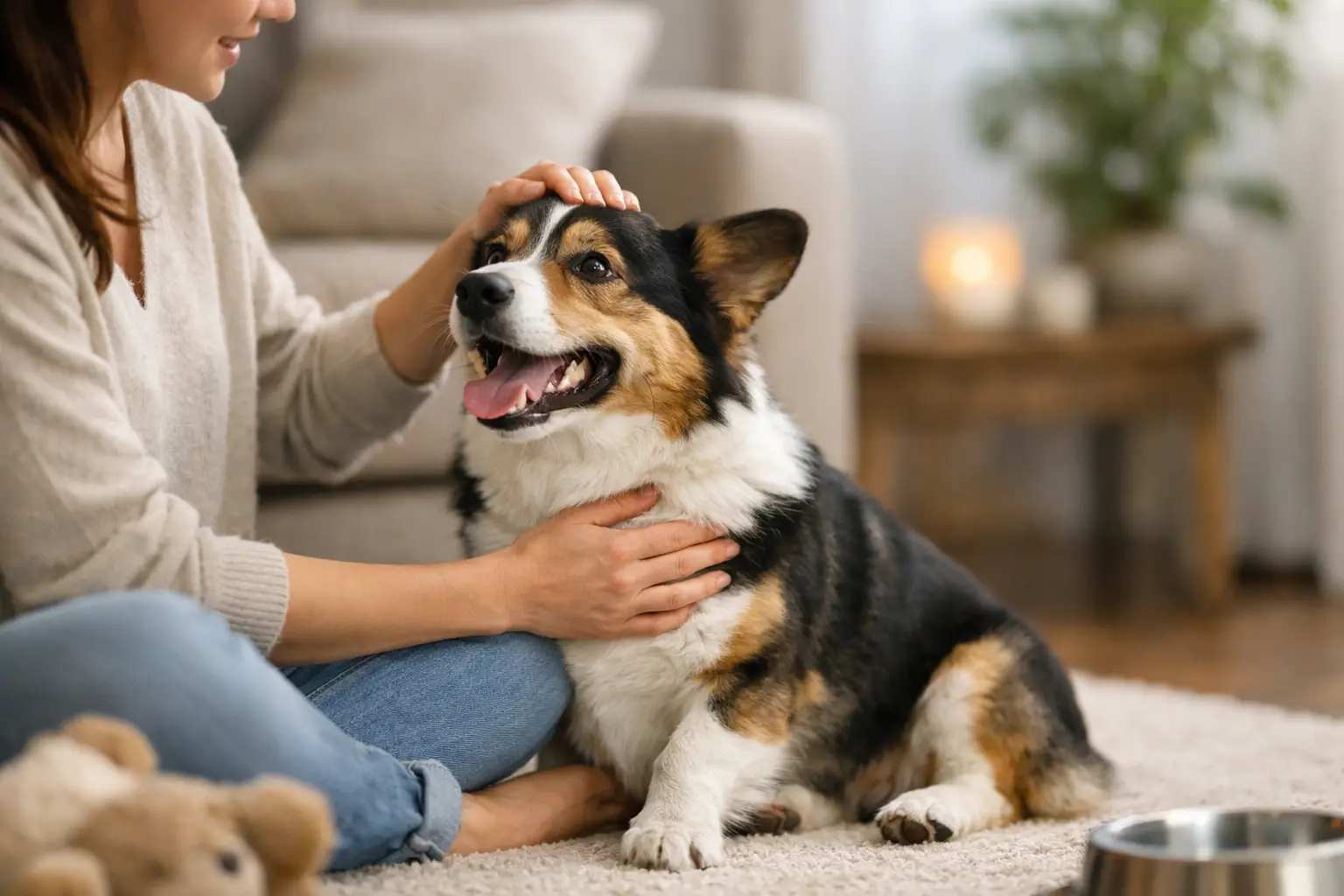
When your dog notices another dog and stays under control, mark that calm moment with a clear word such as “yes,” then give a high-value treat. You are teaching a simple pattern: seeing a dog predicts good things and checking in with you pays.
At first, reward quickly. Your dog looks at the other dog, then looks back at you? Reward. Your dog sees the trigger and keeps walking with a loose leash? Reward. Your dog turns their head toward you when you say their name? Reward. You are building the habit you want before asking for more difficult obedience.
Keep Sessions Short and Winnable
Do not spend an hour searching for dogs to train around. A few calm, controlled repetitions are more valuable than one overwhelming encounter. End after a success when possible.
If your dog stops taking food, cannot respond to their name, stares hard, closes their mouth, or pulls forward with a stiff body, you are too close or the environment is too difficult. Move away. Training is not about forcing your dog to endure a trigger. It is about changing their response through repeated success.
Build Useful Skills Away From Triggers
Your dog will learn faster outside if basic skills are already familiar at home and in quiet places. Practice name response, hand target, a cheerful U-turn, loose-leash walking, and a simple “find it” treat scatter. These are not tricks. They give you practical ways to redirect your dog before a reaction starts.
A U-turn is especially valuable. Teach it indoors first: say your cue, turn with energy, and reward your dog for following. Then practice in low-distraction areas. On a real walk, it becomes your exit when a dog appears too close.
Progress Without Rushing
As your dog succeeds, gradually work at slightly closer distances or around mildly harder triggers. Change only one piece at a time. If you move closer, do not also choose a crowded sidewalk with several dogs. If you practice near a busier area, keep more distance.
Progress is rarely a straight line. Your dog may do well for several walks and then react after a surprise dog appears from behind a car. That does not erase the training. It tells you that the situation exceeded your dog’s current skill level.
Keep track of what your dog can handle: distance, type of trigger, location, and time of day. Patterns will show you where to train next and where management is still necessary. Consistency beats occasional intense training sessions.
When to Get Extra Help
Get professional support if your dog has bitten, attempted to bite, redirects onto the leash or handler, cannot recover after triggers, or makes walks feel unsafe. A skilled trainer can watch the details you may miss, set up controlled practice, and help you move forward without taking unnecessary risks.
You do not need to wait until the problem is severe. If you have tried random tips and your dog is still rehearsing the same behavior, a step-by-step system can replace guesswork with a clear plan. The right training should show you what to do before, during, and after a trigger appears.
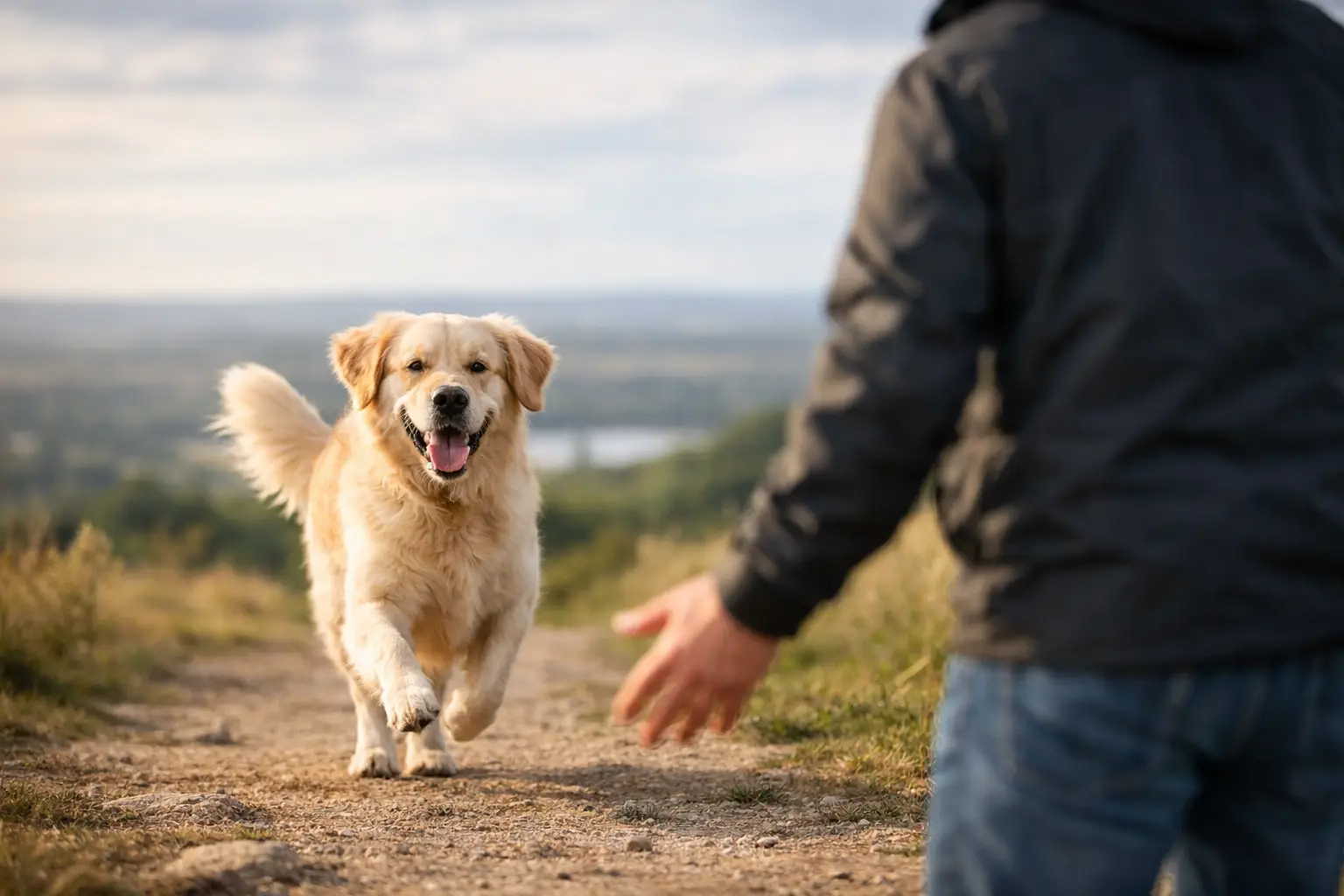
Your dog does not need to love every dog they see. A calmer walk begins when your dog learns that seeing a trigger is not an emergency, and you become the handler who can guide them safely through it.
Learn how to stop leash pulling with simple, proven training steps that help your dog walk calmly beside you without frustration or constant corrections.
This guide to off leash reliability shows you how to build a fast, safe recall with clear training, proofing, and smart real-world decisions every day.





Comment