Helping You Raise a Calm, Happy & Well-Behaved Dog
10 Best Treats for Dog Training
Sara Michael,
Sharing is caring 😉
Your dog was listening perfectly in the kitchen, then completely forgot their name outside. That usually is not stubbornness. It is often a reward problem. If you want the best treats for dog training, you need something your dog will work for when life gets distracting, exciting, or overwhelming.
A good training treat does one job better than anything else – it makes the right choice worth repeating. That sounds simple, but the wrong treat can slow training down fast. If it is too big, your dog fills up quickly. If it is dry and boring, your dog checks out. If it takes too long to chew, you lose momentum and timing.
The fix is not complicated. The best training treats are small, easy to eat, and valuable enough that your dog wants to earn the next one right away. Once you understand that, choosing treats gets a lot easier.
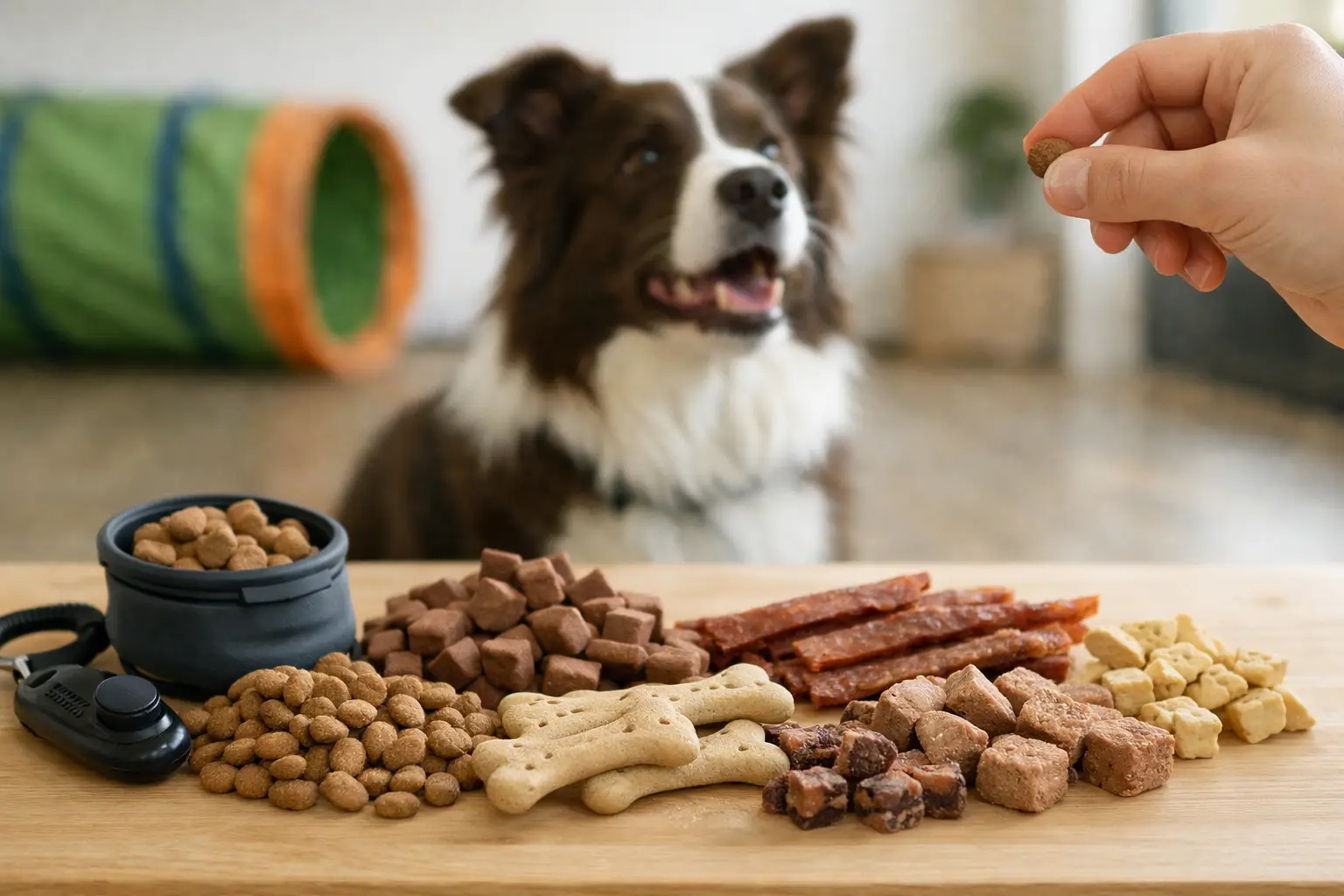
The best dog training treats are usually soft, tiny, and smelly. Soft matters because your dog can swallow them fast and get back to work. Tiny matters because training involves repetition, and repetition works best when your dog can earn a lot of rewards without getting full. Smell matters because dogs care much more about scent than packaging or price.
Value is the part many owners miss. Not every reward is equal to your dog. Kibble may work in a quiet room for an easy behavior your dog already knows. It usually will not beat a squirrel, a stranger, or another dog on a walk. For harder situations, you need higher-value treats.
There is also a trade-off. Super exciting treats can create laser focus, but they can also make some dogs frantic if you bring them out too early or use them without structure. If your dog starts mugging your hand, jumping, or losing self-control, the treat may be too exciting for that moment. In that case, the answer is not to stop rewarding. It is to pair a slightly calmer treat with cleaner timing and easier reps.
10 best treats for dog training
There is no single perfect choice for every dog. The best option depends on your dog’s preferences, the training environment, and how hard the task is. These are the most useful categories for real-world training.
1. Soft commercial training treats
These are the easiest place to start. They are made to be small, easy to tear, and quick to eat. For most pet owners, they are convenient enough to keep in a pouch and use every day.
Look for treats that stay soft instead of crumbling into dust. If you have a small dog or a puppy, break them into even smaller pieces than the bag suggests. Most dogs do not need a full treat. They just need a quick, clear payoff.
2. Freeze-dried meat treats
Freeze-dried liver, salmon, chicken, and beef can be extremely motivating. These treats are often a step up in value for dogs that ignore basic biscuits.
The downside is texture. Some freeze-dried treats are crunchy or flaky, which can slow down rapid-fire training. They can still work well for recalls, harder obedience reps, or moments when you need stronger motivation.
3. Small pieces of cooked chicken
Cooked chicken is one of the most reliable high-value rewards you can use. It is soft, smells strong enough for most dogs, and works especially well around distractions.
This is a smart choice for recall training, leash work, and behavior work where you need your dog fully engaged. The catch is convenience. You need to prep it, store it safely, and use it before it spoils.
4. Turkey or lean beef bits
If your dog is not impressed by chicken, turkey or lean beef may get a much better response. Some dogs have clear preferences, and it pays to notice them.
Keep portions tiny. You are not feeding a meal. You are creating a fast reward loop that helps your dog understand exactly which behavior earned the treat.
5. String cheese or cheese cubes
Cheese is a classic high-value reward because it is soft, easy to cut, and very appealing to many dogs. For difficult situations, it can be a strong backup when regular treats stop working.
Still, cheese is richer than many owners realize. A little goes a long way, especially for small dogs or dogs with sensitive stomachs. Think of it as a powerful tool, not your default reward for every session.
6. Dog-safe deli meat pieces
Plain turkey or ham can work well if you cut it into tiny pieces. This is another soft, high-value option that helps with outdoor training and new environments.
Watch the ingredients and salt content. Simpler is better. If the meat is heavily seasoned, it is not the right choice for regular use.
7. Food rolls or training loaf products
These are underrated. Many food roll products can be sliced into very small cubes, and they tend to stay soft in a treat pouch. That makes them useful for longer sessions when you need consistency.
For owners who want something easier than cooking chicken every week, this can be a practical middle ground.
8. Your dog’s kibble
Kibble is not exciting, but that does not mean it is useless. For easy practice at home, kibble can work just fine, especially with food-motivated dogs. It is also helpful if you want to train without adding many extra calories.
Just be honest about when it stops working. If your dog can do sit in the living room for kibble but tunes you out in the yard, that is normal. Increase the reward value when the difficulty goes up.
9. Wet dog food on a spoon or squeeze pouch
For some dogs, wet food is incredibly motivating. It can be ideal for puppies, small dogs, or dogs that need very fast licking rewards during close-position work.
This option is messier, so it is not for every owner. But if your dog is picky or has trouble chewing treats quickly, it can be surprisingly effective.
10. Homemade training treats
Homemade treats can be a great option if your dog has food sensitivities or if you want tighter control over ingredients. Soft baked treats made with simple proteins often work better than hard crunchy ones.
Do not overcomplicate this. If you make treats at home, keep them small, soft, and easy to handle. Fancy recipes do not train the dog better.
How to choose the best dog training treats for your dog
Start by matching the treat to the difficulty of the job. For easy behaviors in a quiet space, low- to medium-value rewards are usually enough. For outdoor distractions, new skills, recall, leash reactivity work, or behavior modification, raise the value.
Your dog will tell you a lot if you pay attention. If they spit treats out, chew forever, or wander off between reps, the reward is too weak or too inconvenient. If they stay engaged, recover quickly, and eagerly offer behavior, you are close to the right level.
Texture matters more than many people think. Hard biscuits can be fine as a casual snack, but they are usually not the best treats for dog training because they interrupt flow. Training works better when reward delivery is fast and timing is clean.
Size matters too. Most treats should be pea-sized or smaller. For tiny breeds, even that may be too big. Dogs do not count ounces. They count repetitions.
Common mistakes that make treats work worse
One common mistake is using the same treat for every situation. Your dog should not earn the exact same reward for ignoring a squirrel as they do for an easy sit in the kitchen. Better performance should often earn better pay.
Another mistake is overfeeding during training. This usually happens because treats are too large, not because training itself uses too many rewards. Cut treats smaller than you think you need. You can also reduce part of your dog’s meal slightly if you know you will do a longer session that day.
Timing is another big one. Even the best treat loses power if it comes too late. Reward quickly so your dog connects the food with the behavior you wanted, not whatever they did two seconds later.
Finally, do not let the treat become a bribe. Show the dog how to earn it rather than waving it around to beg for attention. Reward after the behavior, and your dog will learn faster and more reliably.
Best treats for dog training puppies vs adult dogs
Puppies often do best with very soft, tiny rewards they can eat quickly. They have short attention spans, so the pace of training matters. If each reward takes too long to chew, you lose momentum fast.
Adult dogs can handle a wider variety, but the same principles still apply. Soft, small, high-value rewards usually produce the cleanest sessions. If you are working through behavior issues with an older dog, reward quality becomes even more important because you are competing with habits, distractions, and emotional responses.
If you feel stuck, simplify the session before assuming your dog is not food motivated. In our experience at Optimist Dog, many dogs are not unmotivated – they are underpaid, overfaced, or confused.
The right treat will not fix bad timing or a messy training plan. But it can make good training click much faster. Pick rewards your dog truly cares about, keep them small, and adjust the value to match the challenge. When you do that, progress usually stops feeling random and starts feeling repeatable.
Does your dog ignore you when you call its name? You call… nothing.Or worse—it runs the other way. This is one of the most frustrating (and dangerous) problems dog owners face. The good news? 👉 You can fix it👉 And build a reliable recall In this guide, you’ll learn how…