
A lot of owners search for reactive dog training before and after because they want proof that change is possible. That makes sense. When your dog is barking, lunging, growling, or melting down on walks, you do not want vague advice. You want to know what improvement actually looks like, how long it takes, and whether your dog can become easier to live with.
The good news is that reactive dogs can improve dramatically. The honest news is that the “after” picture usually does not mean your dog turns into a robot who ignores everything forever. Real progress looks calmer, faster recovery, better choices, and more trust in you. For most owners, that is the win that changes daily life.
What reactive dog training before and after really means
The biggest mistake owners make is expecting a personality transplant. Reactivity is often an overreaction to triggers like dogs, people, cars, bikes, noises, or movement. Your dog may be acting from fear, frustration, over-arousal, or a mix of all three. Training does not erase your dog’s temperament overnight. It changes the pattern.
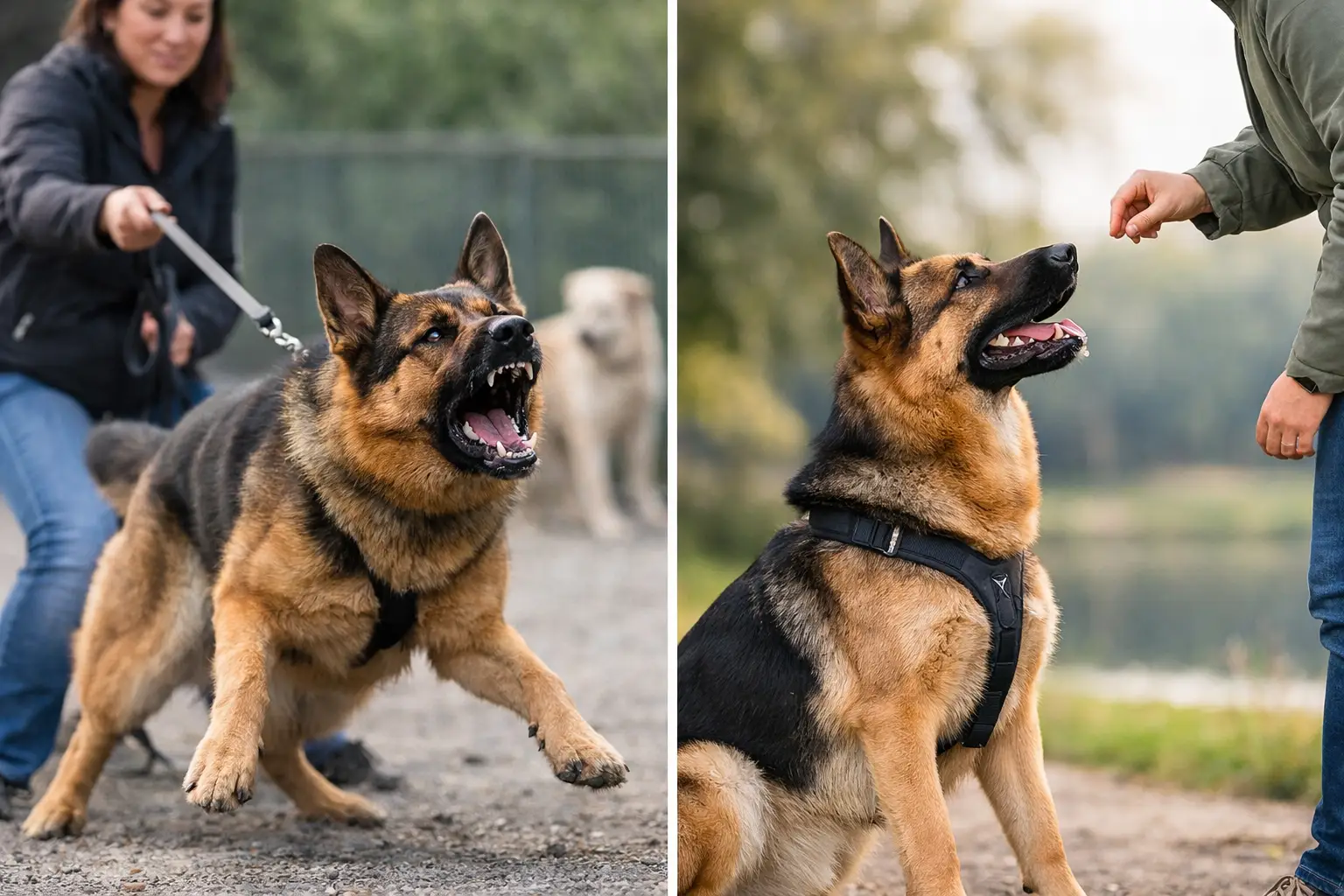
Before training, your dog may lock onto a trigger from a distance, stiffen, bark, lunge, ignore food, and stay wound up long after the moment has passed. After solid training, the same dog may notice the trigger, stay under threshold longer, check in with you, respond to cues, and recover faster if they do get upset.
That difference matters more than flashy before-and-after claims. A dog who can walk past another dog at 20 feet instead of exploding at 80 feet is making real progress. A dog who used to bark for five minutes but now settles in 20 seconds is making real progress. Those are not small wins. They are the building blocks of a normal life.
The “before” stage most owners are living with
If you have a reactive dog, the before stage is exhausting. Walks feel like a trap. You scan every sidewalk, cross the street constantly, and come home frustrated. Guests are stressful. Windows become bark zones. You start avoiding situations because you do not trust what will happen.
Many owners also blame themselves. They think they caused the problem, missed some magic socialization window, or failed because basic obedience did not fix it. In reality, reactivity is common, and it is rarely solved by telling a dog to “sit” louder. If your dog is over threshold, they are not in a learning state. That is why random tips often fail.
The before stage also tends to include inconsistency. One day your dog seems fine. The next day they react to the same trigger at a greater distance. That does not mean training is pointless. It usually means arousal, environment, trigger intensity, and your timing all matter. Reactive behavior is rarely linear.
What the “after” stage can realistically look like
The best reactive dog training before and after results are practical, not perfect. Your dog may still dislike certain triggers. They may still need management in crowded places. But daily life gets lighter.
After training, walks usually feel more predictable. You know your dog’s thresholds better. Your dog knows what to do when they see something hard. Instead of dragging you toward trouble, they start looking to you for direction. That shift alone changes everything.
At home, you may see less barking at windows, less frantic energy around visitors, and fewer surprise blowups. Outside, you may be able to pass people at a comfortable distance, move around the neighborhood with less tension, or work through a trigger without a full meltdown.
Some dogs progress to the point where most people would never guess they used to be highly reactive. Others remain dogs who need smart handling. Both outcomes can be successful. It depends on genetics, history, trigger type, and how consistently the training is applied.
Why some reactive dogs improve fast and others do not
Owners understandably want a timeline. The truth is, it depends.
A mildly reactive adolescent dog with a short history of barking on leash can improve faster than an adult dog who has rehearsed lunging for years. A dog reacting from frustration may progress differently than a dog reacting from fear. Medical issues, breed traits, household stress, and exercise balance can all affect outcomes.
Your own skill matters too. Timing, consistency, and setup quality make a huge difference. If every walk keeps pushing your dog over threshold, progress slows. If you control distance, reward the right choices, and prevent repeated explosions, change comes faster.
This is why the best training plans are structured. You do not need guesswork. You need a system that shows you what to do before the reaction, during the reaction, and after the reaction.
How to create a strong before-and-after change
Start by dropping the idea that your dog needs more exposure to “get over it.” Flooding a reactive dog with too much too soon often makes the problem worse. Progress starts with controlled exposure at a level your dog can handle.
Distance is your first tool. If your dog explodes at 30 feet, training at 10 feet is too hard. Work at the distance where your dog can notice the trigger without losing their mind. That is where learning happens.
Next, teach replacement behaviors before you need them. A reactive dog should know how to check in, follow your movement, turn away with you, and settle into simple cues under low pressure. These skills create something useful to do when a trigger appears.
Reinforcement matters. If your dog makes a better choice, pay for it. That can mean food, space, praise, movement, or whatever your dog values in that moment. The goal is simple. You are teaching your dog that calm, connected behavior works.
Management matters just as much as training. If your dog rehearses barking and lunging every day, that behavior stays strong. Use routes, timing, barriers, and distance to reduce bad repetitions while you build better ones.
If your dog does react, do not treat it like failure. Move away, help them recover, and make the next rep easier. Reactive training is not about proving your dog can handle hard situations. It is about building success often enough that their default response starts to change.
Signs your reactive dog is actually improving
Owners sometimes miss progress because they are waiting for total calm. Look for smaller markers.
Your dog can disengage from a trigger faster. They recover more quickly after getting excited. They take food in situations where they used to refuse it. Their body stays looser. They can work at closer distances than before. They offer eye contact without being begged for it.
You may also notice changes in your own behavior. You feel less tense holding the leash. You stop bracing for disaster. You can make decisions earlier instead of reacting late. Good dog training changes the human side too.
This is one reason structured programs work better than random advice. They help you track what is improving, what still needs work, and what to adjust next. With a reactive dog, clarity is confidence.
Common mistakes that ruin the “after” result
One common mistake is moving too fast because the dog had one good session. A calm walk on Tuesday does not mean your dog is ready for the farmers market on Wednesday. Increase difficulty gradually.
Another mistake is focusing only on stopping barking instead of changing the whole pattern. If your dog is silent but still staring, stiff, and ready to explode, the issue is not solved. Calm behavior is more than quiet.
Owners also struggle when everyone in the house handles the dog differently. If one person rewards check-ins, another tightens the leash at every trigger, and someone else lets the dog practice chaos at the window, progress gets muddy.
Finally, many people quit right before the payoff. Reactive training often feels slow until it starts compounding. Then the dog who used to lose it at every passing dog suddenly starts checking in, turning away, and moving on. That change usually comes from repetition, not luck.
What success looks like for your dog
Your dog does not need to love every stranger, every dog, or every busy place. Success means they can function. It means your walks stop feeling like emergencies. It means you have a plan, your dog understands it, and both of you can handle real life with more control.
That is the real value behind reactive dog training before and after. Not a fake miracle. Not a perfect dog. A better daily life, built step by step, with visible progress you can actually feel.
If your dog is reactive right now, do not measure yourself against polished internet clips. Measure today against last month. If your dog can recover faster, stay calmer, and listen sooner, you are already moving in the right direction. Keep going. Small wins are how hard dogs become easier dogs.