Helping You Raise a Calm, Happy & Well-Behaved Dog
Why Is My Dog Growling? What It Means
Sara Michael,
Sharing is caring 😉
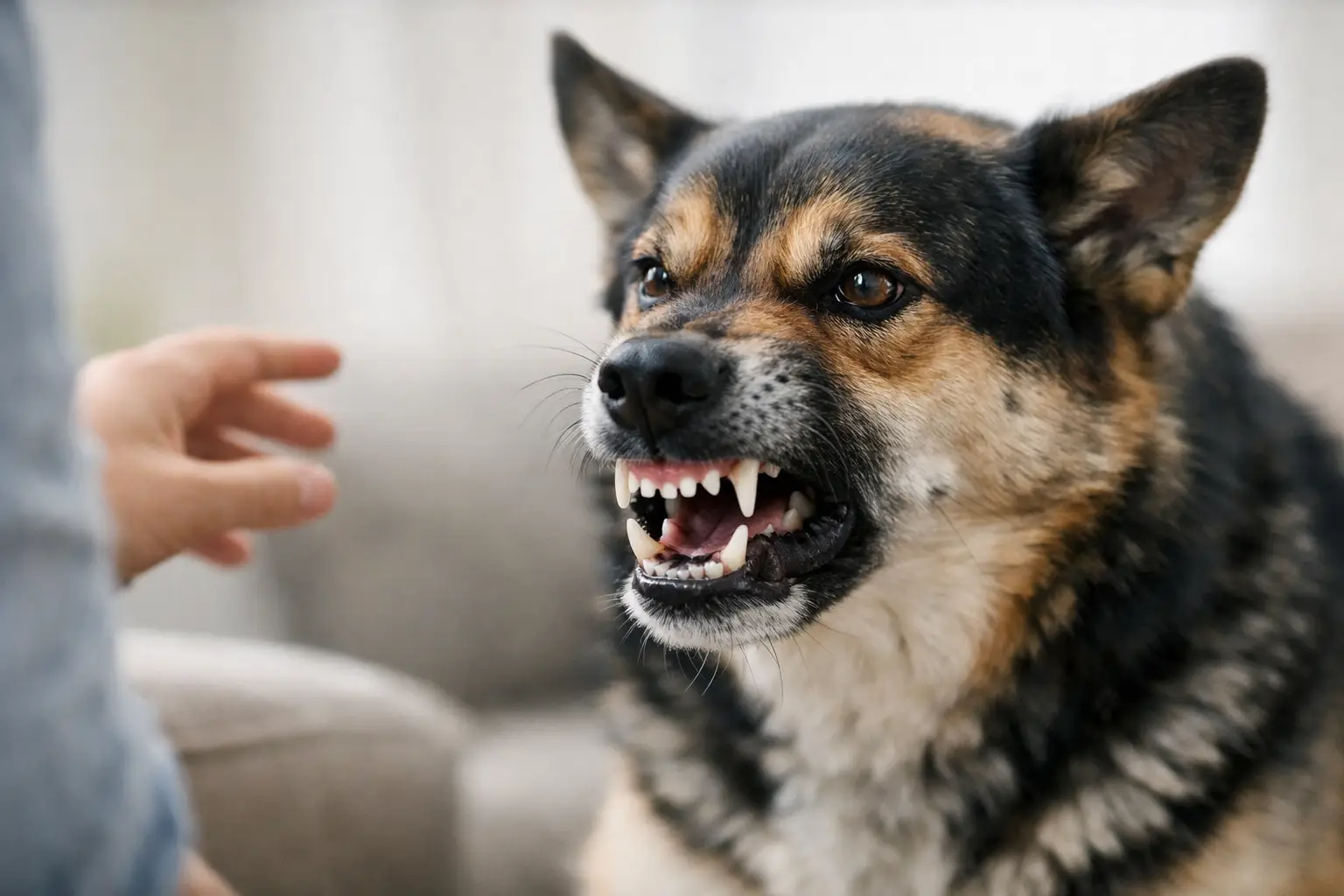
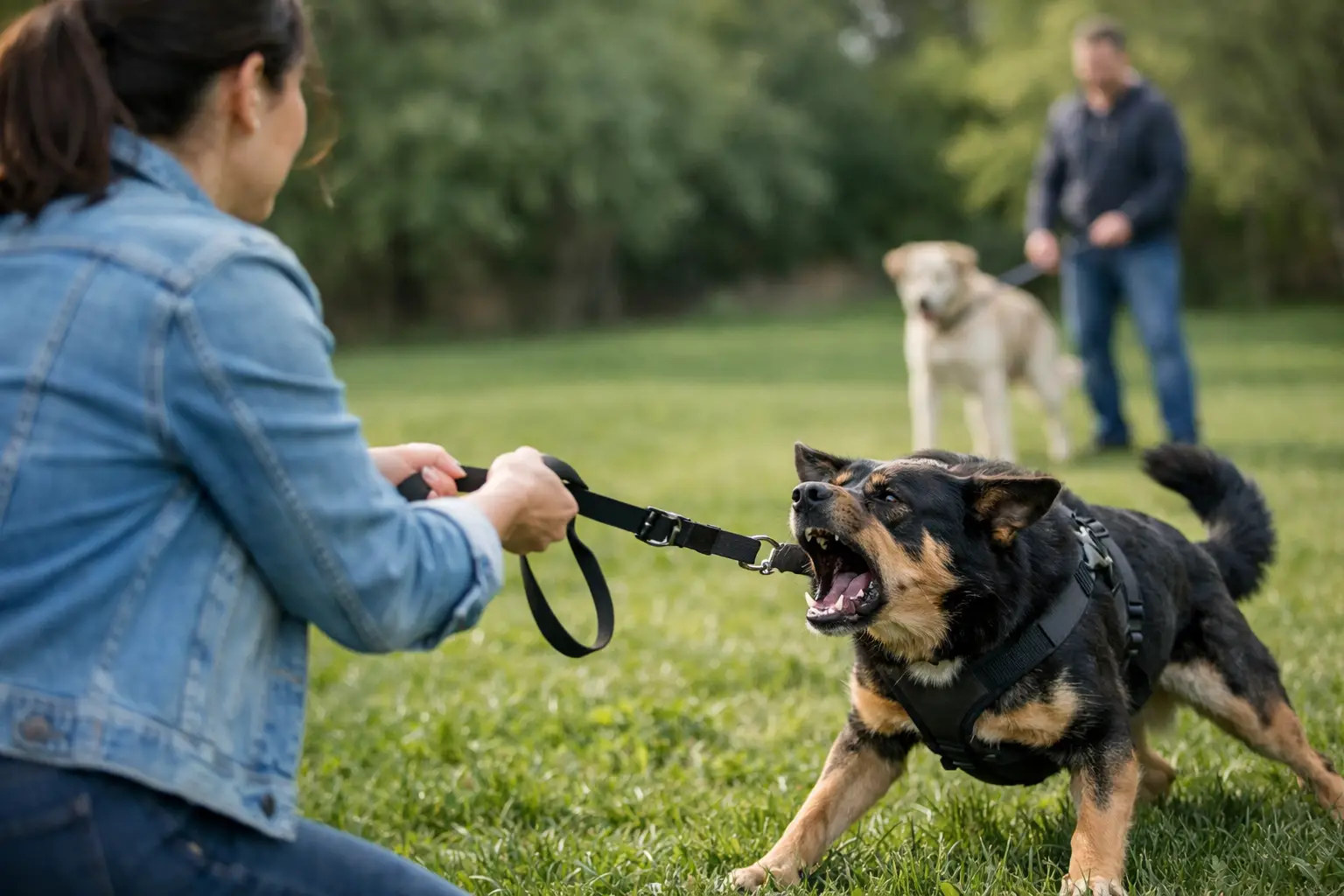
Your dog is lying under the table, you reach down to pet him, and suddenly you hear that low rumble. If you’re thinking, why is my dog growling, don’t ignore it and don’t panic. Growling is communication, and the faster you understand what your dog is trying to say, the faster you can prevent the behavior from getting worse.
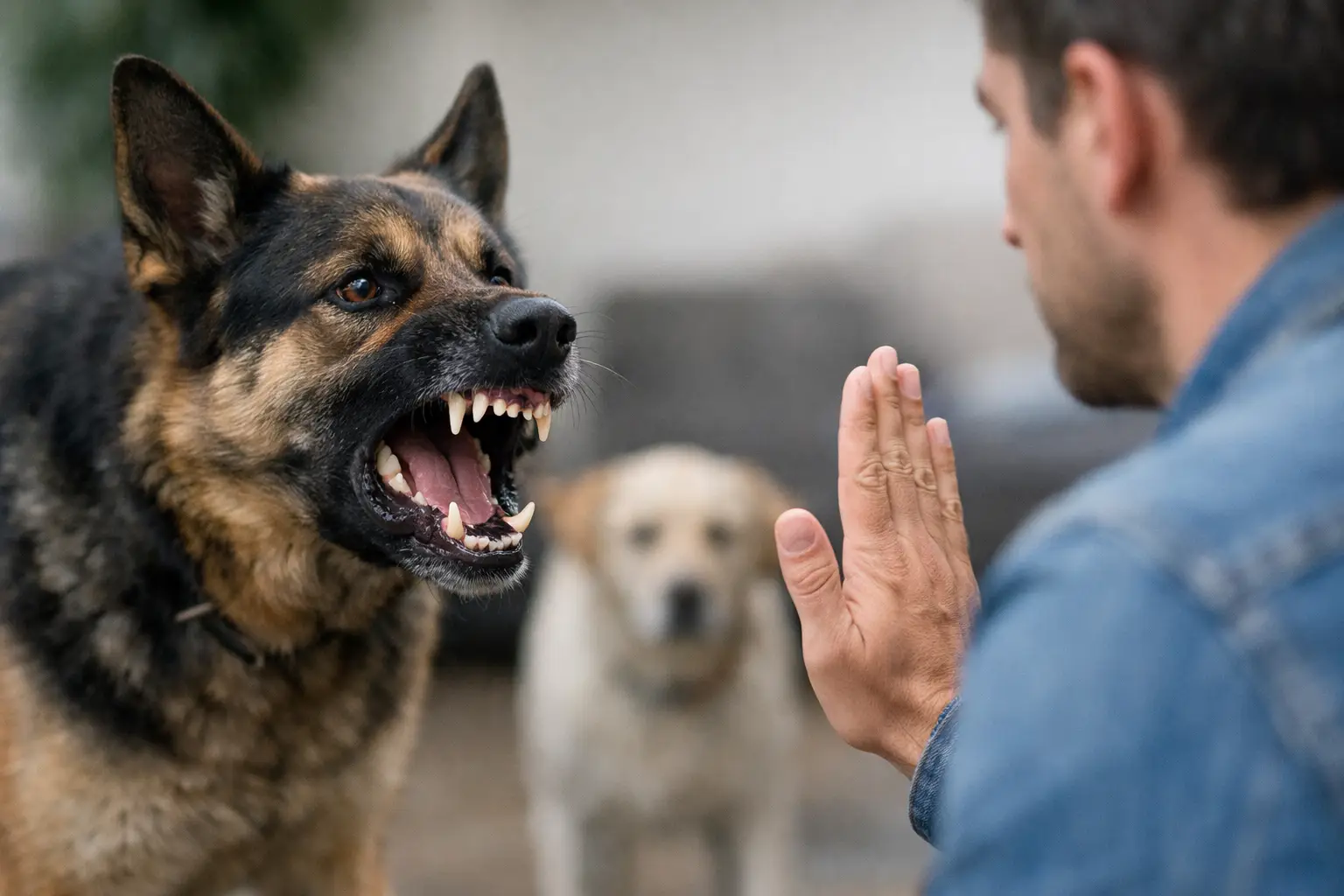
A lot of owners assume growling means their dog is bad, dominant, or about to bite for no reason. Usually, that is not what is happening. A growl is a warning. It is your dog’s way of saying, I am uncomfortable, I need space, or I don’t trust what is happening right now. That warning matters because dogs that feel punished for growling sometimes stop warning and move straight to snapping or biting.
Growling can show up for very different reasons, and the right response depends on the cause. Some dogs growl because they are afraid. Others growl when they feel cornered, overstimulated, protective of food or toys, startled out of sleep, or irritated by handling. Some growl during play, which can sound intense but may be completely normal if the rest of the body language stays loose and bouncy.
Context is everything. The same dog may growl at a stranger who reaches over his head, at another dog near his food bowl, and while playing tug in the backyard. Those are three different situations with three different emotional states. If you only focus on stopping the sound, you miss the reason behind it.
What you want to ask is not just why is my dog growling, but what happened right before the growl, what does his body look like, and what does he gain by growling in that moment. That gives you something you can actually train.
Common reasons dogs growl
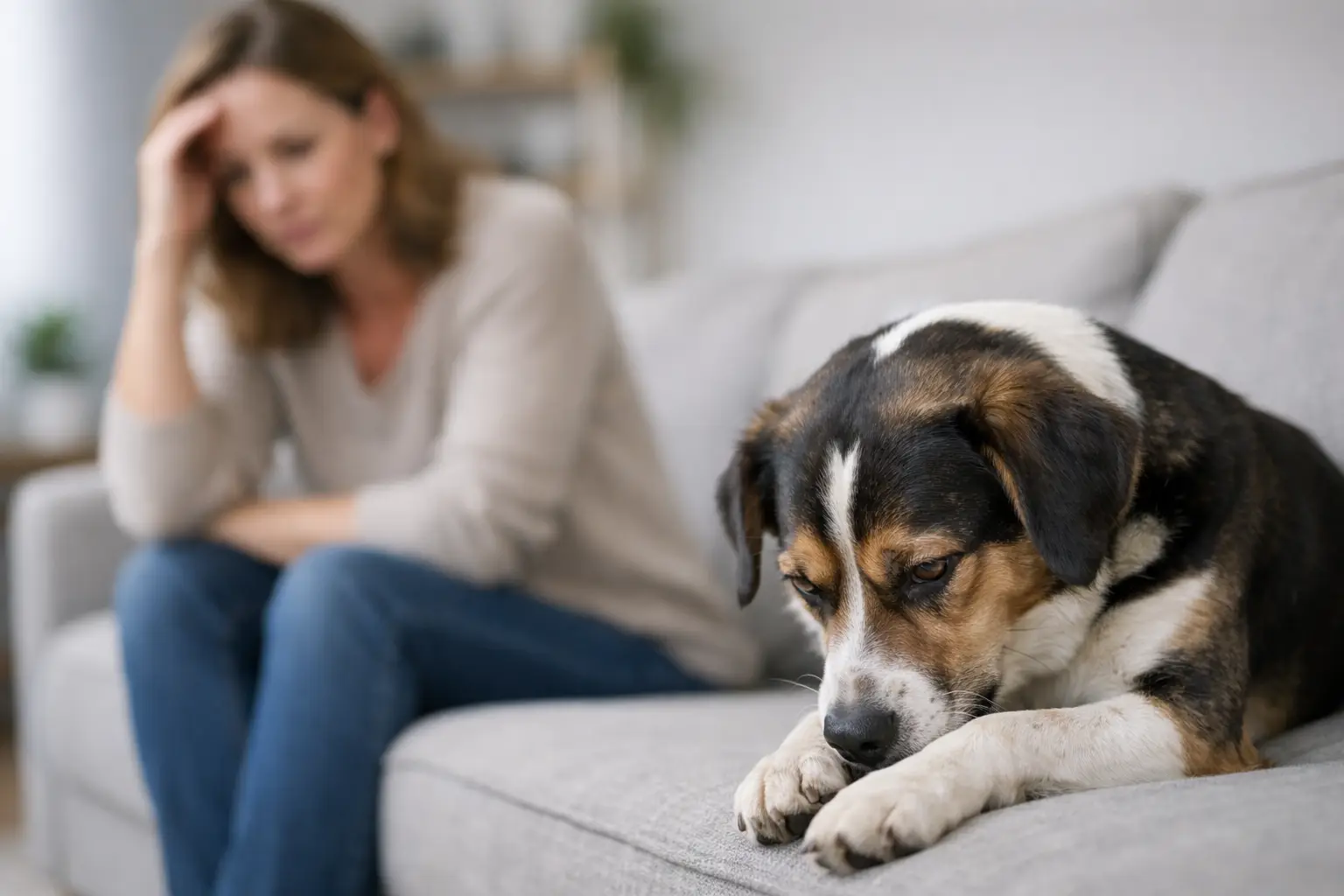
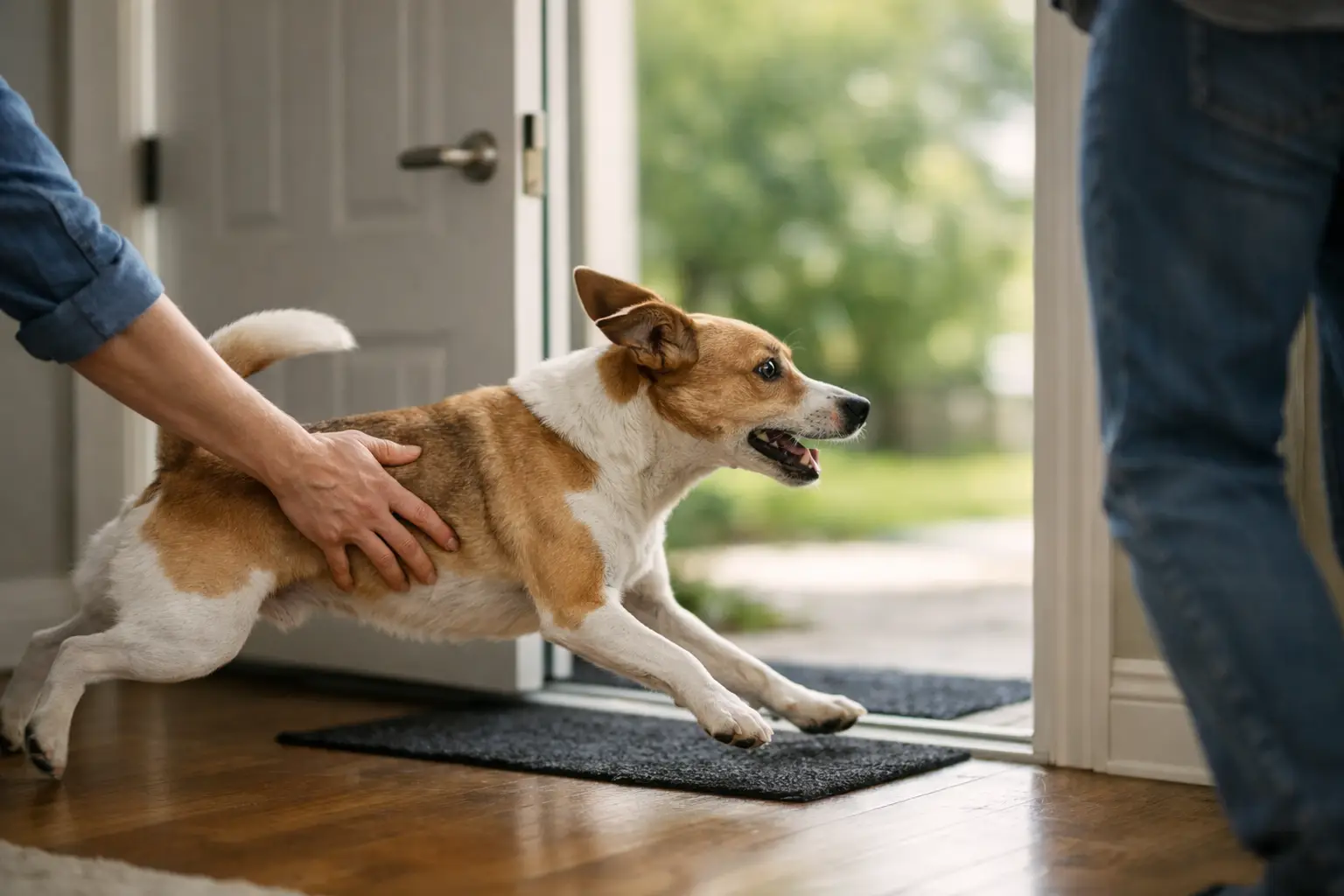
Fear is one of the biggest ones. A nervous dog may growl when approached by strangers, children, other dogs, or anyone moving too fast into his space. This is especially common in dogs with weak socialization histories or dogs that have had rough experiences in the past. The growl is a distance-increasing behavior. Your dog is trying to make the scary thing go away.
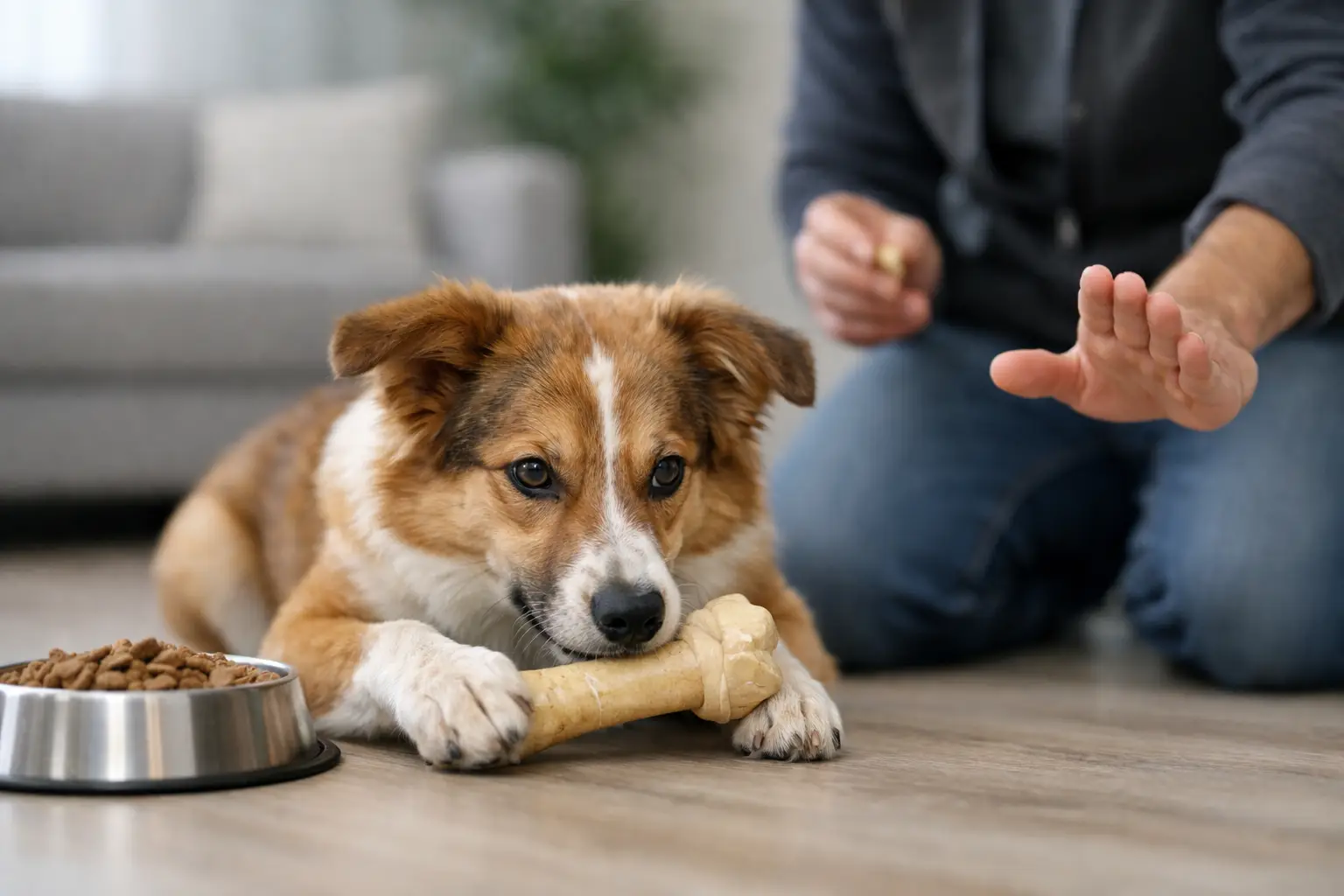
Resource guarding is another common cause. If your dog growls over food, bones, toys, stolen items, resting spots, or even a favorite person, he is guarding access. This can range from mild tension around the food bowl to serious reactions when someone comes close to a high-value item. Guarding does not mean your dog is trying to control the household. It means he is worried about losing something important.
Pain is often overlooked. A dog with an ear infection, sore hips, dental pain, an upset stomach, or an injured paw may growl when touched, moved, or disturbed. If a dog suddenly starts growling during normal handling, get medical issues ruled out early. Training will not fix discomfort.
Overstimulation can also trigger growling. Some dogs go from excited to overwhelmed fast, especially around rough play, crowded spaces, or constant touching. You may see this in homes where kids are affectionate but inconsistent about respecting the dog’s space. The dog is not being dramatic. He is telling you he has had enough.
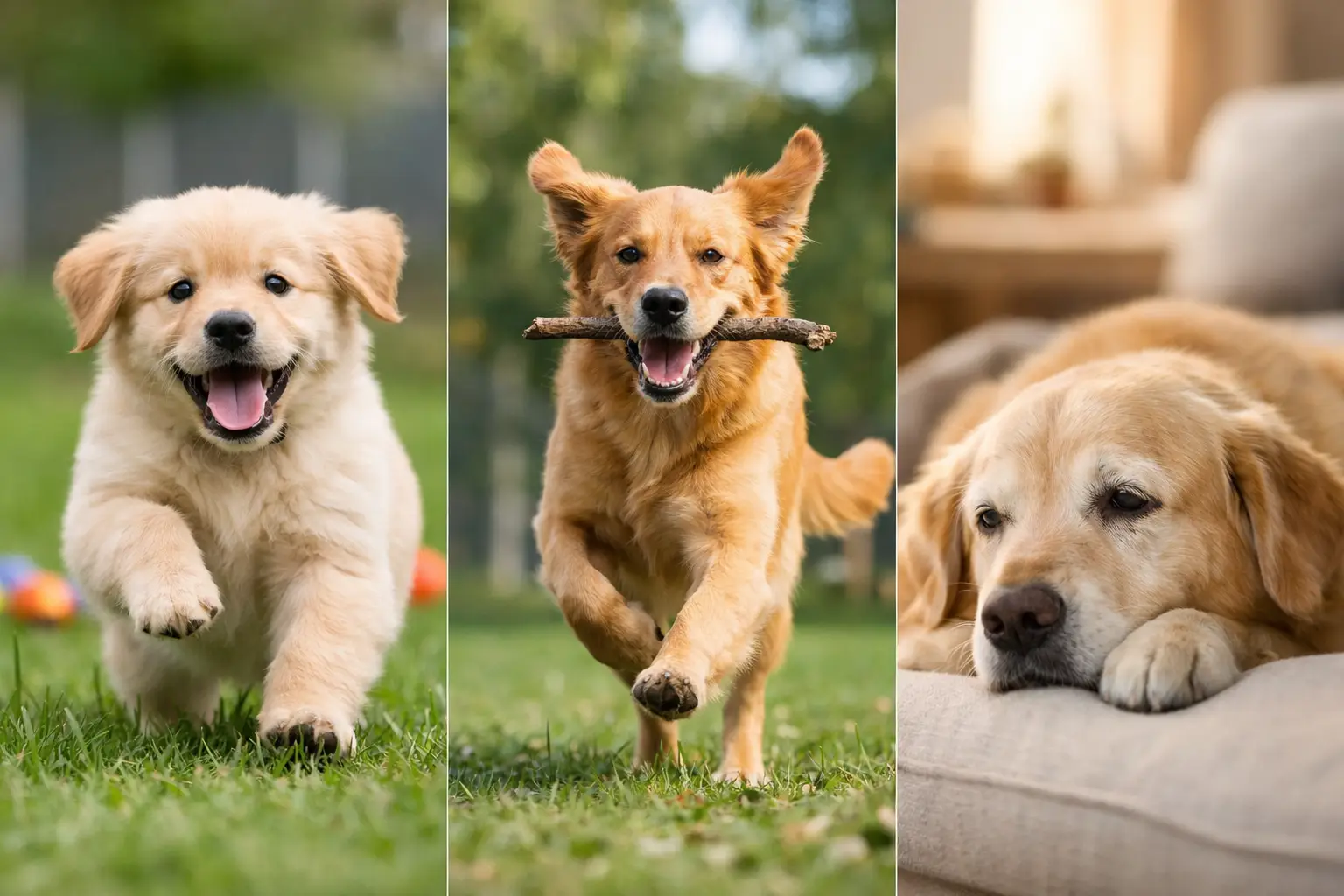
Then there is play growling. This one throws people off because it can sound serious. During healthy play, though, the body usually looks loose, movements stay wiggly, and both dogs take turns chasing, mouthing, and backing off. If one dog stiffens, freezes, pins excessively, or the other dog keeps trying to leave, that is no longer good play.
What your dog’s body language is telling you
A growl by itself is only part of the picture. Look at the whole dog. A fearful dog may crouch, lean away, tuck the tail, pin the ears back, or show lots of white in the eyes. A dog guarding an item may freeze over it, hard stare, and angle his body to block access. A dog that is truly playful usually has softer eyes, a loose body, and quick recovery between bursts of excitement.
One of the biggest mistakes owners make is missing the subtle signs that come before the growl. Lip licking, yawning, turning away, avoiding eye contact, freezing, stiffening, and leaving the area are all early warnings. If those signs keep getting ignored, the dog often escalates. Growling is not the first problem. It is usually the clearer version of several smaller warnings that did not work.
What not to do when your dog growls
Do not punish the growl. Yelling, scolding, alpha rolling, leash corrections, or grabbing your dog may suppress the sound for the moment, but they usually make the underlying emotion worse. A fearful dog becomes more fearful. A guarding dog becomes more defensive. A painful dog becomes more likely to react harder next time.
Do not force the interaction. If your dog growls when someone reaches toward him, the answer is not to hold him still and make him accept it. If he growls over a bone, do not test him by repeatedly reaching for it. Pressure creates conflict, and conflict creates rehearsed aggression.
Also, do not assume all growling is harmless. Some owners swing too far the other direction and laugh it off. If your dog growls around food, guests, kids, handling, or sleeping spaces, take it seriously early. Problems are easier to change when they are still mild.
What to do instead
Start by creating space. If your dog growls, stop what you are doing and reduce pressure. That does not mean reward bad behavior. It means avoid pushing him past his limit while you figure out why the behavior happened.
Next, manage the setup. If your dog guards food, feed him in peace and pick up bowls when he is done. If he growls when startled awake, stop touching him when he is sleeping and teach family members to call him away instead. If visitors trigger him, use a leash, gate, crate, or separate room so he does not have to keep practicing the behavior.
Then begin training the emotion and the habit. For fear-based growling, the goal is to change how your dog feels about the trigger while teaching an alternate behavior. For example, when a stranger appears at a safe distance, your dog gets food and stays under threshold. Over time, the trigger predicts something good instead of something stressful. This is slower than correcting the dog, but it creates more reliable change.
For guarding, the goal is to teach your dog that people approaching predict better outcomes, not loss. That often starts with simple trade exercises, toss-and-walk-away patterns, and careful handling of high-value items. If the guarding is intense, work with a qualified professional because timing matters.
For handling sensitivity, start with consent-based practice in tiny steps. Touch for one second, feed, stop. Lift the paw briefly, feed, stop. Build tolerance gradually instead of pushing through resistance. You are teaching your dog that being handled is safe.
Why is my dog growling at me specifically?
If your dog growls at you, that does not automatically mean your relationship is broken. It usually means there is a predictable trigger in your interactions. Maybe you move him off furniture by grabbing his collar. Maybe you reach for things in his mouth. Maybe he is uncomfortable with nail trims, bedtime routines, or physical affection when he wants to rest.
This is actually useful information. If your dog only growls in certain moments, you can change those moments. Use trades instead of taking items by force. Teach an off cue instead of dragging him off the couch. Pair touch with rewards. Give him a clear place to go and reinforce it consistently. Structured training reduces conflict because your dog learns what to do instead of feeling trapped.
When to get extra help
Get veterinary help if the growling is sudden, increasing, or connected to touch, movement, or normal handling. Pain changes behavior fast.
Get professional behavior help if your dog growls around children, over resources, at guests entering the home, during leash walks, or in any situation where bites are possible. The more serious the pattern, the less you want to improvise. Fast action now can prevent a much harder problem later.
The good news is that growling is not the end of the road. It is information. When you listen to it, manage the situation well, and train the right skill step by step, most dogs can make real progress. That is how behavior changes happen at home – not by overpowering the dog, but by showing him a clearer, safer way to respond.

Comment