Helping You Raise a Calm, Happy & Well-Behaved Dog
When Should Puppies Start Training?
Sara Michael,
Sharing is caring 😉
The first week your puppy comes home sets the tone for everything that follows. If you wait until they are older to teach rules, routines, and focus, your puppy is still learning – just not the lessons you want. So if you’re asking when should puppies start training, the short answer is right away.
That does not mean formal, high-pressure sessions with perfect obedience. It means simple, clear training from day one. Puppies start learning the moment they enter your home. They learn what gets your attention, where to potty, whether biting works, and how chaotic or calm daily life feels. Early training gives you a chance to shape those habits before bad ones take hold.
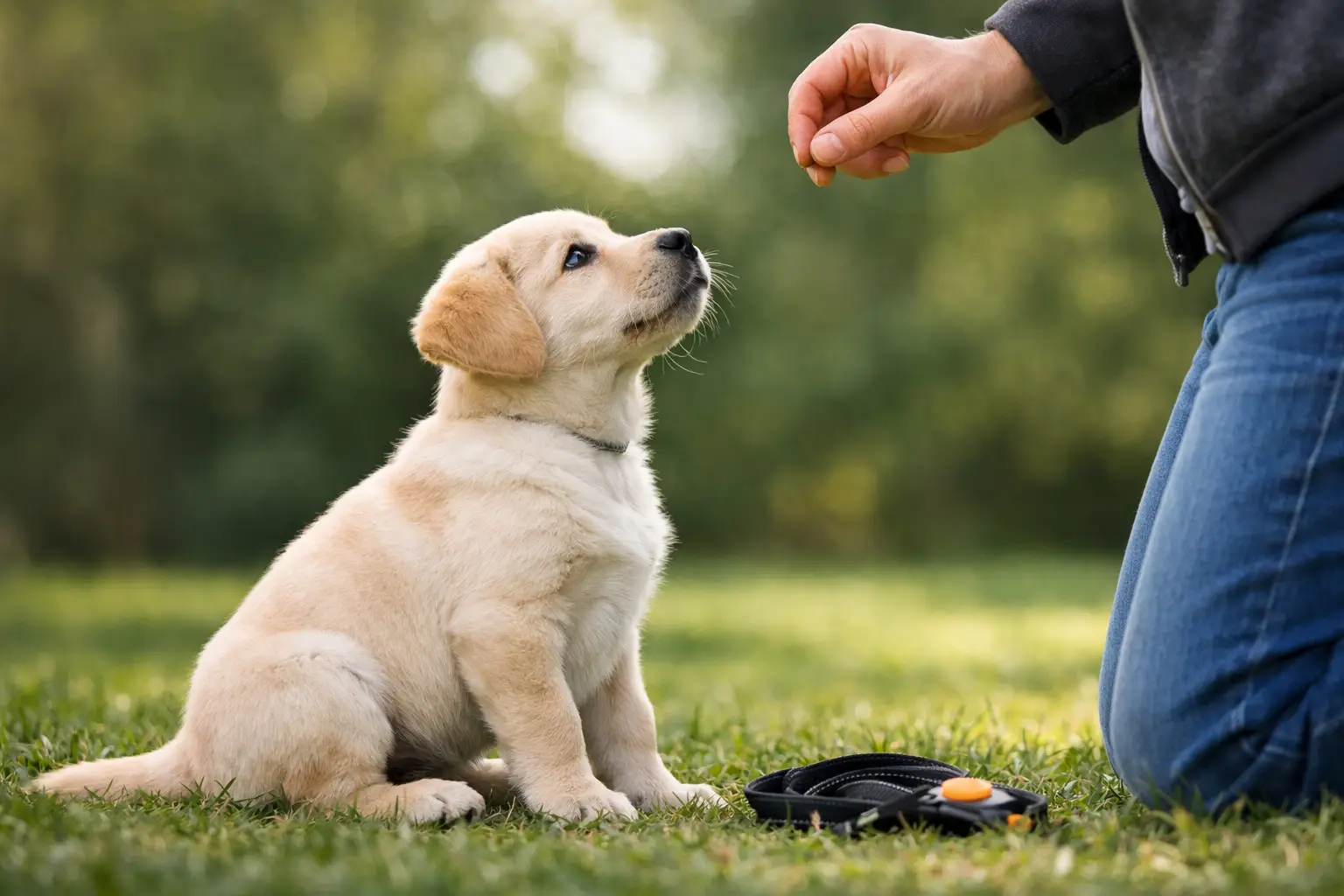
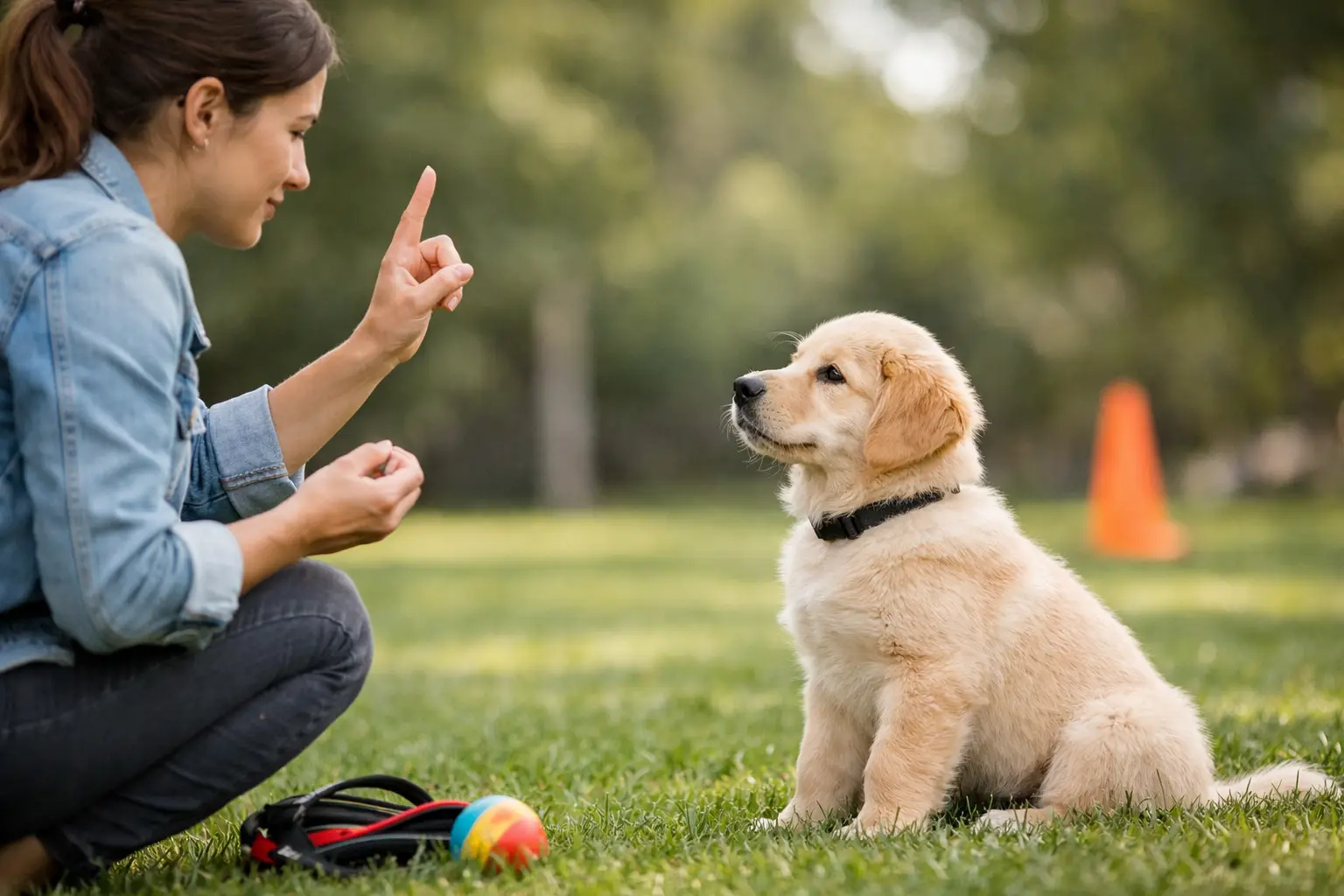
Puppies should start training as soon as they come home, which is usually around 8 weeks old. At that age, they are more than capable of learning their name, following food into positions, coming when called from a short distance, settling in a crate, and beginning house training.
This surprises a lot of new owners because people often picture training as something that starts later, after a puppy is fully vaccinated or “old enough to listen.” In reality, waiting usually makes things harder. A young puppy may have a shorter attention span, but they are also highly adaptable. They are constantly forming associations, and that works in your favor if you give them structure early.
The key is matching the training to the puppy in front of you. An 8-week-old puppy does not need long sessions or advanced commands. They need a calm routine, frequent repetition, and clear feedback. Think in terms of one to three minutes at a time, repeated throughout the day.
What training should start first?
The first phase of puppy training is not about showing off commands. It is about building habits that make life easier fast.
Start with house training, crate training, name recognition, handling, and basic engagement. If your puppy learns that going outside leads to praise, the crate is safe, their name matters, and paying attention to you is rewarding, you have already built the foundation for everything else.
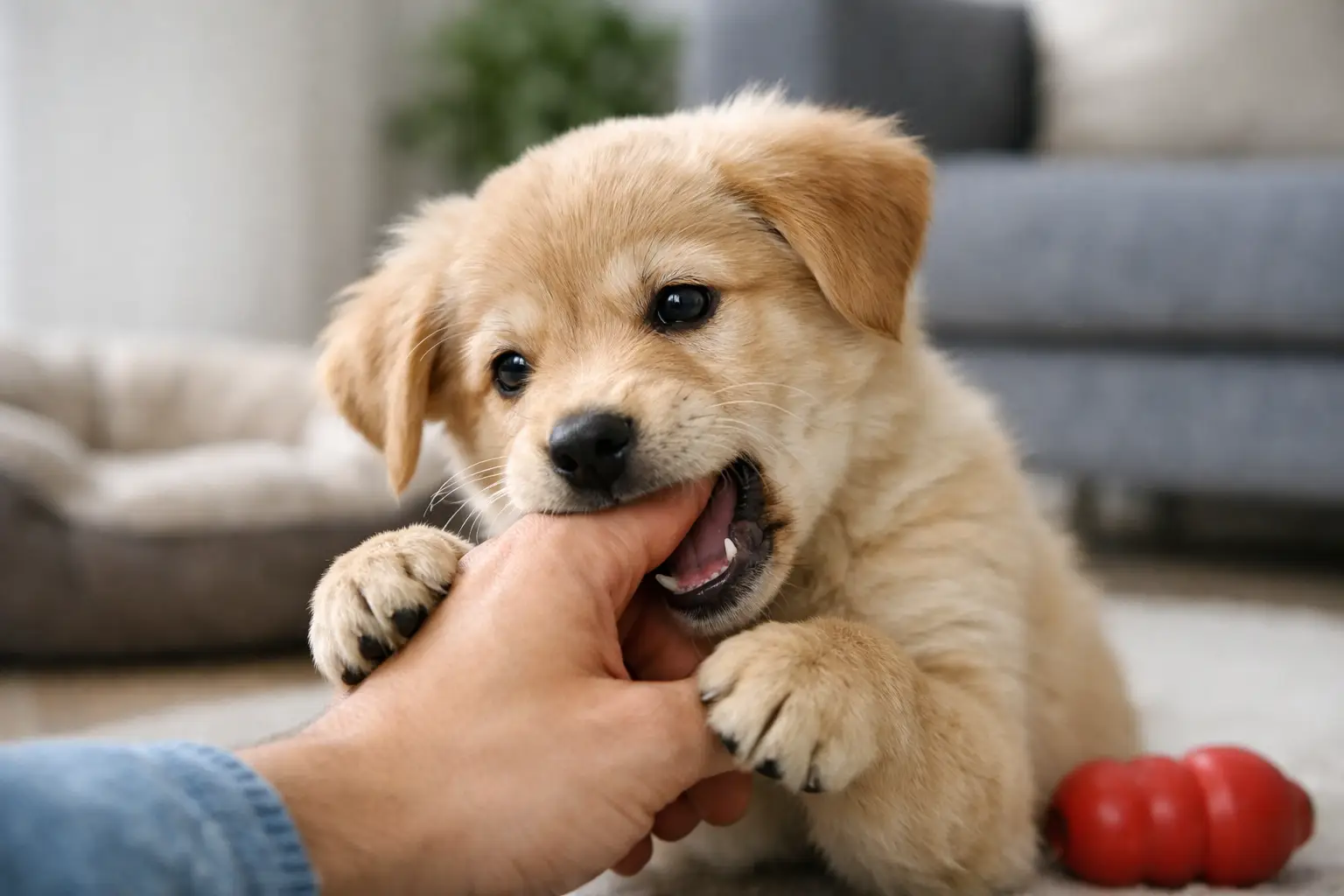
Bite inhibition should start early too. Puppy nipping is normal, but normal does not mean you ignore it. Your job is to teach better choices before rough play turns into a daily battle. Redirect to appropriate toys, end play briefly when biting escalates, and avoid turning your hands into chew toys.
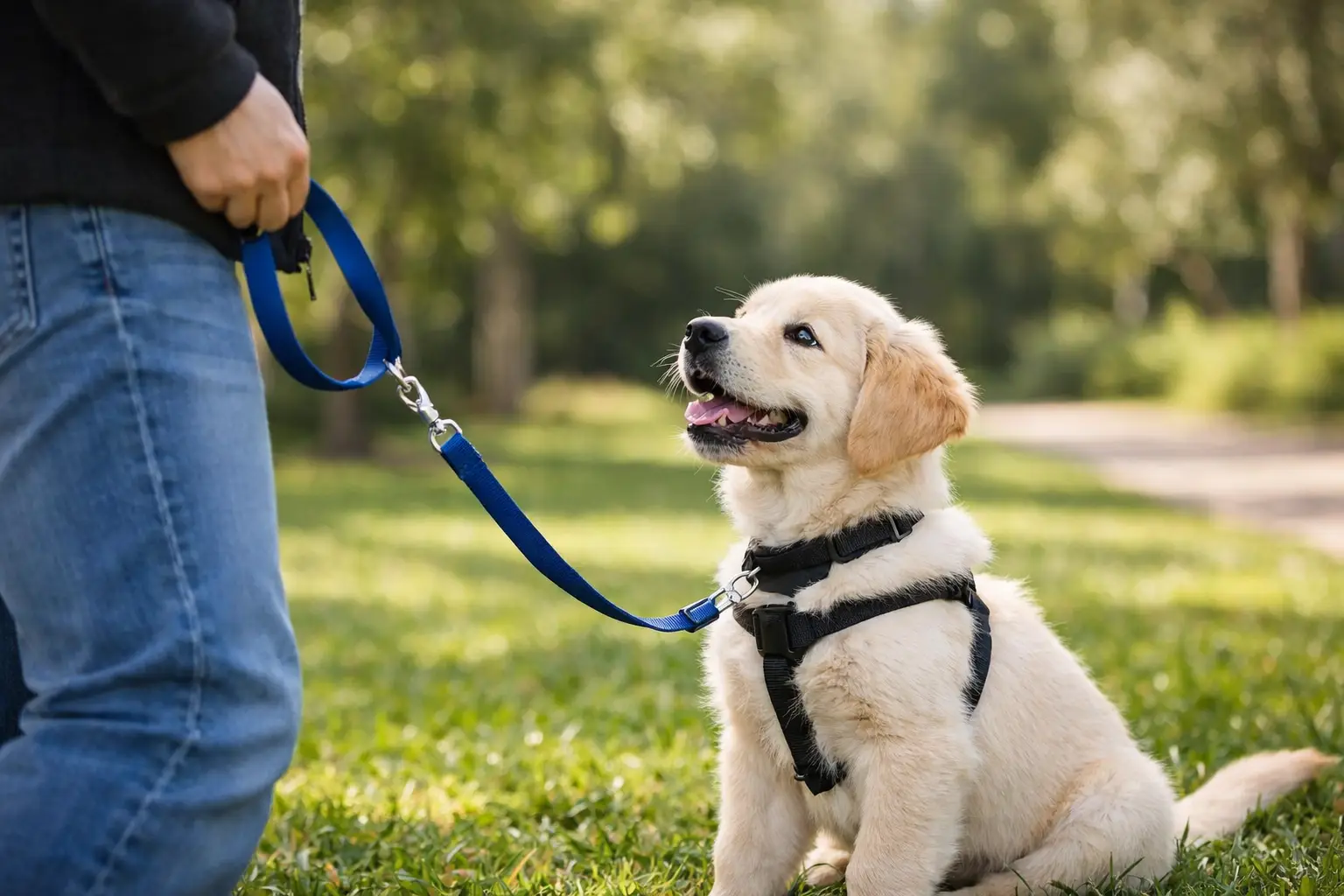
Basic obedience can begin right away as well. Sit, down, place, leash walking, and recall all have beginner versions that fit a young puppy. The mistake is not starting too early. The mistake is expecting too much too soon.
Why early training matters more than most owners realize
A lot of behavior problems do not appear out of nowhere. They grow from small patterns that were allowed to repeat.
A puppy that jumps on everyone is practicing pushy greetings. A puppy that screams in the crate is learning that noise might change the situation. A puppy that ignores their name is rehearsing disconnection. None of this means your puppy is stubborn or bad. It means learning is happening all the time.
That is why the answer to when should puppies start training is tied to prevention, not just obedience. Early training helps stop common problems before they become exhausting habits. It also helps your puppy feel more secure because predictable routines reduce confusion.
There is another benefit owners often overlook: training builds communication. When your puppy understands how to earn rewards and what your cues mean, daily life gets less frustrating for both of you. That matters just as much as teaching commands.
When should puppies start training classes?
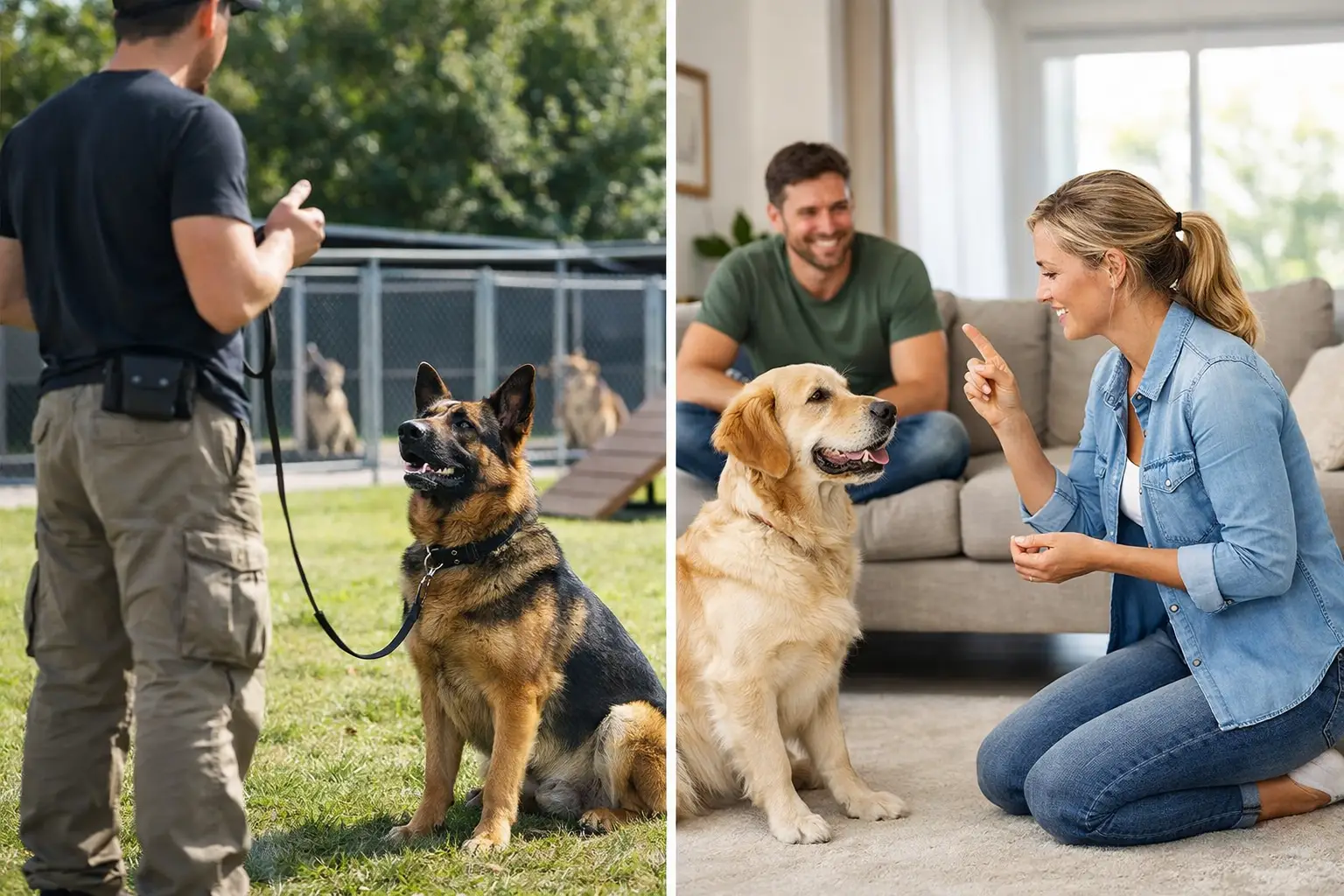
If your veterinarian agrees and the class is well-run, puppies can often start classes soon after coming home. Many puppy classes accept puppies after their first round of vaccines, though exact timing depends on your vet, your area, and the class setup.
The best classes focus on controlled socialization, confidence, handling, and basic skills – not chaotic free-for-all play. Good puppy classes can help, but they are not a substitute for training at home. One class a week will not fix inconsistent routines the other six days.
If you cannot join a class right away, do not treat that as a reason to delay training. Home training still matters most. In many cases, owners who stay consistent at home make faster progress than owners who rely too heavily on occasional group sessions.
How much training is right for a young puppy?
Young puppies do best with short, frequent sessions built into normal life. That might mean practicing “come” in the hallway, rewarding calm behavior in the crate, or asking for a sit before meals. Training does not need to feel separate from the day.
For most puppies, several mini sessions work better than one longer session. Stop while your puppy is still engaged. If they get tired, mouthy, or distracted, that is usually a sign the session has gone on long enough.
This is where owners sometimes get stuck. They hear that puppies should start training early, then worry about doing too much. The balance is simple: start early, keep it light, and stay consistent.
Signs your puppy is ready to learn more
Your puppy does not need to reach a certain age before moving beyond the basics. Progress should depend more on consistency, focus, and emotional stability than on the calendar.
If your puppy can follow food calmly, respond to their name, recover quickly from distractions, and succeed with beginner cues in different rooms, you can start raising the difficulty. That may mean adding mild distractions, increasing duration, or practicing in new places.
If your puppy is still struggling with overarousal, accidents, constant biting, or inability to focus for even a few seconds, the answer is not to pile on more commands. It is usually better to tighten up routine, management, and reinforcement first.
Training always moves faster when the foundation is solid.
Common mistakes owners make when deciding when should puppies start training
The biggest mistake is waiting for the “right age.” Puppies do not need to become older before they can learn. They need owners who are clear and consistent.
The second mistake is thinking socialization means letting the puppy do whatever they want around people, dogs, and new places. Good socialization is about positive exposure and calm experience, not overstimulation. A puppy that drags you toward every dog is not becoming socialized in a useful way.
Another common mistake is being inconsistent because the puppy seems small and cute. Owners allow behaviors at 10 pounds that they will hate at 50 pounds. If you do not want your adult dog jumping, chewing furniture, barking for attention, or pulling on leash, do not rehearse those habits now.
The last mistake is making training too complicated. You do not need a huge command list in the first month. You need a puppy that can settle, follow guidance, come when called, and live peacefully in your home.
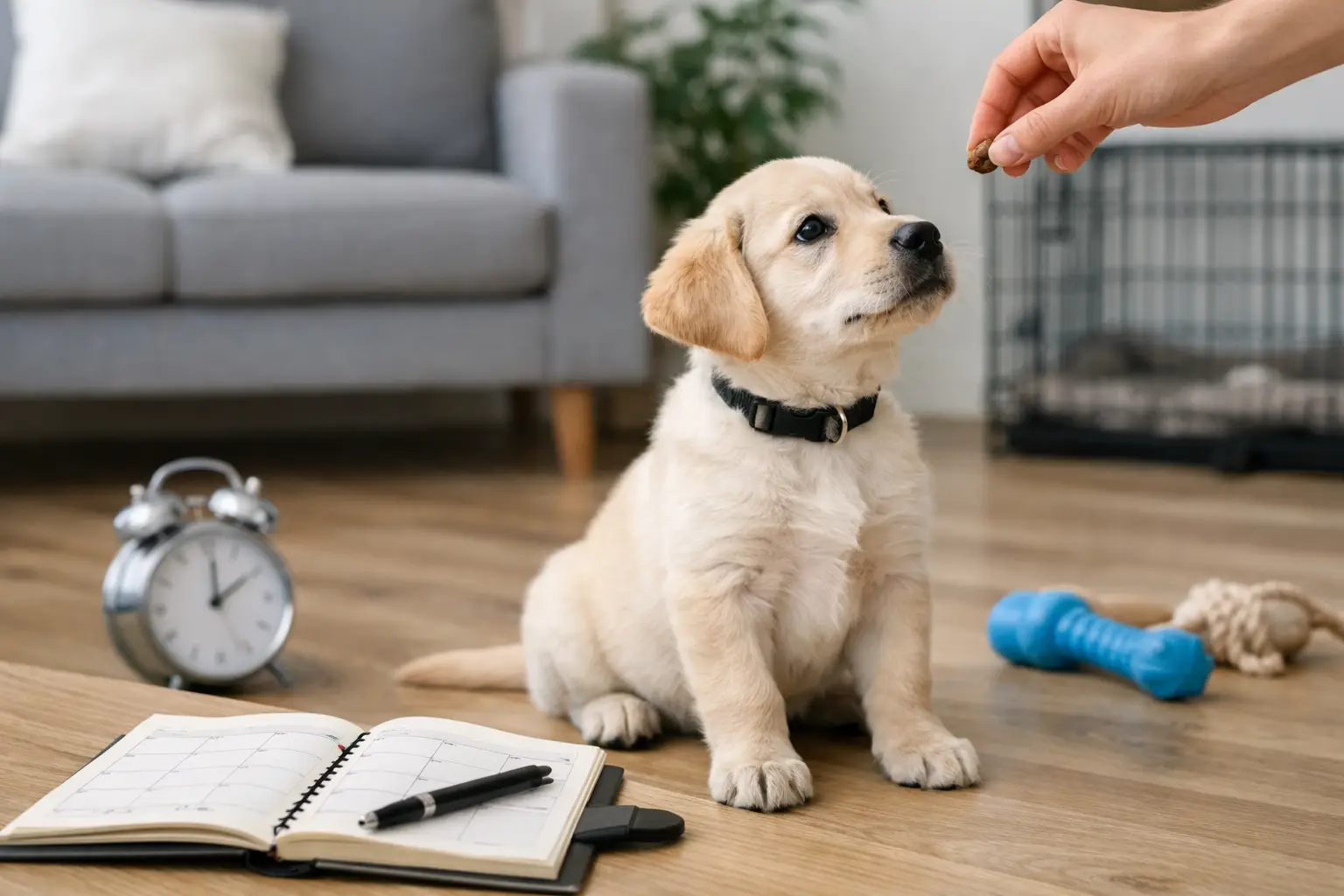
A simple timeline that works
From 8 to 10 weeks, focus heavily on house training, crate comfort, name recognition, gentle handling, play with rules, and short attention-building exercises. Keep everything simple and reward-based.
From 10 to 12 weeks, continue those basics while introducing beginner obedience like sit, down, short recall, leash pressure awareness, and calm exposure to new environments. This is also a good time to reinforce independence so your puppy does not become overly needy.
From 12 weeks and beyond, build more reliability. Start asking for skills in slightly busier places, increase duration for calm positions, and continue addressing biting, jumping, and impulsive behavior before they become harder to change.
That timeline is flexible. Some puppies mature faster. Others need more repetition and structure. Breed tendencies, energy level, confidence, and your consistency all affect the pace.
The real goal of early puppy training
The goal is not to create a perfect puppy in two weeks. It is to create momentum.
When owners start early, they usually see faster house training, better attention, less chaos, and fewer behavior problems later. More importantly, they stop feeling like they are constantly reacting. They start leading.
That is the shift that matters. A trained dog is not built in one breakthrough session. It is built through small, daily reps that teach the dog how to live with you. That process can start the day your puppy walks through the door.
If you keep it simple, stay consistent, and work on the skills that matter most, early training does not feel overwhelming. It feels like progress. And for most new puppy owners, that is exactly what turns the first few months from stressful to manageable.




Comment