Helping You Raise a Calm, Happy & Well-Behaved Dog
How to Control Barking Dogs at Home
Sara Michael,
Sharing is caring 😉
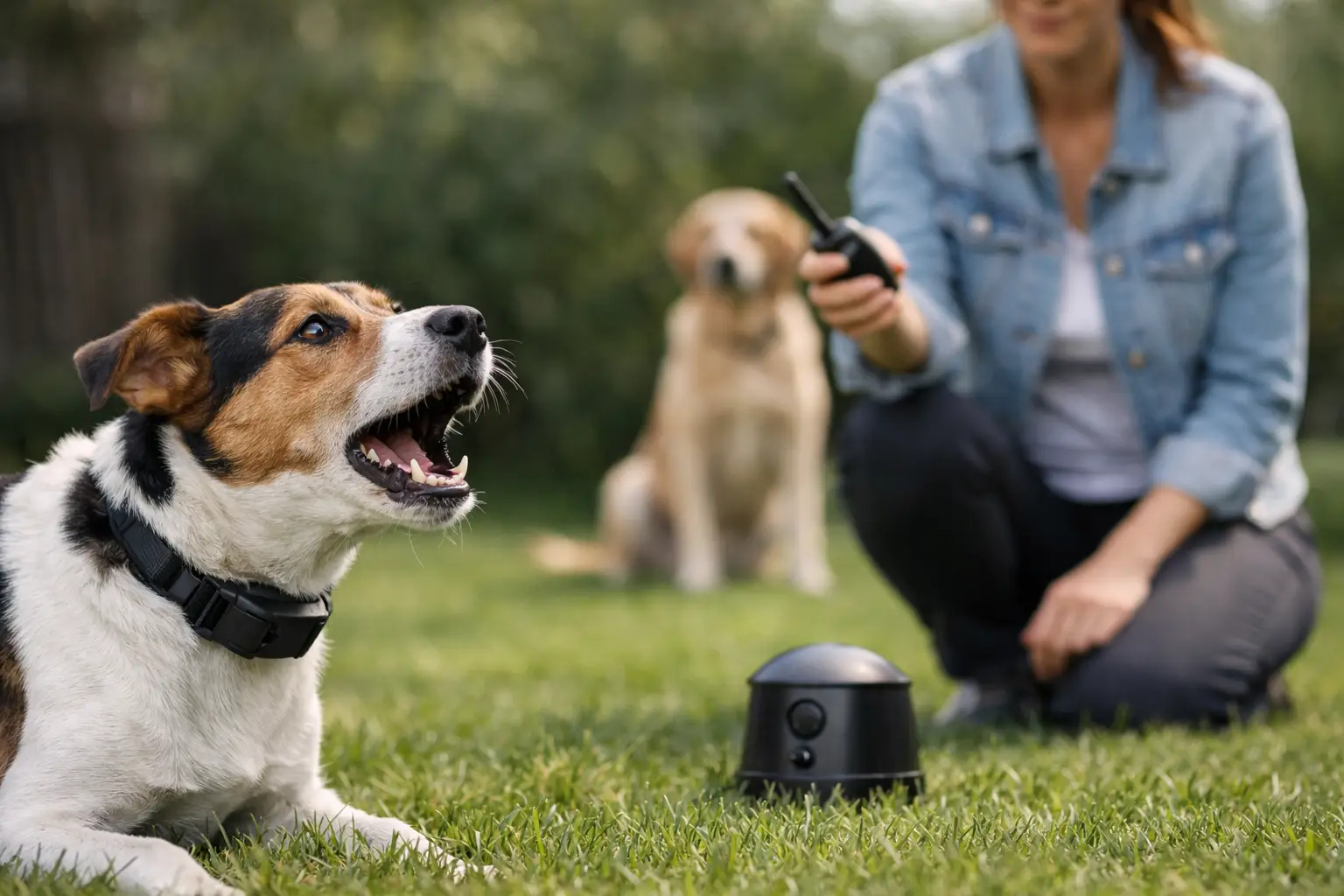
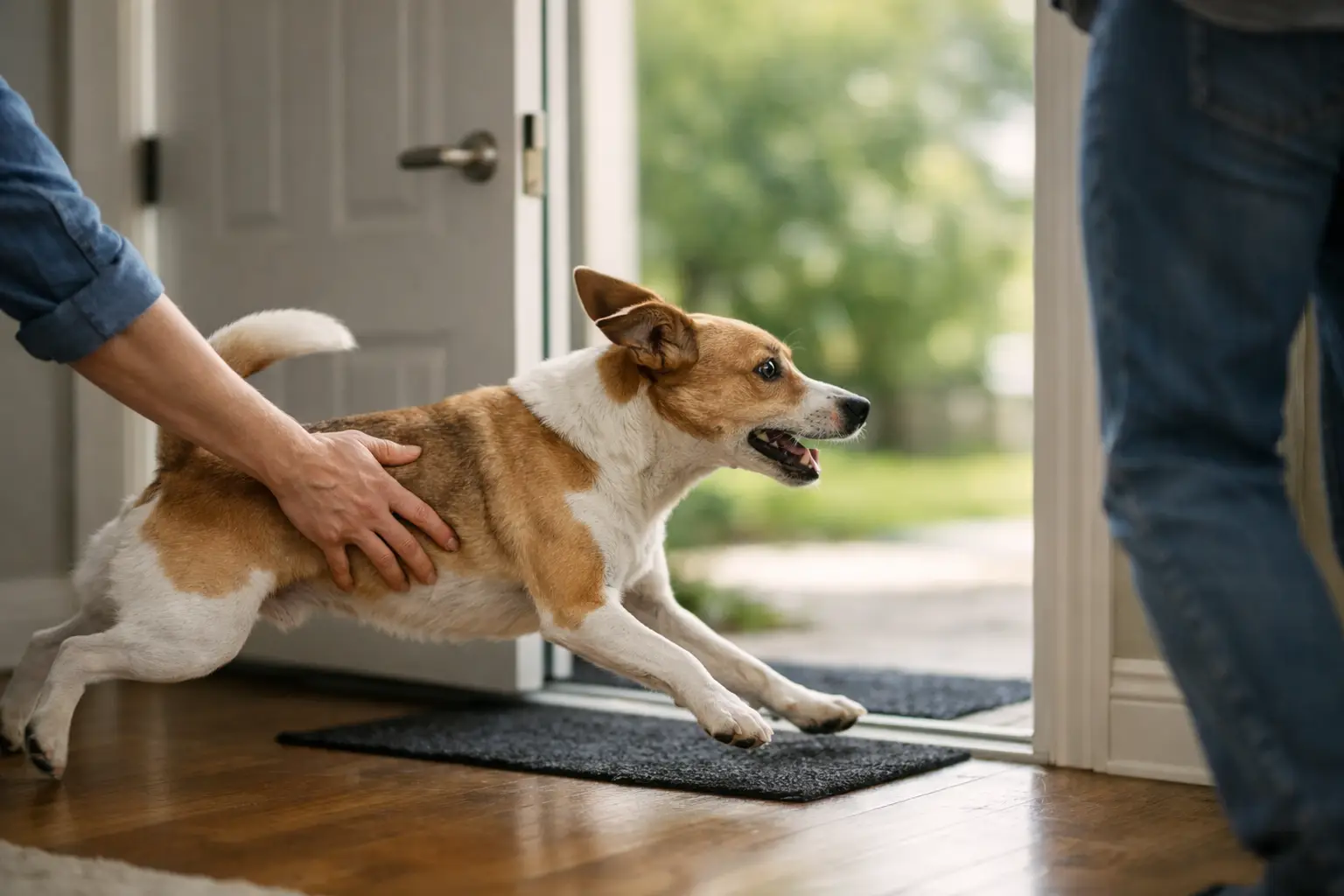
That sharp burst of barking at the door, the window, the neighbor, the mail truck, and then somehow nothing at all – that is how a lot of owners end up feeling trapped in their own homes. If you are searching for how to control barking dogs, the good news is this: barking can improve fast when you stop chasing random tips and start training the reason behind the noise.
Barking is not a single problem. It is a symptom. Some dogs bark because they are excited. Some bark because they are anxious, under-exercised, territorial, or used to getting attention every time they make noise. If you treat all barking the same way, results stay inconsistent. If you identify the trigger and train a different response, progress gets much easier.
Most barking survives because it works for the dog in some way. The dog barks at the window, the person outside keeps walking, and the dog thinks, That did it. The dog barks for attention, you talk to him, and he just got rewarded. The dog barks in the crate, you let him out, and now barking has a paycheck.
That does not mean you caused the whole problem. It means barking is often self-reinforcing, and once a habit gets repeated enough, it becomes the dog’s default response to stress, movement, boredom, or stimulation.
This is why yelling “quiet” over and over rarely works. From the dog’s point of view, you may just be joining the noise. And if the dog is already over threshold – meaning too worked up to think clearly – he is not in a learning state anyway.
How to control barking dogs by finding the trigger
Before you correct anything, get specific. When does the barking happen? What starts it? What does your dog want in that moment?
A dog who barks when left alone needs a different plan than a dog who explodes at the front window. A puppy who barks for play is different from an adult dog guarding the yard. The more exact you are, the faster you can train.
Most barking falls into a few categories: alert barking at sounds or people, demand barking for attention or access, boredom barking from too little structure, fear barking from stress, and frustration barking when the dog wants something and cannot get to it.
You do not need a complicated behavior chart. You just need honest observation for a few days. Look for patterns in time of day, location, distance from the trigger, and your own response.
Start with management, not just correction
Owners often want the command that stops barking instantly. Sometimes that happens. More often, the quickest lasting results come from preventing rehearsals first.
If your dog spends two hours a day sprinting window to window barking at every passing dog, that is not training. That is practice. Covering part of a window, using a crate during high-trigger times, moving the dog away from the front door, or adding white noise can immediately reduce the number of barking reps your dog gets each day.
Management is not giving up. It is how you create a cleaner training environment. Fewer explosions mean more chances to teach calm behavior before your dog is already out of control.
Exercise also matters, but not in the vague “just tire your dog out” way. A frantic dog does not always need more chaos. Many barking dogs need a better balance of physical exercise, clear obedience work, and time learning how to settle. A dog with no off switch can stay noisy even after a long walk.
Teach the behavior you want instead
If you want less barking, your dog needs a job that is incompatible with barking. That could be going to a bed, making eye contact, holding a sit, or relaxing in a crate.
Start when the trigger is mild enough that your dog can still think. If your dog notices a sound outside but is not yet in a full barking fit, mark the calm moment with praise or food and ask for a simple behavior like “place” or “sit.” Then reward again. You are teaching your dog that hearing or seeing the trigger predicts guidance and reinforcement, not chaos.
This part matters: do not wait for the biggest meltdown to begin training. Work at a lower intensity first. If the dog can succeed at level two, you can build toward level five later. If you start at level ten every time, your dog just practices failing.
The quiet command can help, but timing matters
A quiet cue is useful when it is trained, not when it is shouted in frustration. One practical way is to let your dog bark once or twice at a mild trigger, then calmly say “quiet.” The moment your dog pauses, even for a second, reward that silence. Repeat enough times and your dog starts to understand that stopping noise is what pays.
The trade-off is that this works best for dogs who can disengage quickly. If your dog goes from zero to frenzy, a quiet cue alone will not fix the issue. You will need more distance from triggers, more management, and stronger obedience around distractions.
Stop rewarding demand barking
Demand barking is one of the most common and most fixable forms of barking. The dog barks for food, play, petting, to go outside, or to get you off the couch. If barking has ever worked, the dog will keep trying it.
The solution is simple in theory and harder in practice: barking must stop working. Do not talk to the dog, touch the dog, look at the dog, or give access while the barking is happening. Wait for a moment of quiet, then reward that calm behavior.
Consistency is everything here. If you ignore barking nine times but give in on the tenth because you are tired, you have taught persistence. Many dogs bark longer when owners first stop rewarding it. That does not mean the plan is failing. It often means the dog is testing whether the old strategy still works.
Give your dog a better way to ask
Ignoring barking is only half the job. You also need to teach an acceptable replacement. That might be a sit for attention, a down before meals, or waiting quietly at the door. Dogs do better when the rules are clear. “Do not bark” is vague. “Sit and I will help you” is teachable.
When barking is driven by fear or anxiety
This is where owners need to slow down and be fair. A fearful dog is not being stubborn. He is trying to create distance from something that worries him. Punishing that dog harshly can suppress noise in the moment while making the emotion underneath even worse.
For fear-based barking, your first goal is to lower the intensity. Increase distance from the trigger. Keep sessions short. Pair the trigger with food, calm praise, and clear direction. Ask for simple obedience your dog already knows, and end before your dog spirals.
If your dog barks when left alone, that can be a different problem entirely. Separation-related barking usually needs a structured plan for building independence, not just a correction for making noise.
How to control barking dogs faster with structure
Dogs improve faster when the day is predictable. Random energy, random freedom, and random responses from the owner tend to create more barking, not less.
A structured routine helps because it lowers arousal and creates clear expectations. Your dog should know when exercise happens, when training happens, where to settle, and how to earn attention. That kind of clarity reduces a lot of noise before you ever say a command.
This is especially true for adolescent dogs. Many teenage dogs bark more because they are impulsive, easily stimulated, and not yet reliable with obedience. That does not mean they are hopeless. It means training needs to be more consistent than their mood.
A short daily plan works better than occasional marathon sessions. Ten focused minutes teaching place, quiet, recall, and calm door manners can change a noisy household faster than correcting barking all day without a system.
What not to do
Do not assume all barking is bad. Dogs bark. The goal is not silence at all times. The goal is control.
Do not wait until you are angry to respond. Training works best when your reactions are calm and predictable.
Do not rely on one tool or one phrase to fix a behavior that has multiple causes. If barking is rooted in boredom, fear, habit, and poor impulse control, your plan needs to address more than just the sound.
And do not quit because the barking gets worse for a few days. Many owners give up right before the dog starts to understand the new rules.
Real progress comes from clarity. Identify the trigger. Prevent endless rehearsal. Teach a replacement behavior. Reward calm. Stop paying for noise. Then repeat until the new pattern is stronger than the old one.
If that feels more structured than what you have tried before, that is usually the missing piece. Dogs learn fastest when the training is simple, fair, and consistent. Stick with that, and your home can get a whole lot quieter without turning training into a daily battle.
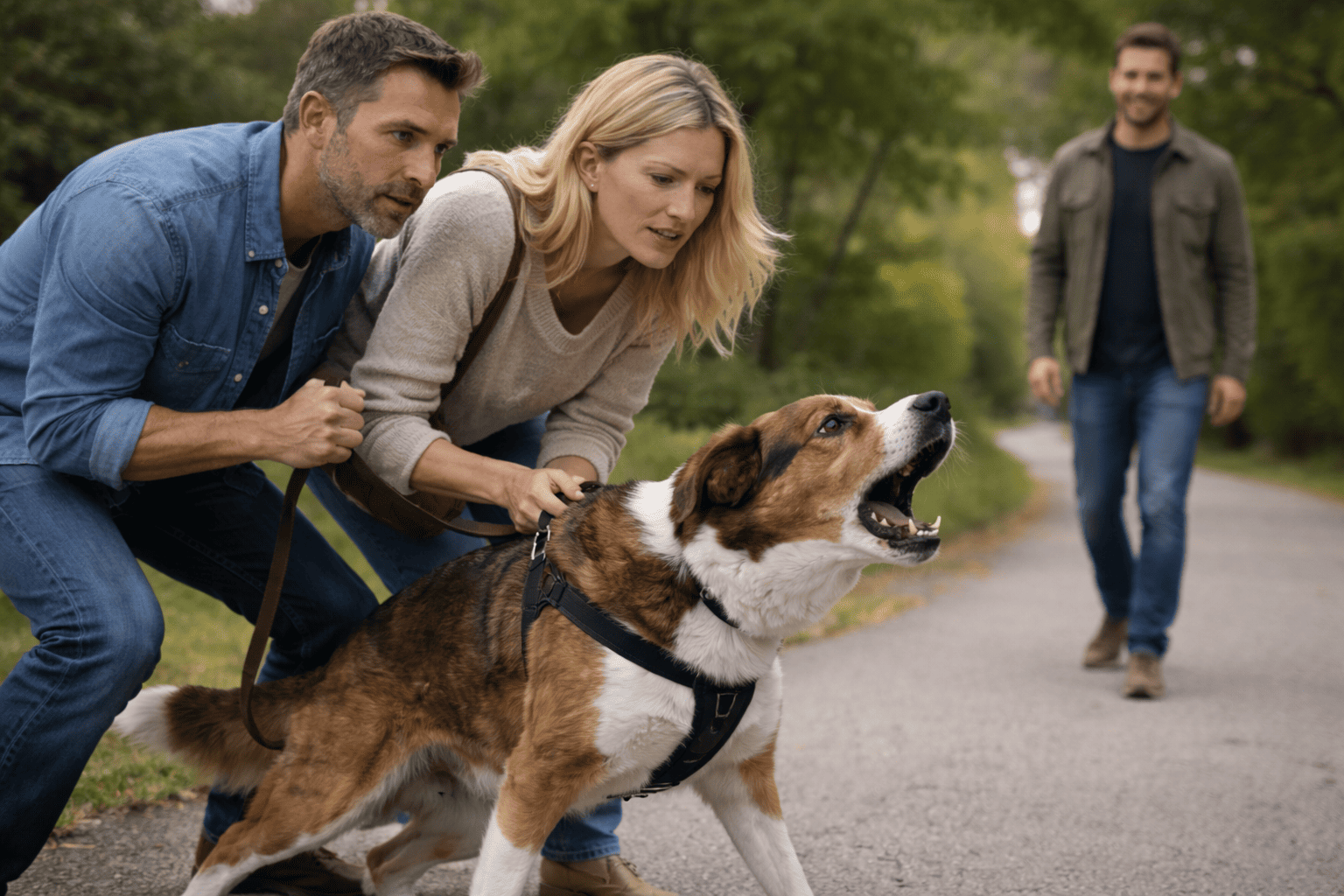
Does your dog bark at strangers during walks or when guests come over? Loud, nonstop barking… pulling on the leash… acting out of control… It’s stressful—and sometimes embarrassing. The truth is: 👉 This behavior is very common👉 And it CAN be fixed with the right training In this guide, you’ll…









Comments (2)