Helping You Raise a Calm, Happy & Well-Behaved Dog
How to Stop Dog Counter Surfing for Good
Sara Michael,
Sharing is caring 😉
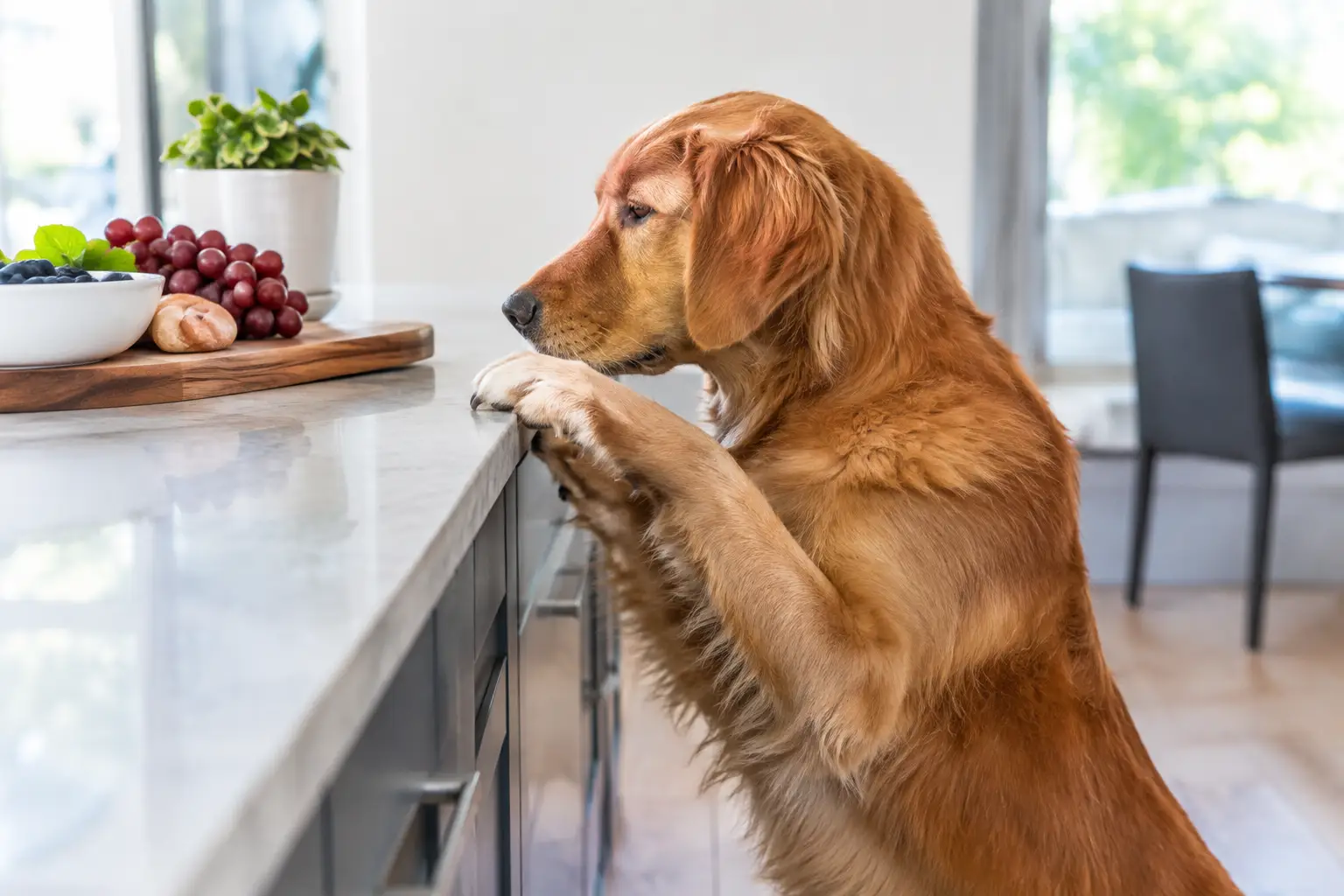
The sandwich disappears in two seconds. Your dog looks pleased with himself, you feel frustrated, and now you are wondering whether you will ever be able to leave food on the counter again. The good news: you can stop dog counter surfing without spending every meal policing the kitchen. You need a clear plan that prevents practice, teaches an alternative behavior, and stays consistent long enough for the new habit to stick.
Counter surfing is not your dog being spiteful or “dominant.” It is a behavior that pays well. A dog may check the counter ten times and find nothing, but one forgotten chicken breast can make all ten attempts worthwhile. Your job is to make counter surfing unrewarding while making a better choice easy and worthwhile.
Dogs repeat what works. Food smells stronger at nose level, countertops hold interesting items, and even a single success can turn a curious jump into a daily routine. Large dogs can reach more easily, but small dogs often learn to use chairs, cabinets, or their front paws to get access.
The behavior can also happen when your dog is bored, excited by kitchen activity, or used to getting attention after jumping up. If every counter check leads to you shouting, chasing, or rushing over, the attention may become part of the game. That does not mean you should ignore unsafe behavior. It means your response needs to be calm, immediate, and effective.
Do not punish your dog after you find an empty plate or a mess on the floor. He will not connect a delayed correction to something he did minutes ago. Harsh reactions can also teach a dog to steal food only when people are absent, which makes the habit harder to address.
Step One: Stop the Rewards Immediately
Training works much faster when your dog cannot keep practicing the unwanted behavior. Management is not giving up or taking the easy way out. It is how you prevent your dog from being paid for the behavior while you teach the replacement.
For the next few weeks, treat your counters like a training zone. Put food away the moment you are done using it. Move dishes into the sink or dishwasher, wipe crumbs, and keep tempting items away from the edge. This is especially important with foods that can harm dogs, including grapes, raisins, chocolate, onions, garlic, xylitol-containing products, cooked bones, and alcohol.
When you are actively cooking, use a physical setup that prevents access. A baby gate, closed kitchen door, exercise pen, leash tether supervised by you, or a crate can work, depending on your home and your dog. Choose the option that keeps everyone safe and allows your dog to relax. Never tether a dog without supervision, and do not use a crate as punishment.
If your dog has a long history of stealing food, assume he will test the counter when your back is turned. That is normal. Every prevented success weakens the old habit.
Teach a Better Job: Go to Your Place
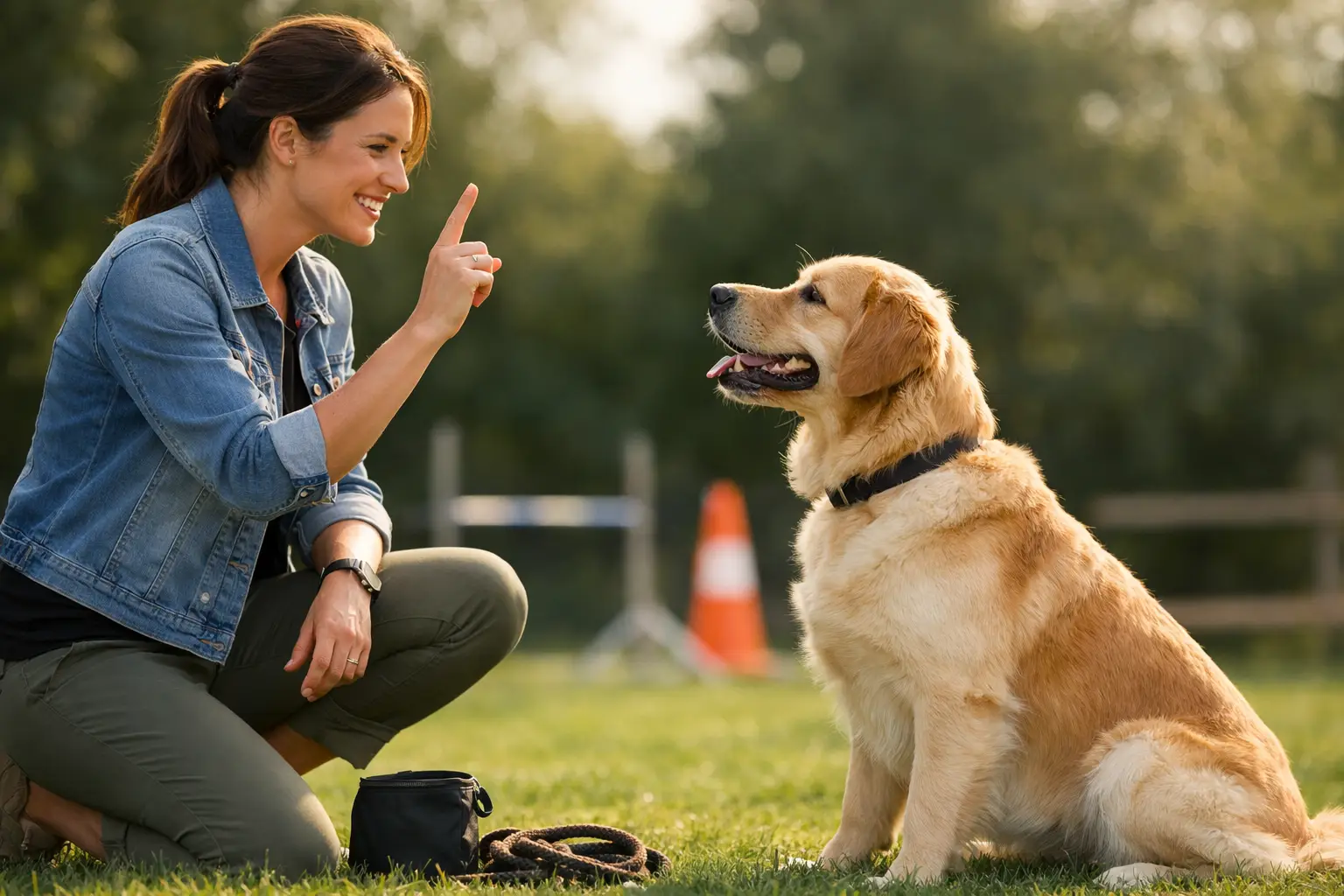
The most reliable solution is not simply telling your dog “no.” It is teaching him exactly what to do when people are in the kitchen. A bed, mat, or raised cot placed outside the main cooking path gives your dog a clear station. The goal is simple: kitchen activity means go to the mat and stay there until released.
Start when there is no food on the counter and very little distraction.
Build Value for the Mat
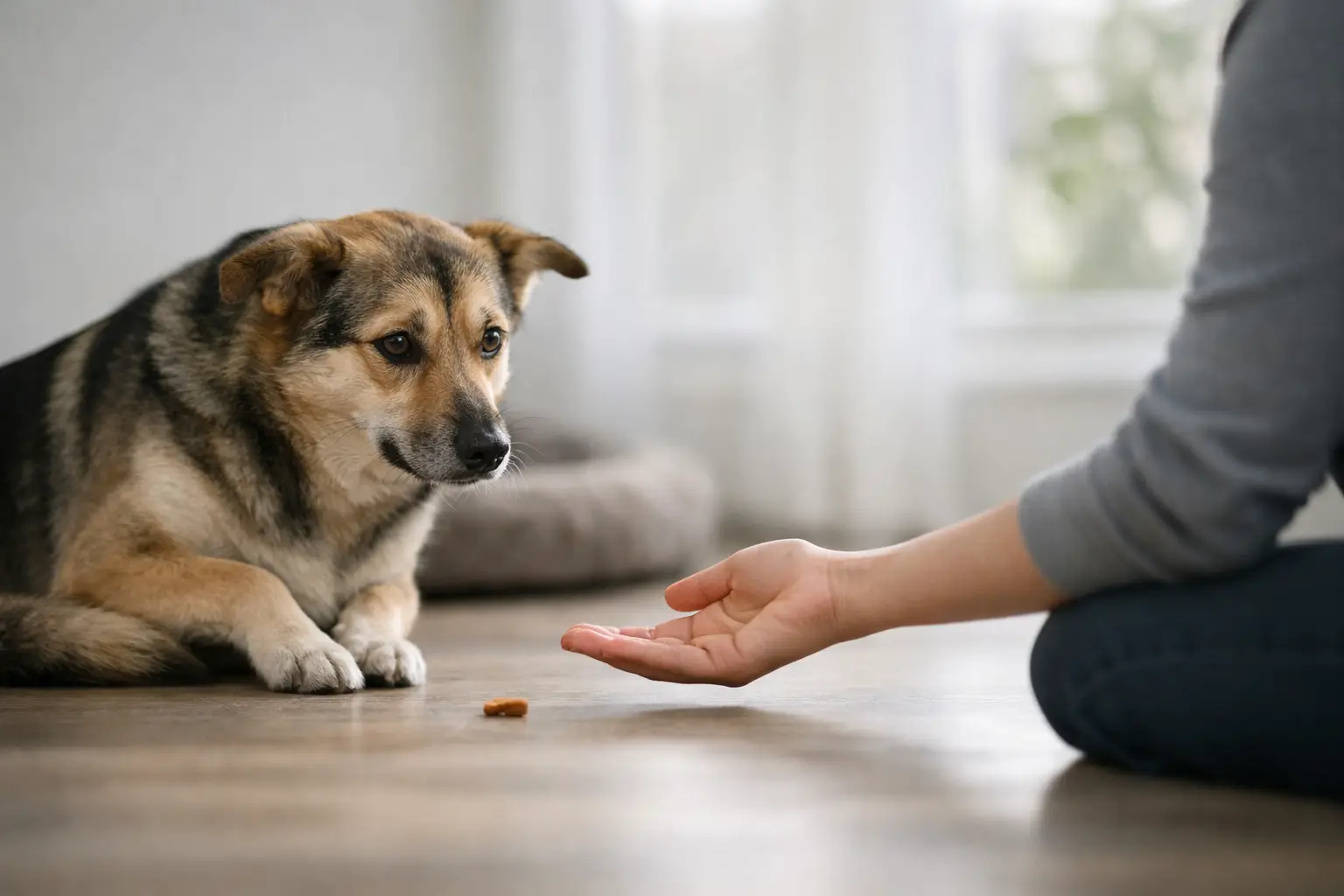
Place the mat on the floor. The moment your dog looks at it, steps toward it, or puts a paw on it, mark the choice with a cheerful “yes” and place a treat on the mat. Continue until your dog is willingly stepping onto it.
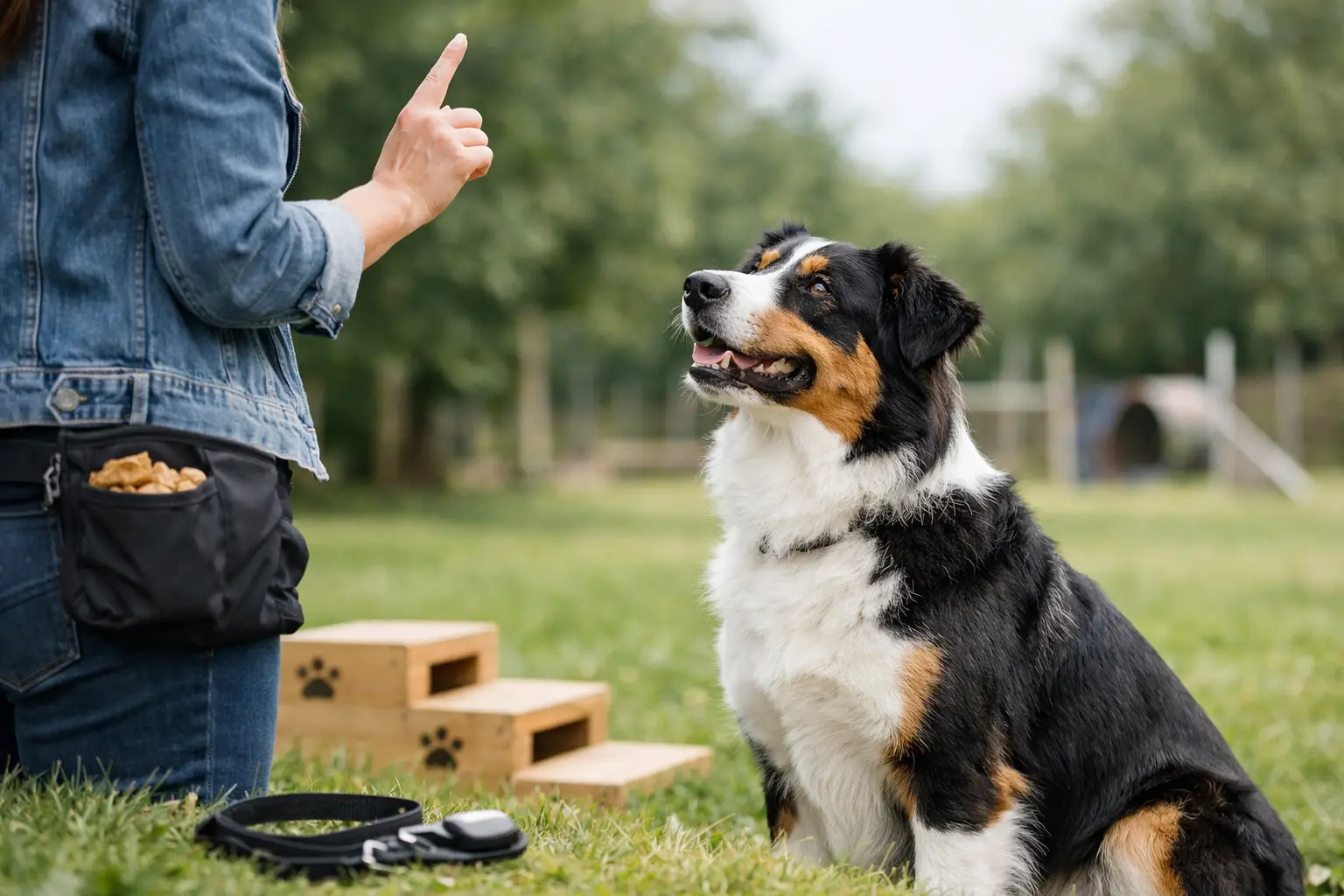
Next, reward him for standing, then sitting, then lying down on the mat. Feed several small treats between his front paws so staying there becomes valuable. Add a cue such as “place” only after he understands the action.
Keep sessions short. Three to five minutes of clear practice is better than twenty minutes of repeating a cue your dog is not ready to follow.
Add Duration Before Distractions
Ask for “place,” reward your dog on the mat, then wait one second before giving the next treat. Gradually build to five seconds, then ten, then longer. If he gets up, calmly guide him back or reset the exercise. Do not repeat the cue over and over.
Use a release word such as “free” or “okay” so your dog learns that staying put is his job until you end it. This matters because a dog who leaves the mat whenever he wants has not yet learned a reliable station behavior.
Practice Kitchen Movement
Once your dog can remain on the mat for a short period, add small distractions. Take one step toward the counter, return, and reward. Open a cabinet, reward. Pick up a spoon, reward. Walk around the kitchen, reward.
Increase difficulty slowly. If your dog leaves the mat as soon as you touch food, the exercise became too hard too fast. Go back to an easier version where he can succeed. Reliable obedience is built through many correct repetitions, not by testing your dog until he fails.
How to Stop Dog Counter Surfing During Real Meals
Training sessions are controlled. Dinner preparation is real life. Use both.
Before you begin cooking, send your dog to his place and give him something appropriate to do, such as part of his meal in a food puzzle, a stuffed toy, or a safe chew he handles well. This is not bribery. You are creating a predictable routine: people prepare food, and your dog settles in his spot.
At first, reward your dog frequently for remaining on the mat. You may need to deliver a treat every few seconds while you chop vegetables or move pans. As he improves, spread rewards farther apart. Eventually, the normal reward becomes being released after the meal preparation is over, with an occasional treat to maintain the behavior.
If you cannot supervise, do not leave your dog loose in a kitchen with accessible food. Put him behind a gate, in another room, or in his crate if he is already comfortable being crated. Freedom around food is earned through successful practice, not granted because you hope today will be different.
What to Do When Your Dog Jumps Up
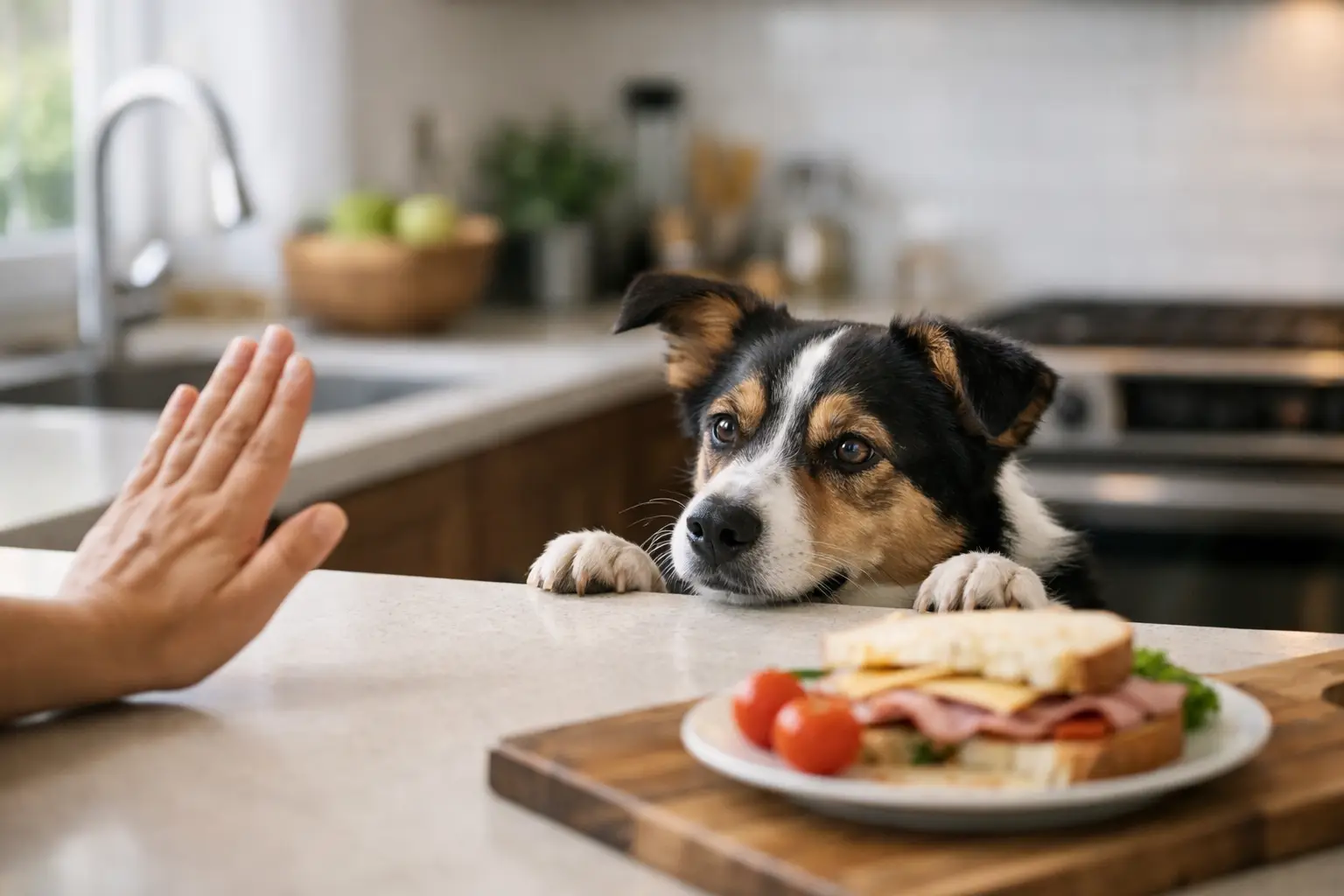
If you catch your dog putting paws on the counter, stay calm. Do not yell, shove, or turn it into a chase. Interrupt the attempt with a neutral sound or a calm “off,” then direct him to his place. Reward him when he gets there.
The important part is what happens next. If he jumps up and then gets sent to a comfortable mat where rewards appear, he learns the correct path. If he jumps up and finds food, he learns the wrong path. Consistency matters more than dramatic corrections.
Some owners use booby traps, startling noises, or unpleasant substances on food. These methods can create anxiety around the kitchen, damage trust, or fail when the setup is gone. They also do not teach your dog what he should do instead. A trained place command plus smart management is more useful in everyday life.
Common Mistakes That Slow Progress
The first mistake is leaving “just one thing” on the counter. A single successful theft can strengthen the habit again, especially with high-value food. Keep the environment clean while training is underway.
The second is expecting too much too soon. A dog who cannot hold a stay on a mat while you take one step away is not ready to remain there while bacon cooks. Build the skill in small layers.
The third is using different rules at different times. If your dog is allowed to investigate the counter while you make coffee but corrected when guests are over, the rule is unclear. Decide what you want: four paws on the floor and a settled station during kitchen activity. Then enforce that standard every day.
Finally, make sure basic needs are met. A hungry dog, an under-exercised adolescent, or a dog who has had no mental activity all day may struggle more around food. Exercise will not solve counter surfing by itself, but a dog with appropriate physical activity, enrichment, and training is better prepared to make good choices.
When You Need More Help
If counter surfing includes guarding stolen food, growling when approached, snapping, or aggression around the kitchen, do not try to take items from your dog by force. Secure the area, prevent access, and get professional guidance. Food-related aggression needs a careful plan that protects both your dog and your family.
For most dogs, though, counter surfing changes when the kitchen stops being a jackpot and starts becoming a place with clear rules. Be patient enough to prevent the old habit, structured enough to teach the new one, and consistent enough for your dog to trust what is expected. Soon, the sound of you opening the refrigerator can become your dog’s cue to head calmly to his mat.
Why is my dog leash reactive? Learn what triggers the barking and lunging, how to manage walks, and the training steps that build calmer responses outside